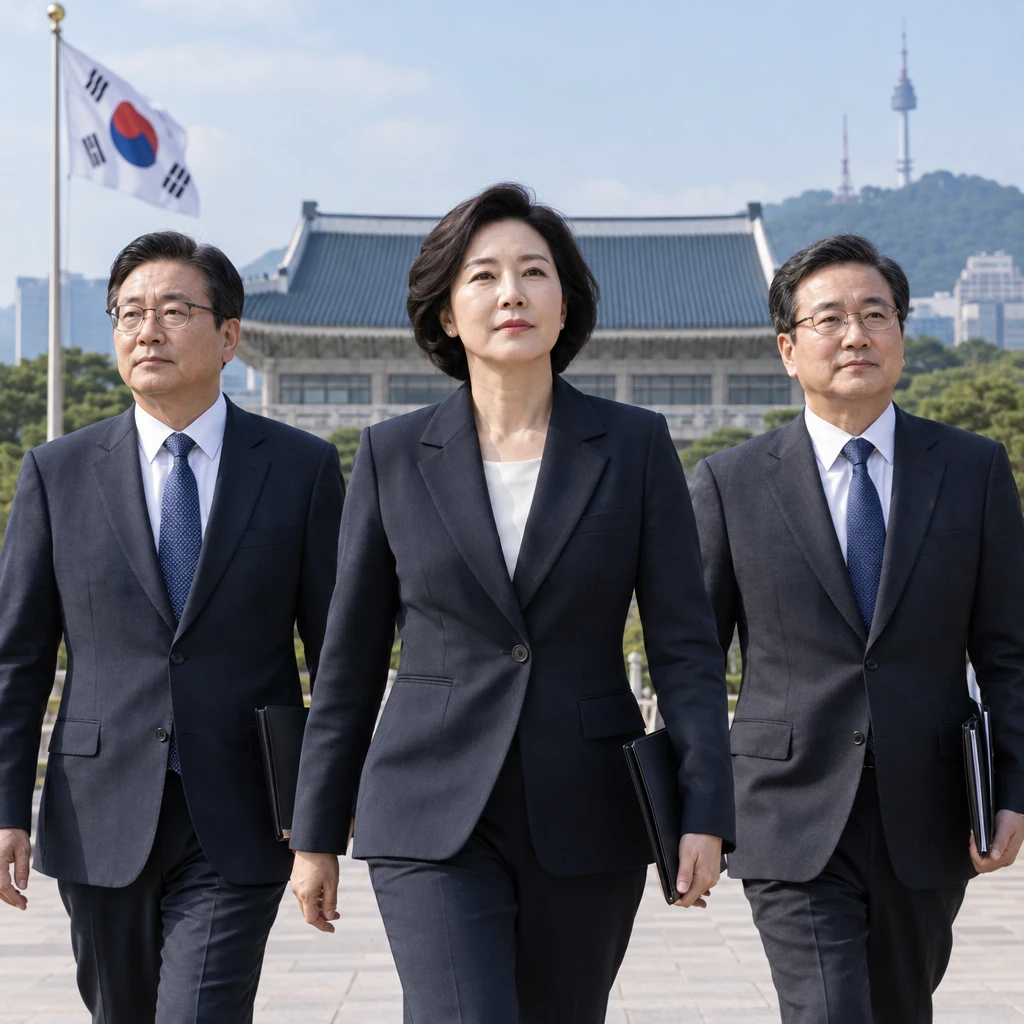
SEOUL, Nov 23 (Reuters) – South … a new spy chief and foreign and unification ministers amid calls to better manage the alliance with Washington. …
If you’ve ever wondered what a government reshuffle looks like when the stakes are national security, South Korea just gave us a fresh example. President Lee Jae Myung has put forward a set of nominations for some of the country’s most sensitive posts, and the list is worth a closer look.
The headline pick is Kang Kum-sil, who has been nominated to lead the National Intelligence Service, the country’s main spy agency. If she is confirmed, she would become the first woman to run the agency, which is the kind of milestone that tends to get a lot of coverage. Spy agencies are not exactly known for their openness, so it’s a little funny that a job this secretive gets its own news cycle, but here we are.
The nominations don’t stop there. Lim Woong-soon is set to be proposed as foreign minister, responsible for guiding the country’s diplomacy with the rest of the world. Hong Ik-pyo is slated to become unification minister. That post carries a particularly heavy workload, since the unification ministry deals with relations with North Korea, a relationship that has been tense for a very long time and rarely moves quickly.
Why does this matter? Because these three roles touch on the core of how South Korea sees its place in the region. The intelligence chief gathers and analyzes information on threats and developments that often never make the evening news. The foreign minister manages relationships with allies and other countries, and every statement can carry weight. The unification minister sits at the center of efforts, past and present, to manage or repair ties with Pyongyang. Putting new people in all three jobs at once means the government’s approach to security could shift in noticeable ways, or at least that’s the kind of question analysts will be asking.
It’s also worth noting that this news was reported widely. Several outlets, including SRN News, The Straits Times, the Japan Times, and Anadolu Agency, covered the nominations, and each put its own spin on the headline. Some emphasized the historic first for the spy agency, while others focused on the diplomatic and unification roles. That kind of consistent coverage suggests the appointments are being watched closely both at home and abroad.
Of course, a nomination is not the same as a finished job. These picks are being put forward, and they will need to go through whatever formal steps apply before they take up their posts. Until then, it’s a good idea to treat the list as a starting point rather than a final lineup. Politics has a way of surprising people, and a name on a proposal list doesn’t always make it to the office.
Still, the overall picture is clear enough. The Lee administration is assembling a new team for some of the government’s most important security and diplomatic responsibilities. Whether you’re a policy nerd, a news junkie, or just someone who enjoys watching a government reshuffle unfold, this is one to keep an eye on. And if Kang Kum-sil does take the spy chief job, expect a lot of people to remember exactly where they were when they heard the news.
Inspired by: “South Korea nominates new foreign, unification ministers, spy chief” (r/News)