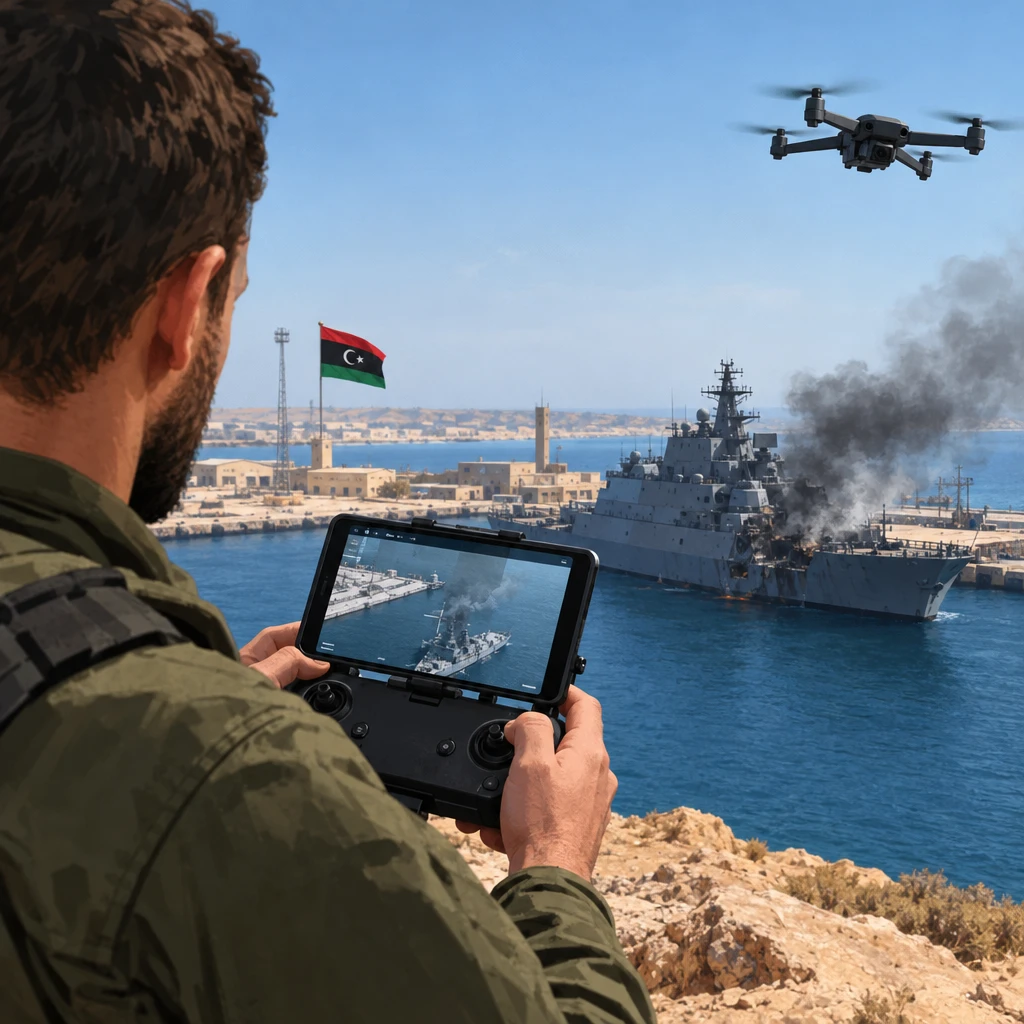
A Russian warship was sunk by Ukrainian drones at a port in Libya on Sunday , President Volodymyr Zelensky said.
Some headlines are built to make you spit out your coffee. This one, about Ukrainian drones reportedly sinking a Russian warship at a naval base in Libya, is a good example. Before you start picturing a dramatic sea battle in North Africa, it helps to look at what is actually confirmed, what is still hazy, and why the wording across outlets doesn’t quite match.
Here is the core story. Ukrainian drones reportedly struck a Russian warship at a naval base in Libya. Ukrainian President Volodymyr Zelenskyy confirmed the incident. The attack is dated November 23, 2026. That’s about where the solid facts end.
The headline itself is the first thing to raise an eyebrow at. Several outlets covering the story ran with language about the warship being sunk. One version, from Toledo Blade, uses that exact word. But the CTVNews coverage frames it differently, saying Ukrainian drones hit a Russian warship and that Zelenskyy said so. Those are not the same claim. A ship can be hit and badly damaged without sinking, and a ship can be hit with little lasting harm at all. Headlines have a habit of picking the most dramatic verb available, and readers should notice when the verbs don’t agree.
The reporting also makes clear that the extent of the damage and any casualties remain unconfirmed. That’s an important caveat. In the early hours of a story like this, officials have strong incentives to talk up results, and other parties have reasons to downplay them. Until there is independent verification of what happened to the vessel, it’s wise to treat the sinking claim as unproven.
So what is the story, then? Three outlets covered it: France 24, CTVNews, and Toledo Blade. All three reported that a strike involving Ukrainian drones targeted a Russian warship at a naval base in Libya. The consistency in the basic event is worth noting, even as the details of the outcome vary. When multiple outlets report the same core event but disagree on the result, that usually means the situation is still developing and the picture is incomplete.
Why does a story like this matter? A strike on a military vessel at a foreign naval facility would be notable in any era. It touches on the wider conflict involving Ukraine and Russia, and it raises questions about how far that conflict’s reach extends beyond Eastern Europe. It also highlights the growing role of relatively inexpensive drones in naval and military operations, a trend that has drawn attention across many recent conflicts.
If you’re following this story, here’s a practical approach. Look for updates that name specific sources or include independent confirmation, such as satellite imagery analysis or statements from multiple governments. Be skeptical of any single claim that presents a sinking as fact without evidence. And pay attention to updates that correct or revise early reports, because that’s often how the real story emerges.
The bottom line: Ukrainian drones reportedly hit a Russian warship at a naval base in Libya, Zelenskyy confirmed the incident, and the sinking claim has not been independently verified. Until more information comes out, the most accurate headline may be the least exciting one. Sometimes the truth is just “something happened, and we’re still finding out what.”
Inspired by: “Ukrainian drones sink Russian warship at naval base in Libya” (r/World)