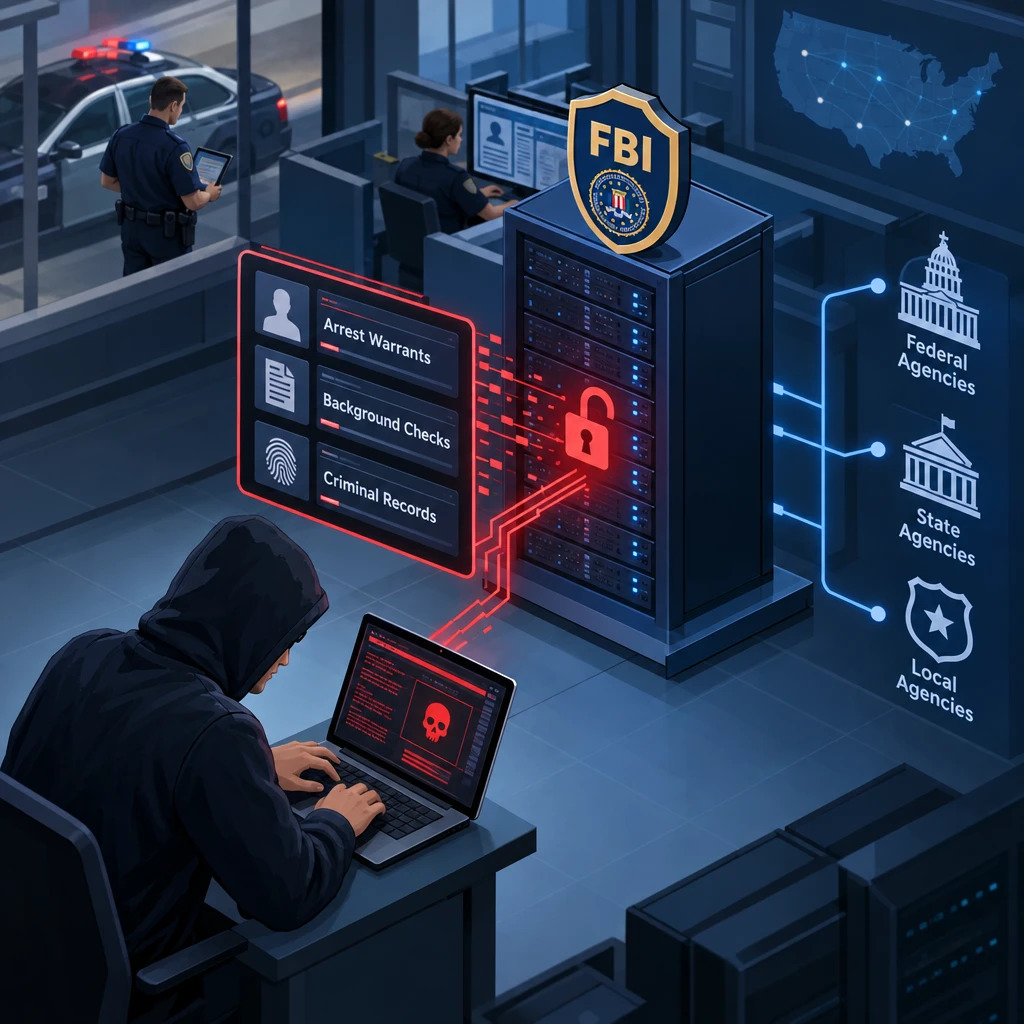
The FBI is investigating an apparent breach of its nationwide criminal information database that serves as a lifeline between federal, state and local law enforcement , two people briefed on the investigation said.
If you were hoping the FBI would have a quiet stretch after its last embarrassing cyber incident, I have some bad news. The agency is now investigating a cyber intrusion targeting the National Crime Information Center, or NCIC, and this one hits closer to the heart of what law enforcement actually relies on every day.
For anyone who hasn’t spent time thinking about criminal databases, here’s the basic idea. The NCIC is a criminal information database shared among federal, state, and local law enforcement agencies. Officers use it to check things like arrest warrants and background information, often in the middle of a traffic stop or an active investigation. In other words, it’s not some dusty filing cabinet in a basement. It’s a tool that gets used in real time, which makes a breach a much bigger deal than a typical data leak.
According to reports, the intrusion reportedly allows access to records tied to arrest warrants and background checks. That’s the part that should make people sit up. Criminal records are sensitive by nature. They can affect whether someone gets a job, an apartment, or a second look from a police officer. When that kind of information lands in the wrong hands, the consequences can spread well beyond the agency itself.
What makes this story especially awkward is that it’s the second incident in recent months. Earlier, an FBI recruitment website was targeted by hackers who compromised employee personal information. So we’re not talking about one unlucky day. We’re talking about a pattern, and patterns are harder to explain away with a shrug and a press statement about how seriously the agency takes security.
Now, it’s worth being fair here. Large organizations get hit by attackers all the time, and the FBI is hardly the only institution struggling to keep digital doors locked. Government systems are huge, they’re interconnected, and they’re touched by thousands of users across many different agencies. Every link in that chain is a potential weak spot. A database shared across federal, state, and local agencies is a bit like a house with a hundred keyholders. Good luck tracking every key.
Still, the sheer number of breaches involving government agencies has turned cybersecurity into one of those topics that gets treated as a looming crisis rather than a rare event. That framing is part of why headlines like the one attached to this story, which describe America’s cybersecurity crisis growing, resonate with readers. People are tired of hearing that everything is fine, especially when the evidence keeps pointing the other way.
So what should the average person take from all this? First, if you’ve ever had dealings with a government agency, it’s reasonable to be a little uneasy about where your information might end up. Second, it’s a good reminder that strong passwords, two-factor authentication, and cautious habits around unexpected emails matter for everyone, not just for federal employees. Attackers often start with one compromised account and work their way outward, so basic hygiene is still the cheapest defense available.
Third, and maybe most important, we should keep our expectations realistic about what’s known right now. The FBI is investigating, and details about the scope and the people responsible may take time to emerge. Early reports can be incomplete or change as more facts come out, so it’s smart to treat any single account as a snapshot rather than the final word.
In the meantime, the story serves as a useful, slightly uncomfortable mirror. The agencies we trust to protect us are also protecting huge amounts of sensitive data, and that data is a tempting target. Whether the answer is better funding, stricter access controls, faster incident response, or some combination of all three, the pressure to improve is only getting stronger. Here’s hoping the next update is about fixes rather than another breach.
Inspired by: “FBI Hacked Again: Criminal Database Breached as America’s Cybersecurity Crisis Grows” (r/World)