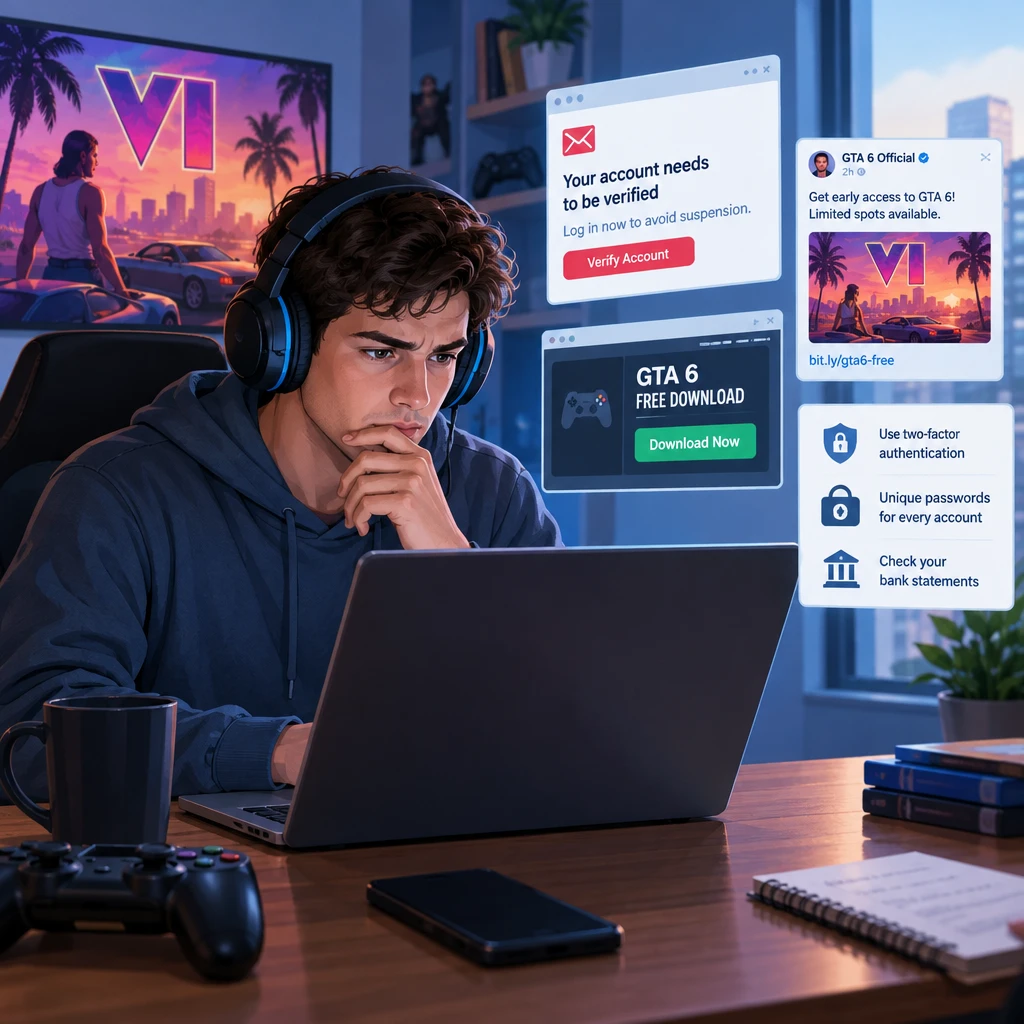
GTA 6 could let hackers steal your bank account, Britain's digital privacy watchdog issues warning . The stratospheric demand for Grand Theft Auto VI could cause an influx of scams , security experts have warned
Every time a big game release comes around, the internet collectively loses its mind. Lines of fans, midnight launches, and forum threads that run to thousands of posts. Grand Theft Auto is one of the biggest of these, so when the next installment comes up, people pay attention. That’s why a headline suggesting GTA 6 could give hackers a way into your bank account grabbed a lot of attention.
The headline comes from a warning issued by Britain’s Information Commissioner’s Office, the country’s main digital privacy regulator. I wasn’t able to pull the full text of the article when writing this, so I’m not going to pretend I know every detail of what the watchdog said. What I can do is talk about the broader situation, because the underlying concern is one that gamers have been dealing with for years.
Why hype makes gamers a target
Scammers are opportunists. They don’t need to be clever when they can just be timely. A major release creates a huge pool of people who are excited, impatient, and searching online for information. That’s exactly the kind of environment where fake websites, phony pre-order pages, and bogus “early access” offers thrive. Anyone who has seen a suspicious link promising a free copy of a hot new title knows how quickly curiosity can override common sense.
The usual tricks
The methods are mostly familiar. Phishing emails pretend to come from a game publisher or a storefront and ask you to log in to “verify” your account. Fake download sites offer cracked games or leaked files that are really just malware wrappers. Social media accounts impersonate official pages and post links to giveaways. Some scammers even contact players directly, posing as support staff.
The goal is usually the same: get you to hand over a password, a login code, or payment details. Once a criminal has access to a gaming account, they may be able to reach linked payment methods, or they may simply use the same password you reuse on your bank or email. That reuse problem is where a lot of damage happens.
Practical steps that actually help
None of this is particularly glamorous, but it works:
– Turn on two-factor authentication for your gaming accounts, your email, and your bank. A password alone is a weak lock.
– Use a unique password for each important account. A password manager makes this far less painful.
– Only buy games from official storefronts or the publisher’s own site. If a deal looks too good to be true, it probably is.
– Be suspicious of unexpected emails asking you to log in urgently. Go to the website directly instead of clicking the link.
– Check your bank statements regularly, and report anything unfamiliar straight away.
– Be careful about sharing personal details in game chats, Discord servers, or forums, since scammers collect small pieces of information over time.
The bigger picture
It’s easy to roll your eyes at warnings like this, because they can sound alarmist. But regulators tend to speak up when they see patterns of harm, and gaming is a massive industry with millions of users, many of them young. Privacy and security advice that feels boring is usually the advice that keeps people out of trouble.
So, will GTA 6 itself put your bank account at risk? A game is not a trapdoor into your finances. The real risk comes from the scammers who ride along with any major release, hoping you’ll click before you think. Enjoy the game when it arrives, by all means. Just treat every unexpected link and urgent login request with the same suspicion you’d give a stranger offering you a briefcase of cash.
If you want the specifics of the watchdog’s warning, read the original report directly. It will tell you exactly what was said, rather than relying on a blog post that couldn’t even load the article it was based on.
Inspired by: “GTA 6 could let hackers steal your bank account, Britain’s digital privacy watchdog issues warning” (r/RSS)