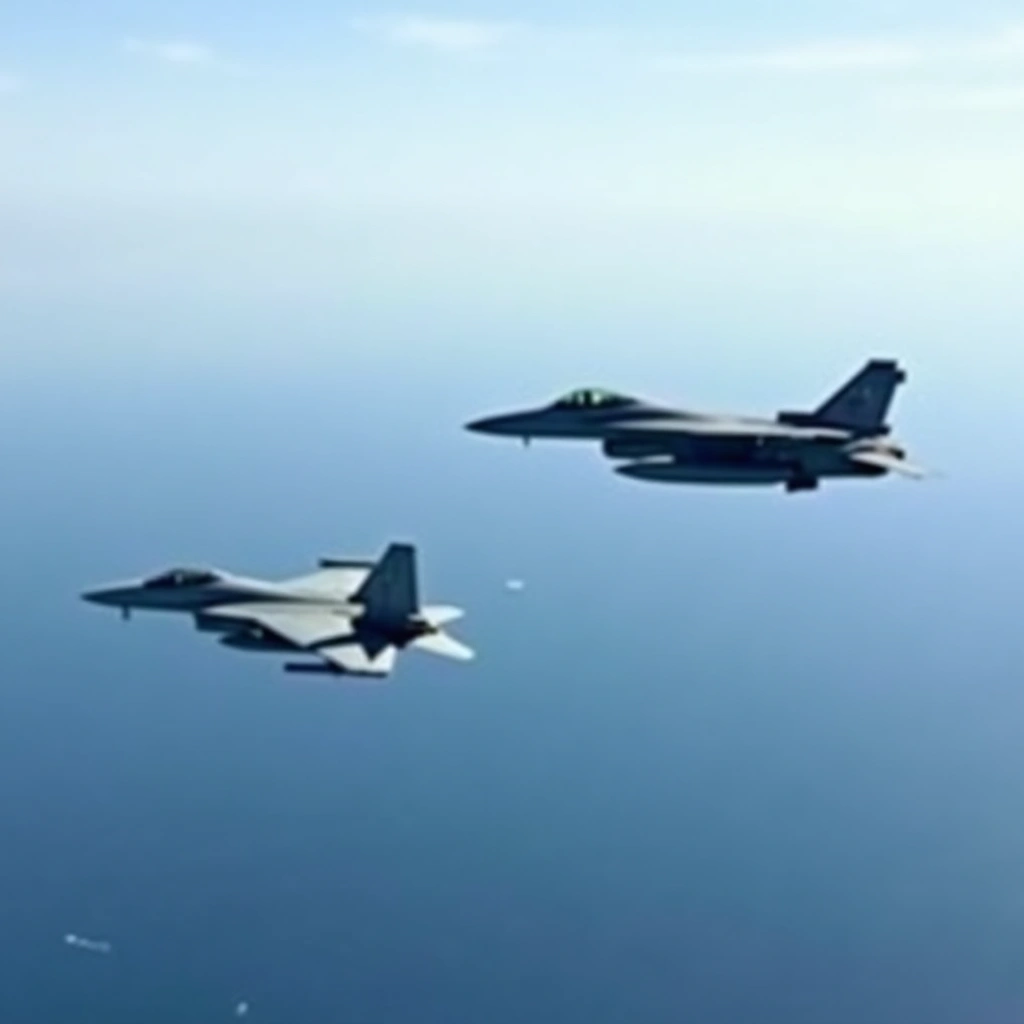
Japan on Tuesday delivered a strong protest to Moscow after two suspected Russian military planes entered Japanese airspace off Fukuoka Prefecture, prompting the Air Self-Defense Force to scramble fighter jets.
Most of us start Tuesday with coffee, a pile of emails, and the slow realization that the weekend really is over. Japan’s air defense crews started theirs by scrambling fighter jets. According to reports, two suspected Russian aircraft entered Japanese airspace early Tuesday, and Tokyo was not amused.
Here’s what we know, what it means, and why a few minutes of flight time can turn into a full diplomatic incident.
What Actually Happened
The basics, as reported by The Straits Times, Hindustan Times, and CNA:
– Two suspected Russian aircraft entered Japan’s airspace early Tuesday.
– Japan responded by scrambling fighter jets.
– The planes flew close to Okinoshima, an island described in reports as being in the southwestern area of Fukuoka.
– Japan lodged a “very stern protest” with Moscow.
– Japanese officials called the incident a “grave infringement” on Japanese sovereignty and a threat to national security.
That’s the confirmed outline. The reports call the aircraft “suspected” Russian planes, which is the careful wording governments and news outlets use before every detail is officially nailed down. Nobody seems to think they were lost tourists in a rented Cessna, though.
What Does ‘Scrambling Jets’ Mean?
If you’ve never followed military aviation news, “scrambling jets” sounds like a breakfast order gone badly wrong. It actually means fighter aircraft are launched quickly to intercept or monitor an aircraft approaching or entering a country’s airspace.
The goal is usually not to start a dogfight. It’s to show up, identify the aircraft, keep an eye on what it’s doing, and make it very clear that someone noticed. Think of it as the aviation version of a store employee suddenly appearing next to you and asking, “Can I help you find something?” in a tone that means “I know exactly what you’re doing.”
Scrambles are a standard part of how countries protect their airspace. An actual entry into a country’s sovereign airspace, though, is a bigger deal than an aircraft simply flying nearby, and that’s why this incident drew such a strong reaction.
Airspace Is Not a Suggestion
To outsiders, airspace can seem a little abstract. You can’t see the border in the sky. There’s no painted line in the clouds and no customs booth floating at 30,000 feet.
Legally and politically, though, a country’s airspace is part of its sovereign territory. Flying military or state aircraft into it without permission is treated a lot like walking into someone’s house uninvited, except the house has radar and the homeowner owns fighter jets.
That’s why Japan used such serious language. Calling the incident a “grave infringement” on sovereignty isn’t diplomatic exaggeration for its own sake. It reflects the view that any unauthorized entry, however brief, crosses a line that matters.
The ‘Very Stern Protest’
Let’s talk about the wording. Diplomacy has its own vocabulary, and “very stern protest” is not something a government reaches for when it’s mildly annoyed. It’s the formal equivalent of putting down your fork, looking someone dead in the eye, and saying, “We need to talk.”
A protest like this is a way of putting the objection on the record. It tells the other country, and everyone watching, that Japan considers the violation unacceptable and expects it not to happen again. Whether that expectation is met is another question, but the message is meant to leave no room for doubt.
The “very” is doing a lot of work here. A plain protest says “we object.” A stern protest says “we really object.” A very stern protest says “we really, really object, and we’d like the record to show we said so in writing.”
Why Okinoshima Matters
The reports point out that the aircraft flew close to Okinoshima, in the southwestern area of Fukuoka. Location matters in incidents like this because it affects how Japan reads the situation and how seriously it treats the potential threat.
The reporting doesn’t spell out why the aircraft were in that particular area or what they were doing, so it’s best not to guess. What’s clear is that Japan considered the route close enough to its territory to call it an airspace violation, and serious enough to label it a national security threat.
A Threat to National Security?
Some people might wonder whether “threat to national security” is a bit dramatic for two planes flying past an island. It’s a fair question, but think about it from a defense planner’s point of view.
When foreign military aircraft enter your airspace, you have to answer several questions very quickly. Who are they? What are they doing? Are they testing your response times? Gathering information? Sending a political message? Did someone just take a very wrong turn?
Until those questions are answered, the safest assumption is that the situation is serious. That’s exactly why jets get scrambled first and diplomatic notes get written afterward. Defense systems are built around the idea that it’s better to respond to something harmless than to ignore something that isn’t.
The Bigger Picture
The source reporting focuses on the incident itself and Japan’s response, without going deep into what Russia intended or how Moscow reacted. So we’ll resist the temptation to invent a backstory involving secret missions and dramatic cockpit monologues.
What we can say is that incidents like this tend to raise tension even when they’re brief and nobody gets hurt. They test how quickly a country can respond, how firmly it reacts diplomatically, and how far it’s willing to push back publicly. Japan’s response checked all three boxes: jets in the air, a formal protest, and strong public statements from officials.
In other words, Japan wanted it known that it saw what happened, responded right away, and isn’t going to shrug it off.
How the News Spread
The story was picked up by several outlets, including The Straits Times, Hindustan Times, and CNA. Their headlines differ a little. One says the aircraft “enter airspace,” another says they “violate” it. But the core facts line up: two suspected Russian aircraft, a Japanese scramble, a location near Okinoshima, and a formal protest to Moscow.
That consistency is reassuring. When several outlets describe the same event in nearly identical terms, it’s a good sign the basic facts are solid, even if some details are still unclear.
The Takeaway
An incident that may have lasted only a short time has turned into a diplomatic dispute, and that’s how airspace works. A few minutes in the wrong patch of sky can bring fighter jets, official statements, and phrases like “grave infringement.”
For Japan, the message is simple. Its airspace is not open for casual visits, and any unauthorized entry will be met with a fast military response and an even more pointed diplomatic one. For everyone else, it’s a reminder that while most of us are still hunting for the coffee filter on a Tuesday morning, some people are already scrambling jets.
We’ll be keeping an eye on whether Moscow responds to Japan’s protest, and whether this stays a one-off or becomes part of a pattern. Either way, Japan’s air defense crews have probably earned a very large cup of coffee.
Inspired by: “Japan scrambles jets after two suspected Russian aircraft enter airspace” (r/News)