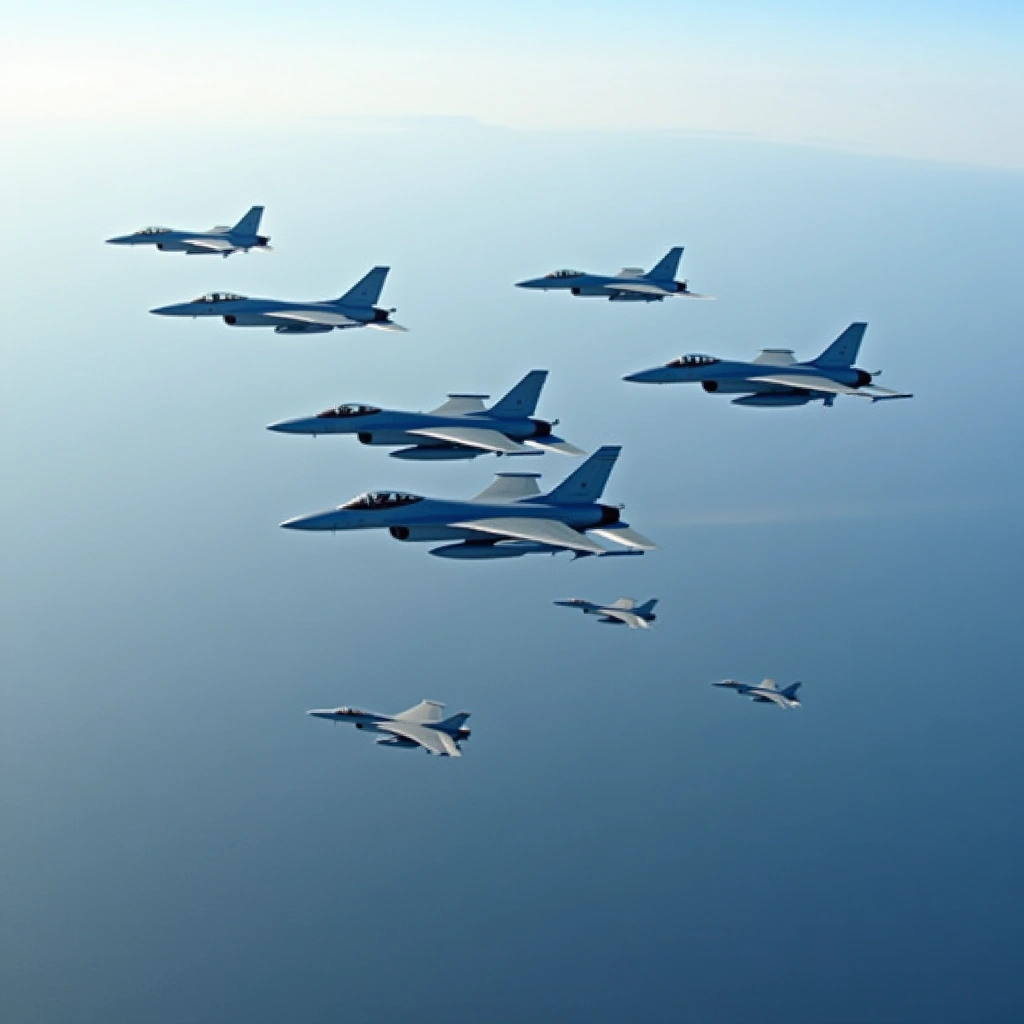
The South Korean military detected the aircraft before they entered the zone and deployed fighter jets to prepare for possible contingencies. The aircraft later left without violating South Korea ’s airspace.
There are polite ways to pass through someone’s neighborhood. You wave, maybe give a heads-up, and you don’t loiter near the fence. Then there’s the approach several Russian military aircraft took on November 17, when they entered South Korea’s air defense identification zone without notice. South Korea responded by scrambling fighter jets, which is the aviation equivalent of stepping onto the porch and saying, “Can I help you?”
What Happened
According to South Korea’s Joint Chiefs of Staff, several Russian military aircraft entered the Korean Air Defense Identification Zone, known as KADIZ, over the East Sea, also called the Sea of Japan. In response, South Korea deployed fighter jets and carried out tactical maneuvers.
The Russian aircraft later left the KADIZ, and the Joint Chiefs of Staff said they did not violate South Korean airspace. No shots, no collisions, no international incident beyond the one that happens every time a military aircraft shows up somewhere it wasn’t announced.
The story was reported by several outlets, including the Korea Herald, The Straits Times, CNA, CTVNews, and The Kyiv Independent. The Korea Herald’s headline emphasized that the aircraft entered “without notice,” which is the heart of the issue.
Wait, If They Didn’t Violate Airspace, Why the Fuss?
This is where the acronyms matter.
An air defense identification zone is not the same as sovereign airspace. A country’s sovereign airspace generally covers its land territory and its territorial waters. An ADIZ extends farther out. It’s a buffer area where a country expects aircraft to identify themselves so its military has time to figure out who’s coming and whether there’s a problem.
You can think of sovereign airspace as your house and the ADIZ as the long driveway leading to it. Nobody has technically broken in, but if an unidentified vehicle starts rolling up the driveway without calling ahead, you’ll probably look out the window. If you have fighter jets, you might send those out to look too.
An ADIZ is not formally governed by a binding international treaty in the way territorial airspace is. Countries declare these zones themselves, and other countries don’t always recognize them or follow notification practices. That leaves room for exactly this kind of friction: one side says the aircraft should have checked in, and the other side doesn’t feel obligated to.
So while “they didn’t violate our airspace” sounds reassuring, entering an ADIZ unannounced is still seen as provocative. It tests response times, gathers information, and signals that someone is watching.
Why Scramble Jets at All?
When unidentified or unannounced military aircraft enter an ADIZ, the standard response is to send fighters to intercept, shadow, and monitor them. That accomplishes several things:
– Confirming what the aircraft are and where they’re headed.
– Making clear that the zone is being watched and defended.
– Showing that the country can respond quickly. Nobody wants to be the military that noticed the visitors three days later.
The tactical maneuvers mentioned by the Joint Chiefs of Staff are part of that response, meant to keep things under control and make sure the visiting aircraft don’t drift into actual sovereign airspace.
It’s a bit of a choreographed routine. Unannounced aircraft show up, jets go up to keep an eye on them, everyone flies around while staying professional, and eventually the visitors leave. It’s a little like a dance in which both partners are heavily armed and neither one asked the other to dance.
The East Sea Setting
The incident took place over the East Sea, which Japan and much of the international community call the Sea of Japan. Even the name is a sensitive topic, which says something about how crowded the region’s diplomatic calendar can be.
This body of water sits between the Korean Peninsula, Japan, and Russia’s Far East, so military aircraft from multiple countries pass through or near it. Air defense zones in the region overlap in places, and that overlap gives militaries plenty of chances to watch one another closely.
Not the Kind of Thing You Want to Become Routine
The incident ended without airspace violations, but that’s the minimum standard, not a gold star. Repeated unannounced entries into air defense zones keep militaries on alert, cost money and fuel, and add a small but real risk that a miscalculation turns a routine intercept into something worse.
They also send signals. Flights like these can be used to probe how quickly a country responds, show military reach, or simply remind neighbors that one’s air force exists and is busy. The available reporting doesn’t say what Russia’s specific purpose was this time, so it’s best not to fill in the blank with guesswork. What we do know is how South Korea responded: quickly, visibly, and by the book.
The Takeaway
On November 17, several Russian military aircraft flew into South Korea’s air defense identification zone over the East Sea without giving notice. South Korea sent fighter jets and carried out tactical maneuvers. The Russian aircraft left the zone, and according to the Joint Chiefs of Staff, they never entered South Korean airspace.
So the system worked as intended: someone came up the driveway unannounced, the homeowner went out to meet them, and the visitors eventually drove away. It’s not a crisis, but it’s also not nothing. It’s another reminder that in Northeast Asia’s skies, the polite heads-up is apparently optional, while scrambling fighter jets is not.
Inspired by: “South Korea scrambles fighter jets after Russian military aircraft enter air defense zone” (r/News)