Category: Science

  • Smart Glasses or Smart Privacy Invasion? The Dilemma of Tech in Public Spaces

    Smart Glasses or Smart Privacy Invasion? The Dilemma of Tech in Public Spaces

    They have little legal recourse as photography in public is broadly considered legal. One woman told the BBC that when she asked the person who posted a secret recording of her to remove it, she was told that doing so was "a paid service". Meta's glasses are currently the most popular on the market, estimated to make up more than 80% of all AI or smart glasses sales, as the company was the first major tech player to launch such a product in recent years.

    Picture this: you’re at the car rental counter, excited to hit the open road, and suddenly you notice something that makes you do a double-take. No, it’s not the price of the insurance waiver (which, let’s be honest, is always a shocking revelation). It’s the agent wearing smart glasses with a micro camera mounted on the frame. Cue the dramatic music!

    At first glance, you might think, “Hey, that’s pretty cool!” I mean, who wouldn’t want to look like they just walked off the set of a sci-fi movie? But then, the reality of the situation sinks in. Those glasses aren’t just there for the aesthetic; they could be recording your every move, and more importantly, your personal information.

    Now, let’s talk about the fine print, or rather, the fine line between convenience and invasion of privacy. Sure, in theory, recording in public spaces is legally permitted. But when you’re standing there handing over your ID, driver’s license, and credit card details, the thought of someone recording that transaction feels a bit like handing your secrets to a stranger while they nod and smile, all the while plotting to leak your credit card info to the highest bidder.

    This is where the mildly infuriating part comes in. We live in an age where technology is advancing faster than our ability to keep up with the implications. Smart glasses may offer convenience, but at what cost? Are we really okay with our personal data being potentially compromised for the sake of a snazzy gadget?

    Let’s face it, the tech world has a knack for making us feel like we’re living in the future while simultaneously reminding us of the pitfalls that come with it. From smartphones that can track your every move to smart refrigerators that know when you’re out of milk (I mean, who needs that level of judgment in their life?), we’re living in a paradox. It’s like being handed a slice of cake while someone whispers in your ear about the calories – delicious yet slightly guilt-inducing.

    So, what can we do? First and foremost, we can be vigilant. Next time you’re at a rental counter or any public space, take a moment to assess your surroundings. Is someone wearing smart glasses? Is there a suspiciously shiny device that looks like it could be recording? If so, maybe it’s time to put on your metaphorical tinfoil hat and ask a few questions.

    Additionally, advocating for stronger privacy regulations is key. We need to push for policies that protect consumers from intrusive technology. It’s all fun and games until your credit card details become the next viral TikTok sensation. And let’s be real, nobody wants to be the star of that show.

    In conclusion, while technology continues to evolve and shape our experiences, we must remain conscious of our privacy. Smart glasses may be the next big thing, but if they come at the expense of our personal data, it’s time to rethink how we embrace innovation. So, the next time you’re at the car rental counter, keep your eyes peeled, and maybe make a mental note to ask if those glasses come with a privacy policy. After all, it’s your personal data we’re talking about here – not just another day in the rental car saga.


    Inspired by: “I was renting a car at the counter when I noticed the agent wearing smart glasses with a micro came…” (r/mildlyinfuriating)

  • The Invisible Neighbor: A Case Study in Awkwardness

    The Invisible Neighbor: A Case Study in Awkwardness

    The videos serve as a story telling discussion starter that will illuminate the key points of each session while interacting with the study guide. … The plight of the poor in North America continues to evade simple solutions .

    Have you ever felt like you were living in a sitcom where the universe decided you were just a background character? That’s exactly how one Reddit user, who goes by the handle /u/candleacademic6, feels in her own neighborhood. She’s been living with her boyfriend for three years, and while they’re both pretty introverted (which, let’s be honest, makes socializing with neighbors feel like a triathlon), they have a neighbor who seems to have mastered the art of selective vision.

    Picture this: you’re out on your daily walk, having a lovely chat with your significant other, and suddenly you spot your neighbor. He’s there, standing like a friendly statue, ready to engage in a riveting conversation with your boyfriend while pretending you’re not even there. It’s like being in a one-act play where the main character is completely ignoring the supporting cast.

    Now, I’m not saying this neighbor is a villain in a dramatic sense, but come on! It’s like he’s got an invisible force field around him that prevents him from acknowledging the very existence of anyone who isn’t wearing a ‘Hello, my name is Boyfriend’ badge.

    So, what’s a girl to do when she feels like a ghost in her own neighborhood? Well, for starters, she could try the classic approach of smiling and waving. But let’s be honest, that’s already been tried—and failed. It’s like waving at a cloud and expecting it to wave back. And standing there awkwardly? That’s just adding insult to injury. It’s like being the third wheel on a date that you didn’t even want to be on.

    Now, you might wonder, what’s going on in this neighbor’s head? Is he secretly an introverted superhero who can only communicate with one person at a time? Or perhaps he’s just really into selective socializing, like some people are into selective eating (you know, the folks who only consume organic kale and gluten-free air).

    Whatever the reason, it’s mildly infuriating. We all know that social interactions can be awkward, but this one takes the cake—or should I say, the invisible cake? It’s a classic case of neighborly neglect, where one person’s social skills are so finely tuned that they forget there’s a whole other human being standing right next to them.

    So, how do you deal with an invisible neighbor? A few options come to mind:

    1. Direct Approach: Maybe it’s time to break the ice and ask, “Hey, do you have a problem with my existence?” I mean, it’s bold, but at least you’d get an answer.

    2. Group Dynamics: Next time you’re out, bring a friend or a dog. Nothing says ‘I’m here too!’ like a furry companion looking for attention.

    3. Awkwardness Olympics: Embrace the awkwardness! Start a competition with your boyfriend on who can wave more enthusiastically until your neighbor finally acknowledges you.

    At the end of the day, we all want to feel seen and heard, even in our own neighborhoods. So, here’s to /u/candleacademic6 and anyone else who feels like they’re living in the background of someone else’s story. You may feel invisible, but remember, you’re not alone in this mildly infuriating experience. Cheers to overcoming the invisible barrier, one awkward wave at a time!


    Inspired by: “My neighbor acts like I’m invisible” (r/mildlyinfuriating)

  • Rebooting the Skies: How One Airline is Paving the Way for a New Airspace System

    Rebooting the Skies: How One Airline is Paving the Way for a New Airspace System

    Let’s face it: flying can feel like a game of Tetris where someone keeps adding more blocks and you’re just trying to fit your luggage into the overhead compartment without causing a scene. Now, imagine if the Federal Aviation Administration (FAA) decided it was time to hit the reset button on our nation’s airspace. Sounds a bit dramatic, doesn’t it? But that’s exactly what’s on the table, and one airline is stepping up to show us how it might actually work.

    How one airline is using AI to optimize operations When Alaska Airlines wanted to optimize its operations, it turned to a small startup called Air Space Intelligence. Now the FAA has hired the company for a major reboot of the entire U.S. airspace.

    So, what does it mean to ‘reboot’ the airspace? In simplest terms, it’s about modernizing the way we manage air traffic, making it more efficient and safer. The FAA has been kicking around this idea for a while, but now they’re serious. With the increase in air travel (thank you, post-pandemic wanderlust!), our skies are getting a bit crowded, and let’s be honest, no one wants to be stuck in a holding pattern over an airport that’s already at capacity.

    Enter our hero: the airline that’s leading the charge. This airline has been experimenting with new technologies and strategies that could revolutionize how we think about air travel. Think of them as the cool kid in school who’s always ahead of the curve, while the rest of us are still figuring out how to tie our shoelaces. They are implementing advanced navigation systems that utilize satellite technology, allowing for more direct flight paths and, dare I say, less time spent in cramped seats wondering if you’ll ever get your luggage back.

    But wait, there’s more! This airline is also working on optimizing their schedules and improving communication between pilots and air traffic control. Can you imagine a world where flights actually leave on time? It’s almost like a fairy tale, isn’t it? The goal here is to reduce delays, enhance safety, and, let’s be honest, give travelers a little less reason to complain to their seatmates about how long it’s taking to get to their destination.

    One of the biggest challenges the FAA faces is the need for collaboration with multiple stakeholders, including airlines, airports, and even the military. It’s a bit like trying to get everyone to agree on what toppings should go on a pizza—everyone has their own preferences, and it can get messy. However, this airline’s proactive approach is encouraging others to get on board with the idea of a more integrated airspace system.

    Now, you might be wondering, ‘What’s in it for me?’ Well, besides the potential for less time spent in the air and fewer delays, a rebooted airspace could mean lower ticket prices in the long run. More efficient flight paths and reduced fuel consumption could help airlines save money, and if they pass those savings on to us, we might just be able to afford that extra legroom seat without breaking the bank.

    In conclusion, while the FAA’s vision for a revamped airspace is still in the early stages, the innovations being tested by this airline are a promising glimpse into the future of air travel. So, the next time you find yourself stuck at 30,000 feet, just remember: change is on the horizon. And who knows? Maybe one day, flying will be as easy as finding a good Wi-Fi signal in a coffee shop. Until then, buckle up and keep those snacks handy!


    Inspired by: “The FAA wants to reboot the nation’s airspace. This airline shows how it might work” (r/technology)

  • The Rise of A.I. Agents: Your New Study Buddy or Cheating Companion?

    The Rise of A.I. Agents: Your New Study Buddy or Cheating Companion?

    So, it seems we’ve officially entered the age where students are no longer the only ones taking online courses. Enter the A.I. agents, the digital sidekicks that are not just here to play games or recommend the best cat videos, but are now enrolling in entire online courses! Yes, you heard that right—these algorithms are hitting the books (or the PDFs, rather) and acing classes on behalf of students.

    If a student increasingly turns to AI instead of peers or teachers, what happens to those social-emotional learning opportunities? The rise of AI “study buddies” means we need to think carefully about how students learn.

    Now, before you start imagining a future where your A.I. buddy is walking across the stage to accept a diploma, let’s dive into the implications of this trend.

    The Good, the Bad, and the Cheaty

    On one hand, you could argue that A.I. agents could help struggling students grasp complex concepts. Picture this: a student is drowning in calculus, and instead of jumping off the deep end, they enlist their trusty A.I. to help them through the course. Sounds like a win-win situation, right?

    But hold your horses! On the flip side, we have the issue of cheating. Let’s be real here; if students are hiring A.I. to complete their assignments, it’s not exactly a shining example of academic integrity. It’s more like giving your homework to a robot and saying, “Hey, buddy, can you make me look smart?”

    Is It Really Cheating?

    Now, you might be wondering, “Is this really cheating?” Well, that depends on who you ask. Some educators might argue that using A.I. to complete coursework is no different from having a friend help you study, while others might see it as a direct violation of academic honesty policies.

    To make things even murkier, A.I. can produce work that may not be easily detectable as machine-generated. So, unless you’re handing in a paper filled with random cat memes (which, let’s be honest, can be a valid form of expression in some cases), your professor might not even realize that you’ve outsourced your learning to a bot.

    The Future of Learning and A.I.

    As technology continues to advance, educators are going to have to adapt to this new reality. Imagine a classroom where A.I. agents are not just completing courses but also helping to teach them. We could see a world where students and A.I. collaborate on projects, allowing for a more interactive and personalized learning experience. It sounds great in theory, but it also raises the question: will students even bother to learn anything if they can just let a machine do it for them?

    Conclusion: Embrace or Erase?

    So, what’s the takeaway here? A.I. agents taking online courses is a double-edged sword. On one side, they could revolutionize education as we know it; on the other, they could turn it into a glorified cheat-fest. As we navigate this brave new world, it’s essential for students, educators, and institutions to find a balance.

    In the meantime, if you’re thinking about getting an A.I. to do your homework, just remember: you might end up with a diploma, but you’ll also miss out on the actual learning part. And when the robots take over, you might just regret not knowing how to calculate the area of a triangle.

    So, do you want to be the proud owner of a degree, or an educated individual? Choose wisely, my friends.


    Inspired by: “A.I. Agents Are Taking Entire Online Courses for Cheating Students” (r/technology)

  • When Science Fiction Meets Silicon Valley: A Recipe for Misunderstanding

    When Science Fiction Meets Silicon Valley: A Recipe for Misunderstanding

    In a world where technology seems to evolve faster than a toddler can say ‘iPad,’ it’s easy to see why many in Silicon Valley might clutch their copies of science fiction like they’re the holy grail of innovation. But historian Jill Lepore has a bone to pick with this trend, arguing that the tech giants are not just misreading these fantastical tales, but are also inadvertently undermining democracy in the process. Sounds dramatic, right? Well, let’s dive into this intriguing claim.

    Is it any wonder, then, that when it comes to the books they claim to love, these people have become experts at surgically extracting the bits they find pleasing and discarding anything they don’t want to hear? Science-fiction authors can issue all the warnings they want. In Silicon Valley, they will always fall on deaf ears.

    First off, Lepore suggests that Silicon Valley’s interpretation of science fiction often leans heavily towards a dystopian view of the future. You know, the kind where robots take over, and humans are left wandering the earth like lost puppies. While there’s certainly a place for cautionary tales in literature (thanks, Orwell), it seems that the tech moguls are more inspired by the ‘cool gadgets’ than by the moral lessons. They’re like kids in a candy store, but instead of sweets, they’re grabbing at AI and blockchain, blissfully ignoring the implications of their creations.

    Now, let’s talk about democracy. Lepore argues that this misreading leads to an undermining of democratic principles. When tech leaders start to believe they’re the protagonists of their own sci-fi narratives, they might start to think they’re above the law — or worse, that they know better than the average citizen. It’s like that one friend at a party who insists they can fix everything with their superior knowledge of how to build a rocket ship. Sure, it sounds impressive, but do we really need rockets when we can’t even get our healthcare system to function properly?

    Moreover, Lepore points out that many of these tech titans display a pronounced lack of historical context. They tend to cherry-pick elements from science fiction that suit their visions while ignoring the broader societal implications. It’s like reading only the first chapter of a book and then proclaiming yourself an expert. Spoiler alert: you’re not! This selective reading can lead to technology being developed without considering its impact on society, which is a bit like baking a cake without measuring the ingredients. Sure, it might rise, but it could also explode in your face.

    What’s the solution, you ask? Well, Lepore advocates for a more nuanced understanding of science fiction that takes into account the lessons of the past. Instead of just looking at how cool the tech is, why not consider how it affects the fabric of society? It’s time for Silicon Valley to take a step back and realize that their shiny new toys come with responsibilities. After all, just because you can create something doesn’t mean you should.

    In conclusion, while it’s fun to dream about a future filled with hoverboards and talking robots, it’s crucial to ground these visions in reality. Lepore’s critique serves as a reminder that science fiction is not just entertainment; it’s a lens through which we can examine our values and priorities as a society. So, next time you find yourself lost in a sci-fi novel, take a moment to ponder the deeper messages. And maybe, just maybe, we can guide Silicon Valley towards a future that enhances democracy rather than threatens it. Now, if only we could get them to read more than just the tech reviews!


    Inspired by: “Historian Jill Lepore says Silicon Valley misreads science fiction and undermines democracy” (r/technology)

  • Myspace: The Unexpected Hero We Didn’t Know We Needed

    Myspace: The Unexpected Hero We Didn’t Know We Needed

    Ah, Myspace. The social media platform that gave us the ability to customize our profiles with glittery backgrounds and the joy of choosing our top eight friends. It feels like just yesterday we were blasting our favorite emo bands while trying to figure out how to embed a music player on our profile. Fast forward to today, and here we are, drowning in the overwhelming sea of social media fatigue. Enter Myspace, stage left, ready to make a comeback as the antidote we didn’t know we needed.

    The hero we didn't know we needed. https://t.co/0EtylESF1T

    So, what exactly is social media fatigue? Simply put, it’s that feeling of being completely overwhelmed by the constant stream of notifications, updates, and the pressure to stay relevant. With platforms like Instagram, TikTok, and Facebook constantly vying for our attention, it’s no wonder we’re all feeling a bit burnt out. It’s like trying to drink from a fire hose—exciting at first, but eventually, you just want to take a step back and breathe.

    Now, imagine a world where social media is a little less chaotic. Myspace is positioning itself as that cozy little coffee shop you know and love, where everyone knows your name (or at least your profile name) and the vibe is more chill than a summer afternoon. According to some recent buzz, Myspace is looking to rebrand itself as a platform focused on creativity and personal expression rather than the relentless pursuit of likes and followers. Sounds refreshing, right?

    But let’s not get ahead of ourselves. Myspace’s revival is essentially a nostalgic throwback, like the return of low-rise jeans and butterfly clips. It’s a reminder of simpler times when you could express yourself without the fear of being canceled for posting a picture with too many filters. The platform is banking on the idea that people are craving a space where they can connect without the noise of algorithms determining their worth.

    Of course, there’s always the question of whether people will actually flock back to Myspace. After all, it’s been a while since anyone has used it for anything other than a time capsule of bad haircuts and questionable fashion choices. But in a world where we’re all looking for a little authenticity, the idea of a platform that allows us to curate our online presence without the pressure of perfection is certainly appealing.

    So, what can we expect from the new Myspace? Well, if it embraces its roots, we might see a revival of customizable profiles, music sharing, and maybe even some good ol’ fashioned friendship-building. Picture this: instead of scrolling through endless reels of people dancing in front of their bathroom mirrors, you could be discovering up-and-coming artists, sharing your favorite playlists, and reminiscing about those awkward middle school years.

    In conclusion, while we may not be ready to ditch our TikTok dances and Instagram stories just yet, the notion of Myspace stepping back into the spotlight is intriguing. It’s like that old friend who shows up at the reunion looking surprisingly good and reminding you of all the fun you used to have. Will Myspace be the antidote to our social media fatigue? Only time will tell, but one thing’s for sure: it’s about time we had a little fun with our online presence again. Cheers to nostalgia and the hope of a less stressful digital life!


    Inspired by: “Myspace eyes comeback as an ‘antidote’ to social media fatigue” (r/technology)

  • SpaceX’s Moon Adventure: The Impact Crater That Has Everyone Talking

    SpaceX’s Moon Adventure: The Impact Crater That Has Everyone Talking

    If you thought the only thing SpaceX was known for was launching astronauts into space and making electric cars cool, think again! Recent news has revealed that a lunar orbiter from South Korea has spotted an impact crater left by one of SpaceX’s rockets on the moon. Yes, you heard that right—a real-life impact crater, not just something you’d see in a sci-fi movie.

    South Korea's Danuri lunar orbiter has spied the crater that a SpaceX rocket blasted out when it slammed into the moon on Wednesday morning (Aug. 5).

    So, what exactly happened? In a not-so-shocking twist of fate, the Korean orbiter, aptly named the Korea Pathfinder Lunar Orbiter (KPLT), was minding its own business, taking some stunning photos of the lunar surface when it stumbled upon this crater. The crater is a remnant from a SpaceX Falcon 9 rocket that was sent to the moon last year. It’s like finding a forgotten sandwich in the back of your fridge, except this sandwich is a massive crater on the moon created by a rocket.

    Now, let’s take a moment to appreciate the sheer scale of this event. The Falcon 9 rocket, which is about 70 meters tall (or 230 feet for those who still think in feet), crashed into the moon’s surface at a whopping speed of 2.4 kilometers per second (that’s about 5,300 miles per hour for those of you who prefer to keep things in the realm of fast cars). When it hit the moon, it left a crater that’s approximately 20 meters wide. That’s a pretty big sandwich!

    But why should we care about a crater on the moon? Well, aside from the obvious cool factor (because who wouldn’t want to say they’ve seen a SpaceX crater on the moon?), it also raises some important questions about space debris. As we continue to send more and more rockets into space, we’re essentially creating our own version of a cosmic junkyard. This crater is just one of many examples of how our space exploration efforts are leaving a mark—quite literally—on celestial bodies.

    Now, to add a bit of levity to the situation, imagine the moon’s surface as a pristine beach. SpaceX just rolled up in a massive rocket and decided to leave its mark. The moon might just be thinking, “Thanks for the crater, SpaceX! Just what I needed to ruin my perfect view!”

    In all seriousness, this discovery is a reminder of both the incredible advancements in space technology and the responsibility that comes with it. As we explore the cosmos, we need to be mindful of our impact—not just on the moon, but on all the celestial bodies we encounter.

    So, the next time you look up at the moon, take a moment to appreciate that it’s not just a shiny rock in the sky; it’s also a canvas for humanity’s adventures (and misadventures). And who knows? Maybe one day, we’ll be visiting SpaceX’s very own lunar crater as a tourist destination. Just don’t forget to bring a moon map and a sense of humor!


    Inspired by: “SpaceX rocket’s impact crater on the moon spied by Korean lunar orbiter (photos)” (r/technology)

  • SpaceX’s Terafab: The Gas-Powered Future We Didn’t See Coming

    SpaceX’s Terafab: The Gas-Powered Future We Didn’t See Coming

    So, here’s a plot twist for you: SpaceX’s latest venture, the Terafab, is going to be powered by natural gas plants instead of the shiny, eco-friendly Tesla solar panels we’ve all come to associate with Elon Musk’s empire. Yes, you heard that right! The man who’s trying to take us to Mars is opting for fossil fuels, at least for this particular project. Grab your popcorn; this is going to be interesting.

    SpaceX and Tesla are building a massive semiconductor fab in Texas that will depend on natural gas power plants, not Tesla solar panels.

    When we think of SpaceX, we usually picture rockets blasting off into the great unknown, not natural gas plants sitting quietly in the background. But alas, it seems the reality of energy production isn’t quite as glamorous as we’d like it to be. While we all love the idea of solar panels soaking up the sun and powering our lives, the practicality of it sometimes takes a nosedive.

    Terafab is designed to revolutionize the way we manufacture rockets and other space-related technologies, but it turns out that the energy demands of such an ambitious project might be a little too much for solar energy to handle. I mean, can you imagine trying to launch a rocket powered by solar panels? One cloudy day and boom – the launch is delayed because the sun decided to take a day off.

    Natural gas, on the other hand, is reliable. It’s like that friend who always shows up on time, even when you’re still in your pajamas, trying to figure out how to make breakfast without setting off the smoke alarm. It can provide a steady and substantial energy source that keeps things running smoothly, especially when you’re dealing with the immense power requirements of rocket manufacturing.

    Now, before you start throwing your recycling bin at the screen in outrage, let’s take a moment to consider the bigger picture. The use of natural gas might seem counterintuitive for a company that’s all about pushing the boundaries of technology and sustainability. But in the world of energy, sometimes you have to make compromises. It’s like trying to eat healthy while still sneaking in that late-night pizza.

    And who knows? Maybe this is just a stepping stone. SpaceX might be laying the groundwork for something more sustainable in the future, but for now, they’ve chosen the path of least resistance. After all, when you’re building rockets that could one day take humans to Mars, you probably want to ensure that you have reliable energy.

    In conclusion, while it may be disappointing to see SpaceX moving away from solar energy, it’s important to remember that innovation often requires a bit of pragmatism. So, the next time you hear about Terafab and its gas-powered machinery, just think of it as a necessary evil in the grand scheme of space exploration. And who knows? Maybe one day, we’ll get to see a rocket launch powered entirely by solar energy – just not today.

    So, let’s raise a glass (of natural gas, if you will) to SpaceX and their ambitious plans. Here’s hoping they figure out the clean energy thing soon – because if they can figure out how to get us to Mars, surely they can figure out how to make rocket fuel from sunshine, right?


    Inspired by: “SpaceX’s Terafab will rely on natural gas power plants, not Tesla solar panels” (r/technology)

  • SpaceX: Navigating the Perils of the Cosmos

    SpaceX: Navigating the Perils of the Cosmos

    SpaceX has become synonymous with bold missions, ambitious goals, and a healthy dose of chaos. But as any space enthusiast knows, with great rocket power comes great responsibility—and a few terrifying perils along the way. So, what’s the latest nail-biter for our favorite space-faring company? Buckle up as we dive into the challenges that could make even the bravest astronaut’s heart skip a beat.

    This article provides comprehensive insights, latest updates, and expert analysis regarding SpaceX ‘s Road To Space: Overcoming Challenges & Setbacks.

    First off, let’s talk about the elephant in the room: the ever-present threat of regulatory hurdles. SpaceX has been on a roll, launching rockets like it’s nobody’s business, but the government doesn’t always share that enthusiasm. With the FAA breathing down their necks and new regulations popping up like mushrooms after a rainstorm, one misstep could lead to delays that would make even the most patient among us want to scream into the void of space. Seriously, who knew that sending rockets to Mars involved so much paperwork?

    Next up, we have the ever-looming specter of competition. While SpaceX has enjoyed a bit of a monopoly on the cool-kid rocket club for a while now, that’s starting to change. Companies like Blue Origin and Virgin Galactic are throwing their hats into the ring, and who knows what other players are lurking in the shadows? One day you’re the top dog, and the next, you’re just another satellite in the sky. Talk about a cosmic identity crisis!

    Then there’s the technical side of things. SpaceX prides itself on its cutting-edge technology and innovative designs, but let’s be honest: sometimes things go wrong. Whether it’s a rocket blowing up spectacularly on the launch pad (don’t worry, it’s all part of the learning process), or a satellite malfunctioning mid-mission, the risks are as real as they come. I mean, who wouldn’t get a little jittery watching billions of dollars go up in flames? At least they have the best fireworks show in town!

    And let’s not forget about the public perception factor. SpaceX has a legion of fans, but they also have their fair share of critics. A single mishap can send social media into a frenzy, with keyboard warriors ready to pounce. One moment you’re the hero of the day; the next, you’re facing a Twitter storm that could rival a hurricane. It’s like being in high school again but with way more rocket fuel and a lot less drama (or maybe just a different kind of drama).

    So, what does all this mean for SpaceX? Well, it means that while they’re aiming for the stars, they need to keep their feet (and their rockets) firmly planted on the ground—at least until they clear the atmosphere. The road ahead is undoubtedly filled with challenges, but if there’s one thing SpaceX has proven time and time again, it’s that they’re not afraid to tackle them head-on. In the grand scheme of space exploration, every peril is just another opportunity to innovate, adapt, and launch into the unknown.

    In conclusion, while SpaceX may be facing a few terrors in their quest to conquer the cosmos, they’ve got the brains, the guts, and the rockets to keep pushing forward. So, here’s to hoping they navigate these perils with the same flair they’ve shown in their launches—and maybe, just maybe, they’ll reach Mars before we all turn into space dust. Cheers to that!


    Inspired by: “SpaceX Now Faces a Terrible Peril” (r/technology)

  • China Takes the Lead in the Orbital Data Center Space Race

    China Takes the Lead in the Orbital Data Center Space Race

    When we think of space, we often picture astronauts floating around in zero gravity, or maybe we imagine a massive spaceship zooming through the stars. But let’s face it—what we really need to talk about is something much more down to Earth (or rather, up in space): orbital data centers. Yes, you heard that right. China is making some serious moves in this futuristic arena, and it’s about time we unpack this cosmic competition.

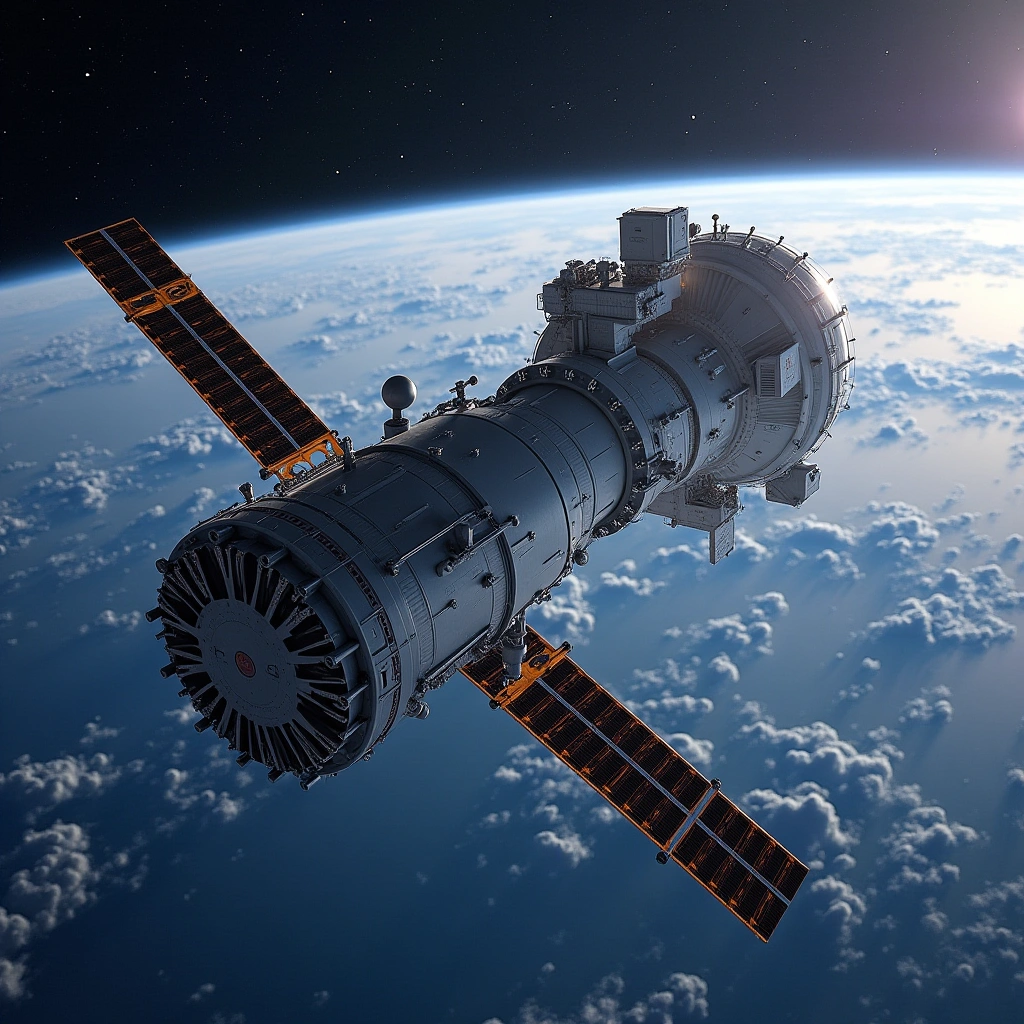
    Multiple companies are planning to develop space-based data centers, which would greatly increase the number of satellites in Earth orbit. (Image credit: ESA) … It looks like China is getting in on the race to launch data centers into space.

    So, what’s the deal with these orbital data centers? In simple terms, they’re essentially data storage facilities that orbit the Earth. You know, just like your favorite satellite dish, but instead of beaming down the latest episode of your binge-worthy show, they’re handling vast amounts of data. Think of them as the cloud, but with a little less fluff and a lot more altitude.

    China has been investing heavily in this technology, and it seems they’re currently leading the charge. Their goal? To harness the power of space to improve data processing speeds and enhance connectivity. It’s like they’re saying, “Why store our data on the ground when we can put it in space?” It’s a bold move, and honestly, I can’t help but admire the ambition.

    One of the major advantages of orbital data centers is their ability to reduce latency. For those who aren’t tech-savvy, latency is the delay before a transfer of data begins following an instruction. In layman’s terms, it’s the time it takes for your computer to respond when you click on that adorable cat video. By placing data centers in orbit, the data doesn’t have to travel as far, which means you can watch your cat do backflips in record time.

    But hold on a second—before we start throwing confetti and celebrating, let’s consider the practical implications. First off, building and maintaining a data center in space is no small feat. We’re talking about sending massive structures into orbit, which requires a lot of rocket fuel and, let’s be real, a small army of engineers with a penchant for problem-solving. It’s not like you can just pop down to the local hardware store for some supplies.

    Now, while China is making strides, other countries aren’t just sitting back and letting them take the lead. The U.S. and various European nations are also eyeing this space race, and they’re not about to let their cosmic competitors steal the show. It’s like a high-stakes game of space poker, with each player trying to outdo the other while keeping a straight face. Spoiler alert: no one’s really good at poker.

    Moreover, the implications of this technology go beyond just faster cat videos. With the rise of AI and machine learning, having data centers in orbit could revolutionize how we process and analyze information. Imagine real-time data processing for everything from weather forecasting to traffic management. It’s like having a supercomputer in the sky that can predict the future—well, sort of.

    But before we get too carried away with visions of flying data centers, there are still plenty of challenges to overcome. There’s the issue of space debris, for starters. The last thing we need is for our shiny new data center to collide with an old satellite or, heaven forbid, a rogue piece of space junk. Talk about a cosmic headache.

    In conclusion, while China may currently be ahead in the orbital data center space race, the competition is heating up, and we’re all in for an exciting ride. As we continue to explore the possibilities of data in space, one thing is for sure: the future is looking bright, and who knows? Maybe one day we’ll all have our very own space-based cloud storage. Just remember to keep those cat videos handy—you never know when you might need a good laugh from the cosmos!


    Inspired by: “China Ahead in Orbital Data Center Space Race” (r/technology)