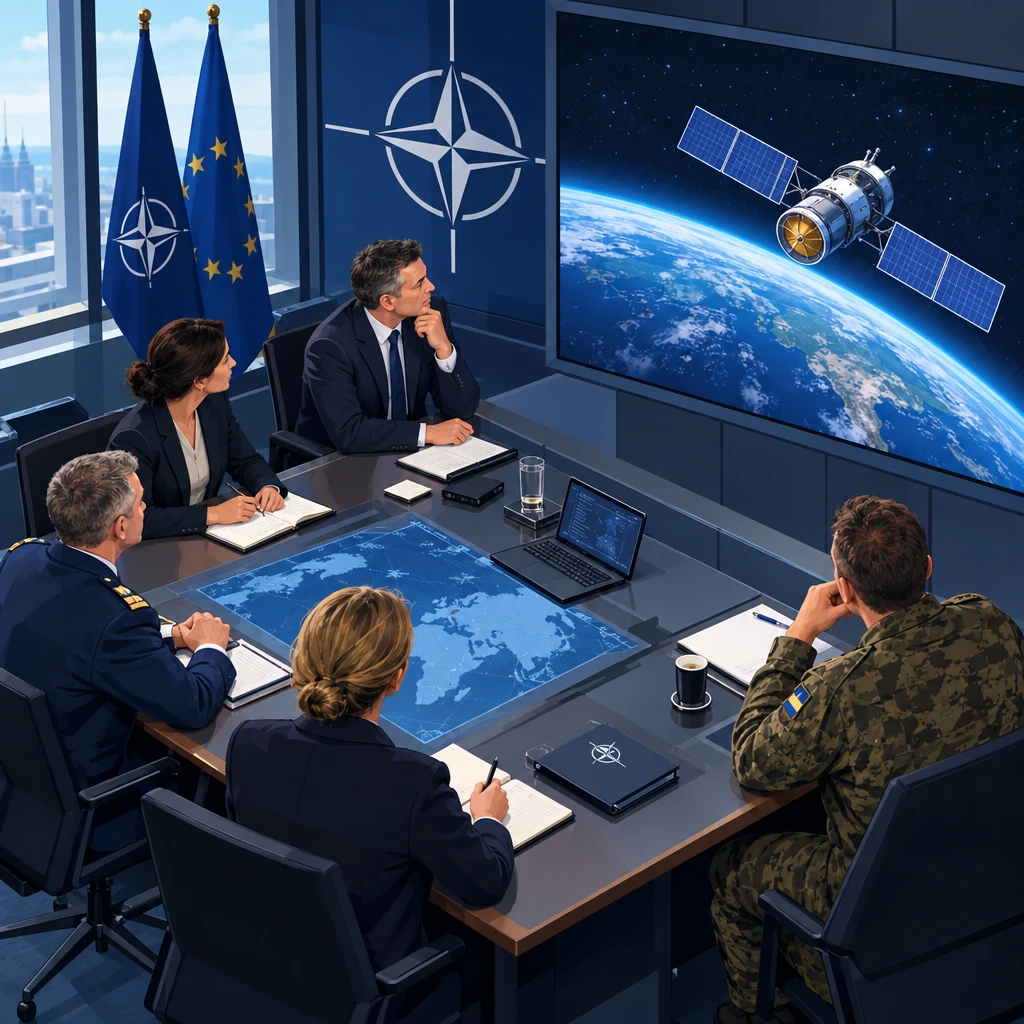
NATO members’ intelligence services have raised concerns regarding Russia’s growing ambitions to launch a satellite armed with a nuclear weapon into space this year, as reported by a…
Every so often a news story comes along that makes you put down your coffee and reread the headline twice. This is one of them. According to reports picked up by several outlets, NATO intelligence agencies believe Russia intends to deploy a satellite armed with a nuclear weapon as early as 2026. German media say the satellite, reportedly called Sputnik-S, has already been assembled and is sitting in the Moscow region. Russian officials have previously denied that they are developing any such weapon.
Let’s start with the obvious: this is a serious claim, and it is worth being careful with it. The information comes from German media reports citing intelligence assessments. Intelligence assessments are not the same thing as confirmed facts, and governments have a long and colorful history of being wrong about each other’s military programs. So the sensible reaction is not panic, and it is not a shrug. It is more like raised eyebrows followed by a request for proof.
That said, the idea itself is not new. Weapons that sit in orbit and wait for instructions have been a nightmare scenario for defense planners for decades. A satellite carrying a nuclear device would be very different from a missile that flies up and comes down in a few minutes. It could, in theory, stay in space for long periods, which raises all sorts of difficult questions about warning times, detection, and what exactly a country would be threatening when it does something like that.
This is also where the international rulebook comes in. The 1967 Outer Space Treaty, which the Soviet Union signed along with the United States and many other countries, says states shall not place nuclear weapons or any other weapons of mass destruction in orbit around the Earth. It is one of those agreements that everyone seems to respect in principle, which is exactly why a credible report like this causes such a stir. If true, it would mean a major power is quietly testing the edges of a treaty it helped write.
The name Sputnik-S carries its own dose of irony. Sputnik 1, launched in 1957, was the Soviet satellite that kicked off the space race and gave the world its first real look at what orbital technology could do. Using that famous name for a possible weapons platform is either a clever bit of symbolism or a very unfortunate coincidence, and it is hard not to imagine a few people in Brussels rolling their eyes at it.
Why would anyone want a nuclear weapon in space, anyway? Analysts often point to a few possibilities, though none of them are settled facts in this case. One idea is that such a system could be used to threaten satellites that other countries rely on for communications, navigation, and military intelligence. Another is that it could be a way to complicate the calculations of an adversary who is already tracking every missile launch. In both cases, the appeal is less about firepower and more about making the other side nervous, which, to be fair, is a time-honored strategy in global politics.
For NATO and its member states, the stakes are very practical. Modern militaries depend heavily on space. Satellites help guide aircraft, coordinate troops, track weather, and provide early warning of missile attacks. Anything that threatens those systems threatens the whole way modern forces operate. That is why even a rumored space-based nuclear capability gets treated as a serious matter rather than a sci-fi plot.
So what happens next? Realistically, the coming months will be about verification. Governments will try to confirm what the satellite is, what it is capable of, and whether it is actually heading for launch. Diplomats will likely raise the issue in forums where arms control is discussed, and Russia will almost certainly repeat its denial. Expect a lot of public statements, a few leaked assessments, and plenty of commentators who are very sure of things nobody can yet prove.
In the meantime, the takeaway is pretty simple. The report is alarming, the claim is unconfirmed, and the legal and strategic implications would be enormous if it turned out to be accurate. It is a good reminder that space, once imagined as a place for exploration and peaceful science, is now very much part of the military map. Keep an eye on this one, but maybe hold off on stocking the bunker just yet.
Inspired by: “NATO believes Russia is ready to launch nuclear-armed satellite, German media say” (r/News)