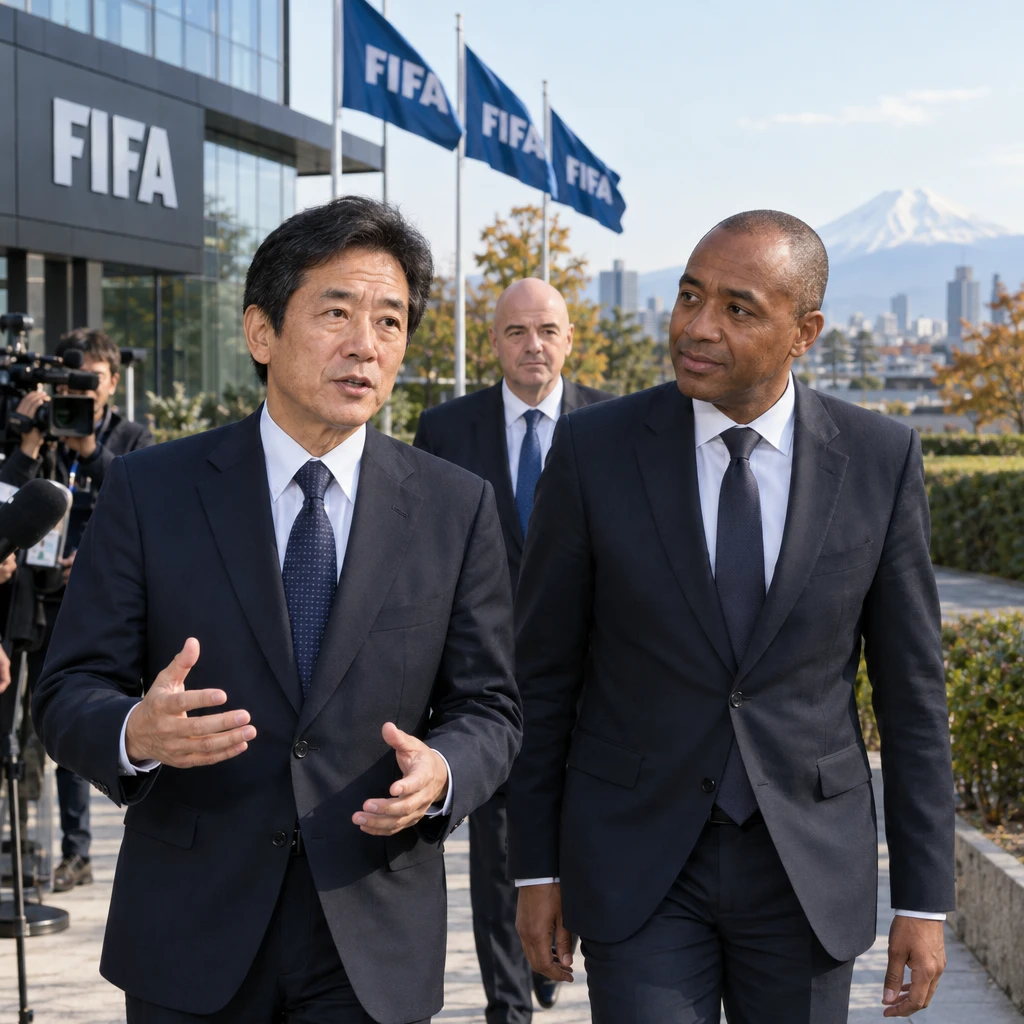
"We do share some moral or ethical positions, so he's a great person to team up with," Tashima said in comments translated from Japanese. "I'm not looking at Diallo as opposition. I just want to change FIFA." Tashima is going against the endorsement of the 47-member Asian Football Confederation, which last month in Tokyo pledged support for Infantino.
Every so often, a sports election comes along that feels less like a contest and more like a family argument where everyone has a microphone. The race for FIFA president is one of those. Gianni Infantino is seeking to keep the top job at world football’s governing body, and the vote is set for March 18. Standing in his way is a Japanese candidate named Kohzo Tashima, who has decided that losing the spotlight is not a good enough reason to walk away.
Tashima made his position clear at a news conference outside Tokyo on November 20. He is staying in the race, and he says the point is to push for change inside the organization. That is a bold line to draw in a campaign where the incumbent has plenty of institutional muscle behind him. Anyone who has watched large organizations for more than five minutes knows that asking for change from inside the building can feel a bit like shouting at a weather system.
What makes Tashima’s stance interesting is his willingness to work with another challenger. He has said he is open to collaborating with Philippe Diallo, who is also running against Infantino. According to Tashima, the two share similar ethical positions. He describes their possible partnership not as an act of opposition but as a practical way to get things done. In other words, the goal is not to make noise for its own sake but to build something that could actually shift how decisions are made.
This is a sensible approach, and it also sidesteps a classic trap in politics. When challengers split the opposition vote, the incumbent often sits back and enjoys the show. By signaling that he is ready to unite with Diallo, Tashima is trying to present a clearer alternative rather than a crowded field of people who mostly agree but cannot agree on who should lead. Whether that unity can survive the pressures of a real campaign is a question for the months ahead, but the intention is clear.
Tashima has also been described in media coverage as a quiet reformer. That label is worth paying attention to. Quiet reformers rarely dominate headlines with fiery speeches or dramatic promises. Instead, they tend to focus on process, ethics and accountability, the sort of topics that do not always fill stadiums but do shape how institutions behave over time. Tashima’s message, as reported, centers on ethical standards and the idea that partnership can drive change more effectively than simple opposition. It is a low-volume pitch in a high-volume sport, and that could either be a strength or a weakness depending on who is listening.
There is also something refreshing about a candidate who says he will keep going rather than fold under pressure. Many people expect challengers in lopsided races to quietly drop out and endorse whoever seems most likely to win. Tashima has so far chosen a different route, and that alone is enough to make his campaign worth following, even if you are not sure he can pull off an upset.
So where does this leave us? Tashima is staying in, he is open to teaming up with Diallo, and he is framing the whole effort as a push for ethical reform. The election is still a few months away, and a lot can change in that time. Still, the story so far offers a reminder that elections are not only about who wins. They are also about whether the people who lose still have something useful to say. Tashima clearly thinks he does, and he is not planning to stop saying it anytime soon.
Inspired by: “FIFA presidential challenger Tashima willing to unite with Diallo against Infantino” (r/News)