Add The New York Times as a preferred source on GoogleAgrega The New York Times como fuente preferida en Google› · The Senate on Thursday passed sweeping legislation to overhaul federal permitting rules in an effort to make it easier to build …
If you have ever waited months for a permit to do something simple, you already understand the problem the Senate is trying to fix. Now imagine that same waiting game applied to a pipeline, a transmission line, or a power plant that will serve thousands of homes. That is the territory the Senate just stepped into with a major permitting bill designed to speed up energy projects across the country.
Here is the basic idea. The bill aims to expedite the construction of energy infrastructure, including pipelines and power lines, by revising federal environmental regulations. Supporters argue that the current approval process is so slow and so tangled that projects stall for years before a single shovel hits the ground. Proponents say faster approvals should lower consumer costs and help the country build the infrastructure it needs, whether that means moving fuel, delivering electricity, or connecting new sources of power to the grid.
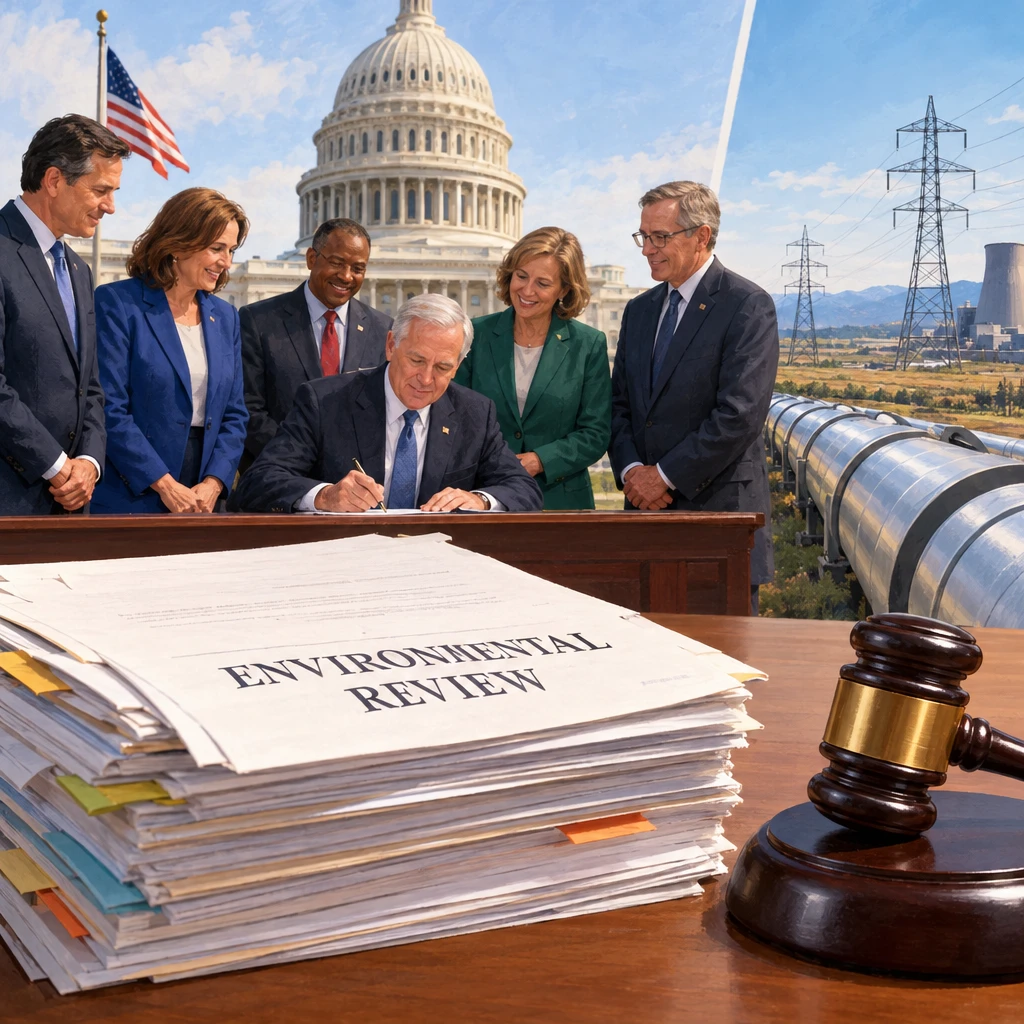
If that sounds like a bureaucratic tune-up, you are not wrong. Much of the fight centers on the National Environmental Policy Act, the 1970 law that requires federal agencies to study the environmental effects of major projects before approving them. Those reviews are meant to make sure decision-makers understand the consequences of their choices. In practice, critics of the process say the reviews can pile up into thousands of pages and drag on for years, sometimes followed by lawsuits that keep projects in limbo. Supporters of reform say that is not a recipe for better decisions, just a recipe for delay and higher costs.
The bill’s backers want to streamline those steps, set clearer deadlines, and reduce the chance that a project gets stuck in endless review. Think of it as trying to cut the red tape without removing the table entirely. Whether it succeeds depends on how the details play out, and that is where things get more complicated.
This is not a purely partisan story, which is part of what makes it interesting. The measure was bipartisan, meaning lawmakers from both parties were involved in writing or supporting it. That alone is a bit of a rarity in Washington these days, and it probably deserves a small round of applause, or at least a raised eyebrow. But the bipartisan label does not mean everyone is on board. Some Democrats raised concerns about environmental impacts, arguing that speeding up reviews could weaken protections for air, water, and communities that live near major projects. Those objections are not just political theater. They reflect a real tension between getting things built quickly and making sure they are built responsibly.
That tension is why the bill’s future is uncertain. Passing the Senate is a significant step, but it is not the finish line. The measure now faces an uncertain path in the House of Representatives, where its prospects remain unclear. Anyone who follows legislation knows that a bill can clear one chamber and then quietly disappear in the other, buried under competing priorities, disagreements over details, or simple scheduling problems. So while the Senate vote is a headline, the real test is still ahead.
It is also worth noting that the story was covered widely. The New York Times, Bloomberg, and The Wall Street Journal all reported on the Senate’s action, and their headlines emphasized the same core themes: speeding up energy projects and lowering consumer costs. When multiple major outlets frame a story the same way, it usually means the central facts are straightforward, even if the policy debate underneath is anything but.
So where does this leave the average person? If you are a ratepayer, the promise is that faster infrastructure could mean lower costs over time, though any savings will depend on how projects are built, financed, and regulated. If you live near a proposed pipeline or power line, you may care less about the talking points and more about whether your concerns will still get a fair hearing. If you are simply someone who likes the lights to stay on and the gas stations to stay stocked, you have a stake in whether the country can build what it needs without spending a decade on paperwork.
The Senate has made its move. Now the House gets to decide whether this bill becomes law or joins the long list of promising proposals that never quite make it across the finish line. Either way, permitting reform is not going away. Everyone agrees the system is slow. The harder question is how to make it faster without making it careless, and that is a debate that is only just getting started.
Inspired by: “Senate Passes Major Permitting Bill to Speed Up Energy Projects” (r/Science)