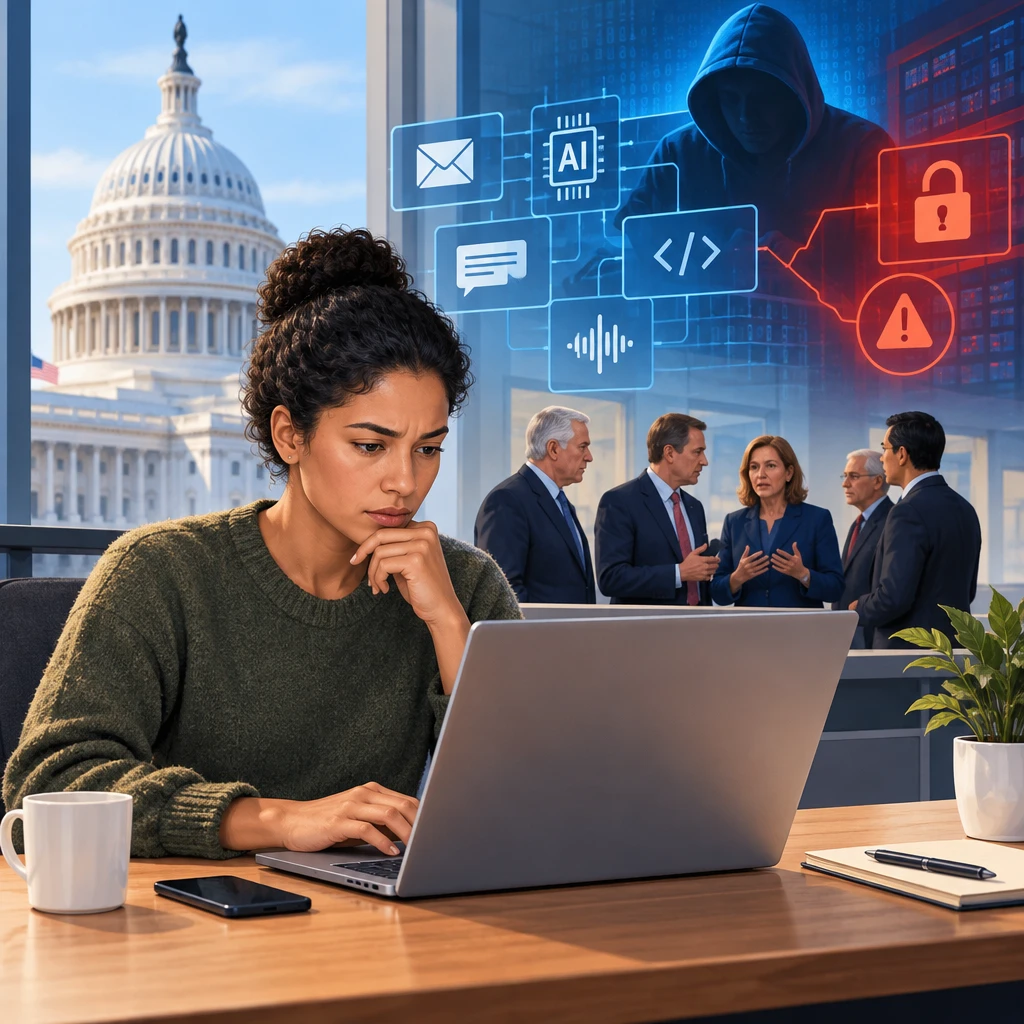
" AI is rapidly increasing the ability to discover and exploit weaknesses in software and our defenses are not keeping pace ," the senators wrote to Clayton, also the chair of the White House Super Intelligence Task Force.
Every few months, someone in Washington sounds the alarm about cybersecurity, and then the news cycle moves on before anything changes. The latest headline in that pattern is that a group of senators has warned that U.S. cyber defenses are ‘not keeping pace’ with the threats posed by artificial intelligence, and they want the Trump administration to act. I couldn’t pull the full text of the story, so I won’t pretend to know every detail of what lawmakers asked for. But the core concern is one that security experts have been raising for a while, and it’s worth unpacking.
Why AI changes the security math
For most of the internet’s history, attacking a system took skill, time, and patience. A criminal who wanted to write convincing phishing emails had to learn the language, research the target, and churn out messages one at a time. Finding a software flaw required specialized expertise. Those barriers were never huge, but they did limit how many people could cause serious trouble.
Generative AI lowers those barriers. Tools that can write fluent text, generate code, summarize technical documents, and mimic a person’s voice or writing style make it easier for less sophisticated attackers to produce polished scams at scale. Defenders benefit from the same tools, of course, but the playing field isn’t always even. Attackers only need to succeed once. Defenders have to succeed every single time, across thousands of systems, usually with tighter budgets and older equipment.
What ‘not keeping pace’ usually means
When officials say defenses are lagging, they’re often pointing to a handful of recurring problems rather than one dramatic failure. Government agencies run a patchwork of legacy systems that were built long before anyone worried about AI-assisted intrusions. Staffing shortages in technical fields are well documented. Procurement processes move slowly, while threats move quickly. And information sharing between the government and private companies, which running critical infrastructure like power grids, water systems, hospitals, and telecom networks depends on, has long been uneven.
None of this is new. What AI does is compress the timeline. A vulnerability that once took months to weaponize might now take days. A phishing campaign that once needed a team might be launched by one person with a laptop. When the window for response shrinks, slow bureaucracy becomes a much bigger liability.
The bipartisan problem
It’s worth noting that cybersecurity has been one of the rare issues that draws concern from both parties. Lawmakers from across the spectrum have pushed for stronger federal standards, better coordination between agencies, and more investment in defending critical infrastructure. The disagreements tend to be about how much the government should mandate, how much to rely on the private sector, and how to pay for it all. Those debates are real, but they don’t cancel out the basic agreement that the problem exists.
So when senators ask an administration to act, the request is less partisan than it might sound. It’s also, admittedly, the kind of request that gets easier to make than to fulfill. Writing a letter costs nothing. Hiring qualified security engineers, modernizing aging systems, and building durable rules that survive the next election cycle is considerably harder.
What ordinary people can do
You don’t need a security clearance to reduce your own exposure. Turn on multifactor authentication wherever it’s offered, especially for email and banking. Be skeptical of urgent messages asking you to log in, pay, or click something, even if they look and sound perfectly legitimate. AI has made fake messages much more convincing, so the old advice to check for typos is no longer enough. Verify requests through a separate channel, such as calling a known number. Keep software updated, since unpatched devices remain one of the easiest ways in.
The bigger picture
The senators’ warning is a reminder that technology keeps advancing whether or not institutions are ready for it. Governments, companies, and individuals all have a part to play. Public officials can fund and prioritize defenses, set clear standards, and make sure agencies talk to each other. Companies can build security in from the start rather than bolting it on afterward. And the rest of us can stop treating cybersecurity as somebody else’s problem.
Whether this particular call to action leads to real change will depend on follow-through, which is the part that rarely makes headlines. Until then, it’s probably wise to assume the bad guys are already experimenting with the same tools everyone else is. Hope for the best, but maybe enable two-factor authentication first.
Inspired by: “SENATORS WARN: U.S. Cyber Defenses ‘Not Keeping Pace’ With AI Threats, Demand Trump Admin Action” (r/RSS)