SpaceX holds numerous government contracts and works with defense and intelligence agencies, making its technology choices subject to heightened security scrutiny. Using Chinese -developed AI models in aerospace operations raises concerns about technological sovereignty and potential vulnerabilities.
If you’ve spent any time around AI developers lately, you know the drill: every few weeks, someone releases a new model, the benchmarks look impressive, and everyone scrambles to see whether it can write a working function without a dozen bugs. So when a story lands saying a major AI coding platform is considering dropping certain models, it’s worth paying attention, even if the headline sounds a little dry.
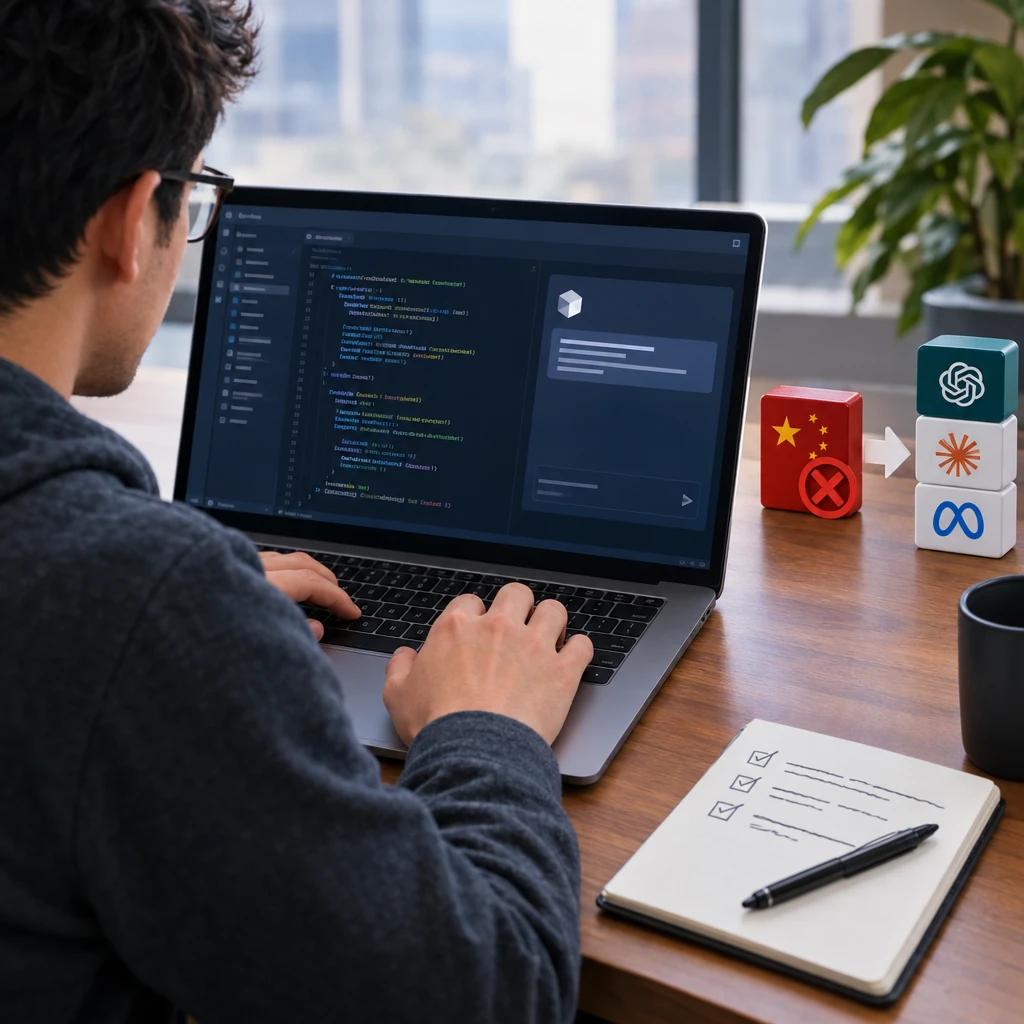
Here’s what we know. According to a House report reviewed by CNBC, Cursor, the AI coding platform owned by SpaceX, is considering phasing out Chinese-developed open-weight AI models. The reason given is geopolitical risk. Other outlets, including Crypto Briefing and Seeking Alpha, picked up the same story, which tells you it’s landed with people who follow both tech and markets.
Let’s unpack a few pieces of that, because the details matter more than the headline.
What are open-weight models, anyway?
Open-weight models are AI models whose trained parameters are publicly released, so developers can download them, run them on their own hardware, and build on top of them. That’s a big deal for companies that want more control over their tools and don’t want every line of code sent to a distant server. Plenty of developers love this setup. It’s flexible, it can be cheaper, and it lets teams customize things.
The catch is that ‘open’ doesn’t automatically mean ‘neutral.’ A model can be freely downloadable and still be built by a company or research group operating under a legal and political system that some governments view with suspicion. That’s the tension at the heart of this story.
Why would geopolitics come into a coding tool?
Fair question. A coding assistant seems like a pretty harmless thing: it suggests code, helps debug, maybe writes a unit test or two. But these tools often see sensitive material, including proprietary source code, internal architecture, and sometimes credentials that developers accidentally paste in. When lawmakers start asking questions, the worry is less about whether a model writes a nice for-loop and more about who built it, where it came from, and what risks might be hiding in the supply chain.
That’s why ‘geopolitical risk’ is the phrase doing the heavy lifting here. It covers concerns about national security, government access to technology, export rules, and the general question of whether a company wants to depend on tools from a country it may have difficult relations with. Reasonable people can disagree about how much weight each of those deserves, but it’s not a made-up concern.
What does ‘phasing out’ actually mean?
Note the wording: Cursor is considering phasing out these models, not announcing an immediate ban. That’s a meaningful difference. Phasing out usually means a gradual shift, with a company evaluating alternatives, testing replacements, and deciding how to handle users who rely on particular options. It’s the corporate equivalent of saying ‘we’re looking at our options’ while quietly updating the spreadsheet.
It’s also worth remembering that the report is what’s being discussed here. The reporting describes Cursor’s consideration as shared with lawmakers. Anything beyond that is still an open question, and it’s smart to wait for official confirmation before assuming what the final decision will look like.
Why this story is bigger than one company
Even if Cursor’s decision ends up being narrow, the broader pattern is hard to ignore. AI tools are now part of the software development pipeline, and governments are increasingly interested in where those tools come from. Companies that build on top of foreign-developed models may need to think about compliance, customer trust, and procurement rules in ways they never had to before.
For developers, the practical takeaway is simple: know what model powers the tool you’re using. Ask where it was built, what data policies apply, and whether your organization has any restrictions. It’s the kind of homework nobody enjoys, but it’s getting harder to skip.
So, will Cursor actually phase out Chinese AI models? The honest answer is that the story says it’s considering it, and that’s where the reporting currently stands. Still, it’s a reminder that in the AI world, the most important question isn’t always ‘how smart is the model?’ Sometimes it’s ‘who gets to decide what happens to the code you feed it?’ And that’s a question worth asking before your next pull request.
Inspired by: “SpaceX’s subsidiary Cursor tells lawmakers it’s considering phasing out Chinese AI models” (r/World)