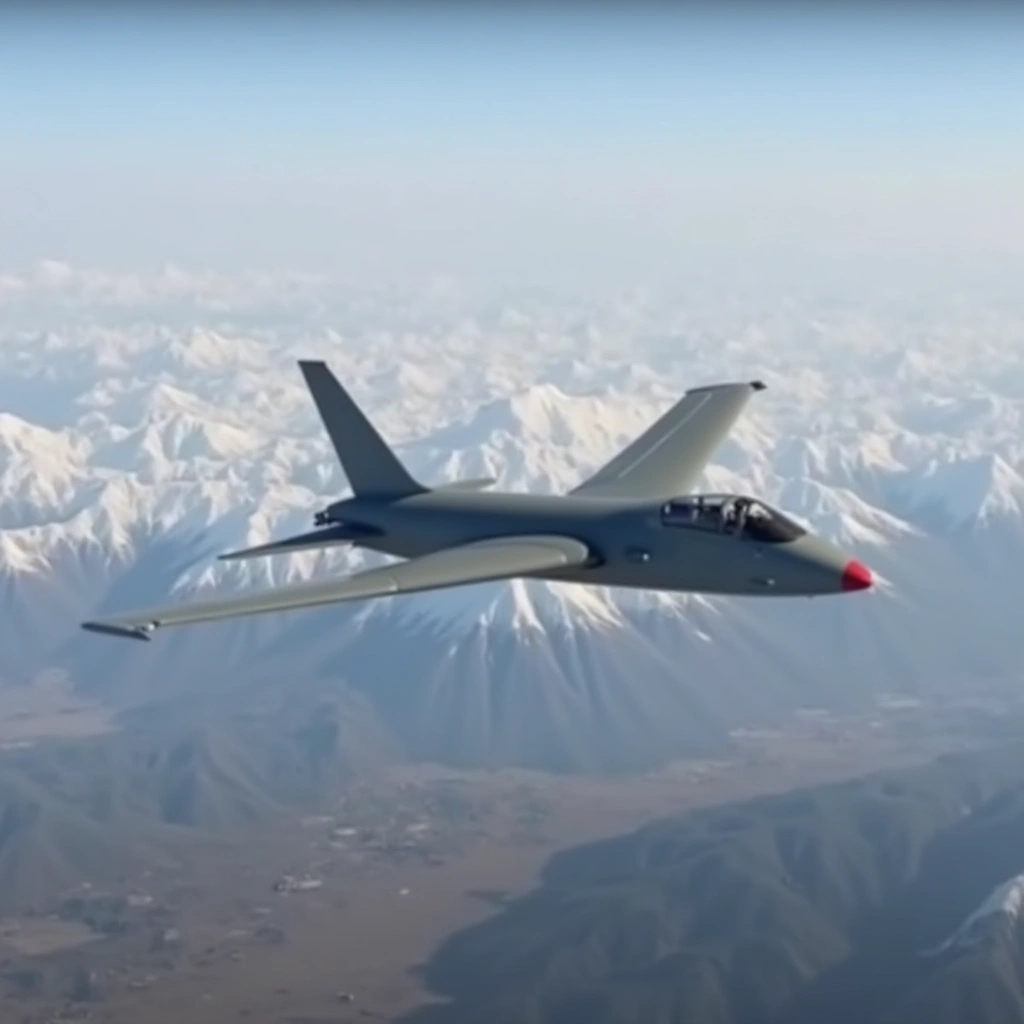
Japan scrambled fighter jets after two suspected Russian aircraft violated its airspace near Okinoshima island. The Japanese government lodged a ‘ very stern protest ‘ with Moscow over the incident, calling it unacceptable and a threat to security.
There are few things less welcome at 4:00 in the morning than an uninvited guest. A cat knocking a glass off the counter, maybe. A smoke detector chirping about its battery, definitely. But for Japan’s Air Self-Defense Force, early Tuesday brought something considerably more serious: two aircraft believed to be Russian entering Japanese airspace off the coast of Fukuoka prefecture.
Tokyo was not amused. Japan has lodged a formal protest with Moscow, and according to the Times of India’s coverage, it was described as a “very stern protest.” In the world of diplomacy, where everything is phrased with the delicacy of someone defusing a bomb with oven mitts on, “very stern” is the equivalent of slamming a door hard enough to rattle the picture frames.
What Actually Happened
Let’s stick to what’s been reported, because international incidents are not the place for creative writing.
– Early Tuesday, around 4:00 AM local time.
– Off the coast of Fukuoka prefecture, in southwestern Japan.
– Two aircraft believed to be Russian.
– The Air Self-Defense Force scrambled fighter jets and issued warnings.
– Japan protested to Moscow, calling the incident a violation of its sovereignty and urging Russia to make sure it doesn’t happen again.
The story was picked up widely, with outlets including Salem Radio Network News, The Straits Times, The Hindu, the Times of India and The Independent all reporting on it. When that many newsrooms are running essentially the same headline, you can be fairly confident something happened in the sky that somebody in Tokyo really didn’t like.
Note the Wording: “Believed to Be”
You may notice the careful phrasing in many of the headlines: aircraft believed to be Russian. That’s not hedging for fun. Identifying aircraft in real time, in the dark, at 4 AM, is the kind of job where precision matters, and official statements tend to reflect what can be stated with confidence. Some outlets were more direct, simply calling them Russian aircraft, but the original framing reflects the cautious language typical of these situations.
It’s a bit like a neighbor saying, “I believe that’s your dog digging up my garden.” Everyone knows whose dog it is. But you leave a little room for the dog to have a lawyer.
What Does “Scrambling Jets” Actually Mean?
If you’ve ever wondered what it means when a country “scrambles” fighter jets, it is exactly as urgent as it sounds, minus the eggs. When an unidentified or unauthorized aircraft approaches or enters a nation’s airspace, the air force launches fighters to intercept, identify, and, if needed, warn the aircraft off.
In this case, Japan’s Air Self-Defense Force did precisely that: jets went up, and warnings were issued. This is standard procedure, and it’s designed to make two things very clear: we see you, and you shouldn’t be here.
It’s worth appreciating the logistics here. Somewhere in Japan, pilots and ground crews were ready to respond at an hour when most of us are deep in a dream about showing up to an exam we forgot to study for. Whatever you think of geopolitics, that’s a level of readiness that deserves a nod.
Why Airspace Is a Big Deal
To the casual observer, a plane drifting into the wrong patch of sky might sound like a minor navigational oops, the aviation version of taking the wrong exit on the highway. But national airspace is treated as sovereign territory. Flying into it without permission is legally comparable to walking across someone’s border without stopping at the checkpoint.
That’s why Japan framed the incident explicitly as a violation of its sovereignty. This isn’t just about one early-morning flight; it’s about the principle that a country gets to decide who enters its territory, whether by land, sea, or air. Let one incursion slide without comment, and you’ve arguably signaled that the line is negotiable. Diplomats really, really don’t like lines being negotiable.
The Protest: Diplomacy’s Strongly Worded Letter
Lodging a formal protest is one of the main tools a government has for registering displeasure without escalating to anything more dramatic. It puts the objection on the record, communicates the seriousness of the issue, and makes clear expectations for the future.
In this case, Japan didn’t just complain; it urged Russia to prevent similar occurrences. That’s the diplomatic equivalent of “Please don’t make me have this conversation again.”
And yes, a cynic might point out that a strongly worded protest is, at its core, a very official strongly worded letter. But in international relations, the record matters. Formal protests establish a paper trail, reinforce legal positions, and signal to both the other party and the wider world that a country takes its borders seriously. It’s less exciting than an action movie, but considerably better for everyone involved.
Why Fukuoka Stands Out
Fukuoka prefecture sits on the northern coast of Kyushu, in Japan’s southwest. Many people, when they think about Russian aircraft near Japan, tend to picture the country’s northern reaches, simply because of geography. So an incident off Fukuoka is the sort of detail that makes people raise an eyebrow and pull up a map.
The reports don’t explain why the aircraft were in that particular area, and it would be irresponsible to guess. What’s clear is that Japan noticed, responded, and complained loudly, which is pretty much the entire playbook.
What We Don’t Know (Yet)
In the interest of not making things up, here’s what the available reporting doesn’t settle:
– The specific type of aircraft involved.
– How long the aircraft were in Japanese airspace.
– The purpose of the flight.
– How, or whether, Moscow has responded to the protest.
These are exactly the kinds of details that tend to come out later, or sometimes never at all. If you’re the sort of person who likes tidy endings, international airspace incidents may not be your genre.
The Bigger Picture
Incidents like this are a reminder that the sky is not some vast, ungoverned free-for-all. It’s carefully divided, closely watched, and defended around the clock, including at 4 AM on a Tuesday. Each response, from the scrambled jets to the formal protest, is part of a well-rehearsed system meant to handle these situations firmly while avoiding things spiraling out of control.
Japan’s message here is about as clear as diplomacy gets: this was a violation of sovereignty, it was unacceptable, and it shouldn’t happen again. Whether that message lands is up to Moscow.
The Takeaway
Two aircraft, believed to be Russian, entered Japanese airspace off Fukuoka in the early hours of Tuesday. Japan scrambled fighters, issued warnings, and followed up with a very stern protest, urging Russia to make sure it doesn’t become a habit.
It’s not the flashiest headline of the week, but it’s the kind of story that quietly shapes how neighbors deal with each other. And if there’s a lesson for the rest of us, it’s this: if you’re going to show up somewhere uninvited at 4 AM, expect someone to be awake, and expect them to be annoyed.
Inspired by: “Tokyo lodges protest after aircraft believed to be Russian violate Japan airspace” (r/News)