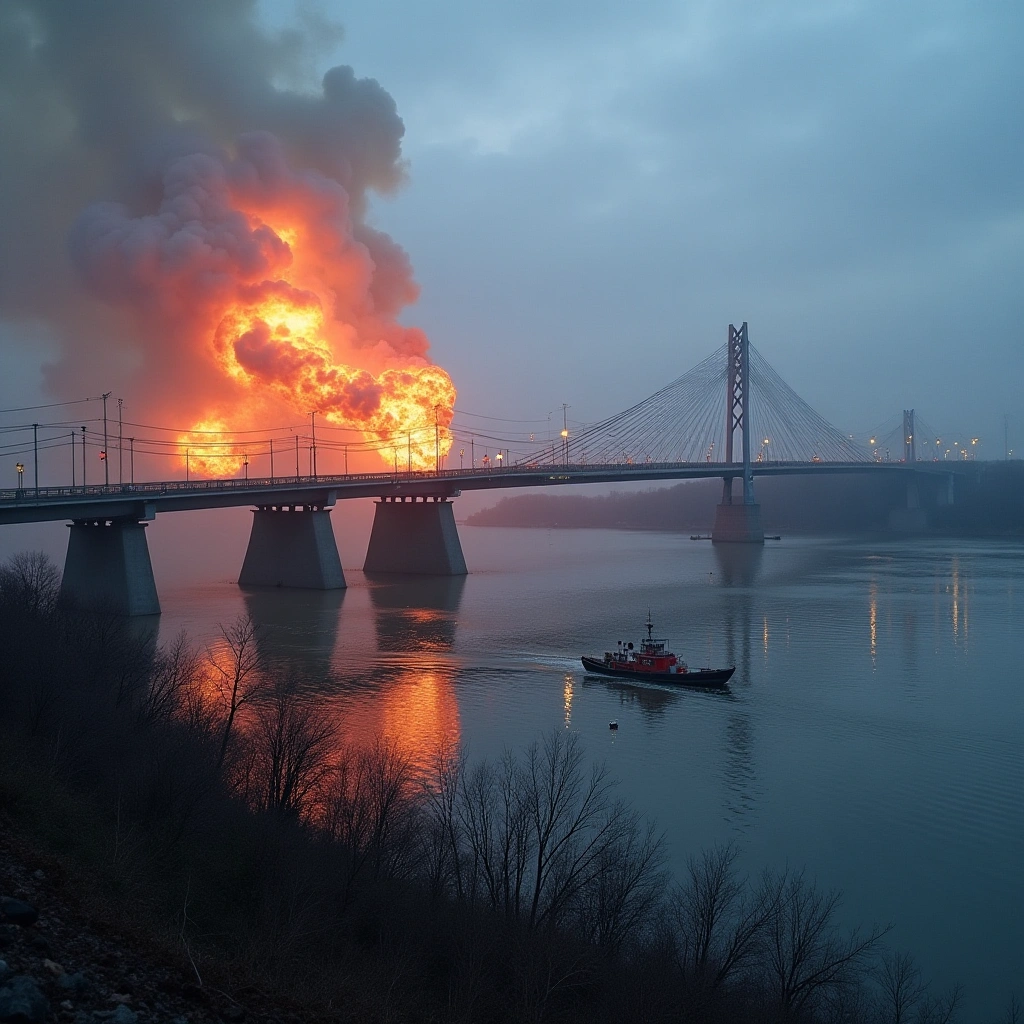
The missiles hit Kyiv's Northern and Southern bridges spanning the Dnipro River, Klitschko said, adding that water and power supplies in the city had been disrupted . Meanwhile, Ukraine struck the landmark Kerch Bridge connecting Russia to occupied …
Some news stories need a lot of unpacking. This one is grimly simple: Russian forces struck two bridges over the Dnipro River in Kyiv late Monday, and parts of the city lost water and power. That is according to Kyiv’s mayor, Vitali Klitschko, and it has been reported by The Straits Times, France 24, Deutsche Welle, BBC News and The Independent.
This is a serious event, so any light tone here is aimed at the absurdity of the situation, not at the people living through it. Here’s what happened, why it matters, and why the timing caught everyone’s attention.
The Short Version
– The North and South bridges over the Dnipro River in Kyiv.
– Late Monday.
– Mayor Vitali Klitschko.
– Disruptions to water and power supplies in parts of the city.
– It follows similar attacks earlier this month and in October, and it came the same day Ukraine attacked the Crimean Bridge.
That’s the core of it. Everything else is context, and there’s a fair amount of it.
Why Bridges Matter So Much in Kyiv
The Dnipro River runs right through Kyiv and splits the city into two banks. For anyone who has never lived in a city cut in half by a large river, here is the arrangement: on one side you have part of your city, on the other side you have the rest of it, and bridges are the only practical way to join the two.
Bridges carry people, cars and goods. In many cities they also carry the less glamorous but very important things nobody thinks about until they stop working, like utility lines. So when a bridge gets hit, the damage often goes well beyond traffic.
That helps explain why strikes on the North and South bridges could be followed by water and power disruptions. A city’s infrastructure is connected, and damage in one place tends to spread to others.
Water and Power: The Two Things You Really Notice Missing
People can put up with a lot. Bad Wi-Fi, a broken elevator, a neighbor who has apparently taken up drumming at midnight. Losing water and electricity is a different level of trouble.
Without power, everything from cooking to charging your phone to keeping the lights on gets harder. Without water, so do drinking, washing and flushing a toilet. Lose both at once and an ordinary evening turns into a survival exercise.
The reports don’t give a full picture of how widespread or how long the disruptions were, so it’s best not to guess. What is clear is that parts of the city were affected, and residents had to deal with the fallout overnight.
This Wasn’t a One-Off
If this feels familiar, that’s because it is. According to the reporting, the strike follows a series of similar attacks earlier this month and in October.
That pattern matters. One strike can be read as an isolated event. Repeated strikes on similar targets suggest a sustained focus on the infrastructure that keeps a city running. Every hit means more repair work, more strain on emergency services, and more uncertainty for people who would like the tap to keep working.
The word “series” is doing a lot of heavy lifting here, and none of it is good news for Kyiv residents.
The Crimean Bridge Connection
The timing is the detail most outlets highlighted. The strikes on Kyiv’s bridges came after Ukraine launched an attack on the Crimean Bridge earlier the same day.
The Crimean Bridge links Russia to the Crimean peninsula. It is one of the most symbolically and strategically significant structures in the conflict, and it has been a target before.
The sources set out the sequence plainly: Ukraine attacked the Crimean Bridge, and later that day Russian strikes hit two bridges in Kyiv. Readers can draw their own conclusions about whether one led to the other. Based on the available information, I’ll stick to the order of events rather than claim to know what was going on in anyone’s war room.
Still, it’s hard to miss the bleak symmetry. A war fought partly over bridges, on a day when bridges on both sides were the targets.
How Different Outlets Framed It
It’s worth looking at how the same story came across in different headlines:
– “Russian strikes hit two bridges in Kyiv, cause water, power cuts, mayor says”
– “Russian strikes hit two key bridges in Kyiv, disrupting water and power supplies”
– “Ukraine: Russian strikes hit bridges in Kyiv, mayor says”
– “Two major Kyiv bridges hit in Russian attack, mayor says”
– “Ukraine-Russia war latest: Power cuts in Kyiv as vital bridges struck in massive Russian ballistic missile attack”
They mostly agree, with small differences in emphasis. France 24 calls the bridges “key,” the BBC calls them “major,” and The Independent goes with “vital” and describes a “massive Russian ballistic missile attack.” Several attribute the information to the mayor, which is standard practice when an official is the main source on the ground.
The common thread is consistent across all of them: two bridges, Kyiv, utility disruptions, and Russian strikes as the cause.
Klitschko’s Role
Vitali Klitschko has been mayor of Kyiv for years and is often the first official voice reporting damage to the city. Before politics, he was a world heavyweight boxing champion, which makes him one of the few mayors whose old job involved taking hits and getting back up. It’s an unfortunately fitting background for running a city under repeated attack.
In this case, he reported the hits on the North and South bridges, which is why so many outlets attribute the story to him.
What We Don’t Know Yet
It’s worth being clear about the gaps, because breaking news about wartime damage tends to change as more information comes in. Based on these reports, we don’t have firm details on:
– How badly each bridge was damaged.
– How many residents lost water or power, and for how long.
– How quickly services will be restored.
– Whether there were casualties linked to these specific strikes.
These are the questions that will matter most to people in Kyiv, and they will probably be answered in follow-up reporting. Until then, filling the gaps with speculation doesn’t help anyone.
The Bigger Picture
Zooming out, this story fits a familiar and grim theme: infrastructure has become a central target in this war. Bridges, power systems and water supplies are not just structures. They are what make daily life possible for millions of people.
When they are hit, the result isn’t only a damaged structure. It’s families without running water, homes without electricity, and a city forced to repair the same systems again and again. Kyiv has been through this repeatedly, and this latest round shows that the pressure on its infrastructure hasn’t eased.
Final Thoughts
The facts are straightforward: Russian strikes hit the North and South bridges over the Dnipro in Kyiv late Monday, causing water and power disruptions, according to the mayor. It follows earlier attacks this month and in October, and it came hours after Ukraine attacked the Crimean Bridge.
The human side is easy to lose in a list of facts. A bridge is a convenient way to cross a river until it becomes a line on a target map. Water and electricity are taken for granted until one evening the tap and the lights both go quiet.
We’ll be watching for updates on repairs, service restoration and the wider response. For now, it’s another reminder that in this war even the most ordinary parts of a city are at risk.
Inspired by: “Russian strikes hit two bridges in Kyiv, cause water, power cuts, mayor says” (r/News)