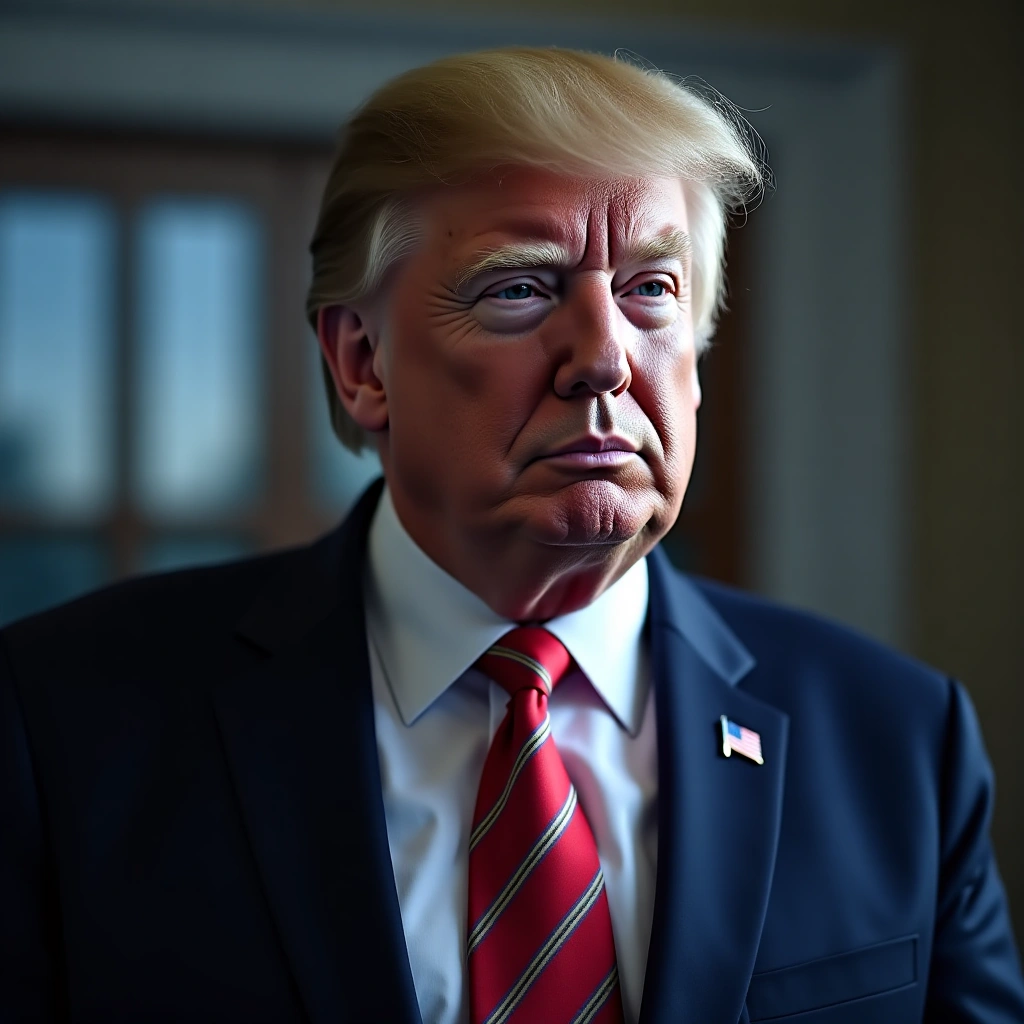
US president Donald Trump on Thursday opposed international efforts to regulate or restrict the development of superintelligence (SI), saying Washington would not allow measures that could stifle the technology .
Every few months, someone in a position of power says something about artificial intelligence that makes the rest of us wonder whether anyone in the room has actually used a chatbot. This time the stage was the APEC summit in Shenzhen, China, and the speaker was President Donald Trump, who used the occasion to say the United States would not sign on to global rules that could slow down AI development.
The headline that caught the most attention came from the Times of India: “‘US invented superintelligence’: Trump flags AI dangers, rejects global regulation.” Anadolu Ajansi framed it slightly differently, reporting that the US opposes what Trump called “globalist regulation” of AI. Science Independent Journal Review ran its own piece under the title “Trump Opposes Global AI Regulation at APEC.” Three outlets, three headlines, one basic message: Washington is not interested in a worldwide rulebook for AI, at least not right now.
Trump’s remarks referred to AI as “superintelligence,” a term that gets thrown around a lot in tech circles and often means different things depending on who is using it. Usually it describes AI systems that would surpass human abilities across most areas of thinking. Whether that is a near-term reality or a distant hypothetical is a matter of heated debate, and the summit speech was not the place to settle it. What Trump did make clear was his view that the United States is a leader in this field and should remain one.
That leadership claim was central to his argument. According to the reports, he said the US would not allow measures that could stifle innovation and growth in the technology sector. For a government that has spent years positioning itself as the home of major AI companies, research labs, and venture funding, this is a familiar line. The logic goes something like this: heavy regulation written by committees in multiple countries could slow American companies down while rivals move ahead. Supporters of this view see regulation as a brake on progress. Critics see it as a seatbelt that nobody wants to buckle until after the crash.
What made the speech more interesting is that Trump did not dismiss the risks entirely. Reports indicate he acknowledged that AI carries potential dangers. That is a more nuanced position than pure techno-optimism, and it reflects a tension that policymakers around the world are wrestling with. Nobody serious argues that powerful AI systems come with zero downsides. The disagreement is over who should set the guardrails, how strict they should be, and whether international coordination helps or simply hands advantages to whoever refuses to participate.
This is where the “globalist” label comes in. The term signals skepticism toward multinational agreements and institutions that may seek to set common standards across borders. Opponents of such arrangements argue that countries should retain control over their own technology policy, especially when that technology is considered strategically important. Supporters argue that AI does not respect national borders, so a patchwork of conflicting rules could be messy for everyone, and some baseline agreement on safety might protect the entire world.
The summit setting added another layer. APEC brings together economies from across the Asia-Pacific region, and China was the host. That means a US leader talking about AI leadership and rejecting global governance was doing so in a room full of countries with their own ambitions in the same field. It is hard to imagine a more competitive backdrop for a conversation about shared rules, which may be exactly why shared rules are so hard to create.
So where does this leave everyone else? For businesses, the message is that the American approach is likely to remain focused on speed and innovation rather than sweeping international commitments. For researchers and safety advocates, it is a reminder that talk of dangers has to be backed up by concrete mechanisms, not just acknowledgments at podium events. For ordinary people, it is a slightly unsettling situation in which the most powerful technology of the moment is being shaped by governments and companies who agree it is risky but disagree about what to do about it.
As with most high-profile political statements, the real story will be what happens next. Speeches are easy. Policies, enforcement, and international negotiations are considerably harder. For now, the takeaway from Shenzhen is clear enough: the United States believes it is ahead in the AI race, it does not want to be tied down by global rules, and it is willing to admit the technology could be dangerous as long as that admission does not come with a permission slip.
Inspired by: “‘US invented superintelligence’: Trump flags AI dangers, rejects global regulation” (r/Science)