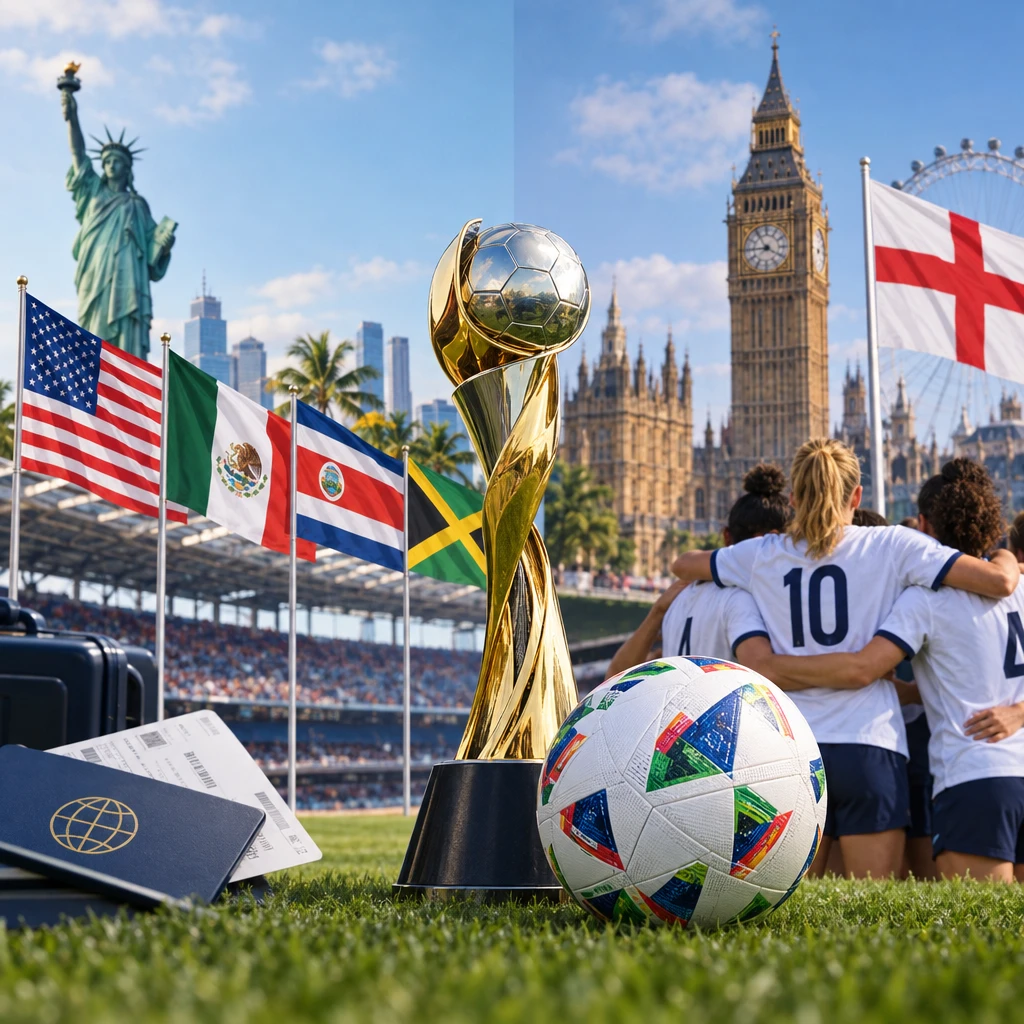
FIFA on Monday confirmed the U.S. will lead a four-nation, regional co-hosting of the 2031 Women’s World Cup — with Mexico, Costa Rica and Jamaica — and a UK project led by England was ratified for the 2035 edition .
If you were hoping for a quiet news week, FIFA has other plans for you. The sport’s governing body has chosen a United States-led bid to host the 2031 Women’s World Cup, and it has also settled on an England project for the 2035 edition. Between those two decisions, the women’s game has its next two tournaments mapped out, and the plans are ambitious enough to make you wonder whether the organizers have been saving their best ideas for this moment.
Let’s start with 2031. The tournament will be jointly held by the United States, Mexico, Costa Rica, and Jamaica. That’s four countries sharing one World Cup, which is a lot of airports, hotel bookings, and travel itineraries for fans and teams to juggle. Still, joint hosting has become more common in recent years, and it has a clear logic. Spreading matches across several nations can share costs, widen the range of stadiums and cities involved, and give more fans a chance to see games in person without needing to cross an ocean. Whether it works smoothly will depend on the planning, but on paper it’s a bold and interesting setup.
Then there’s 2035. England will host that edition, and it’s a notable milestone. It will mark the first time the country has hosted a World Cup since 1966, when the men’s tournament was held there. That gap is a long time, and it gives the England bid a bit of symbolic weight. Hosting a major tournament is a chance to show what the country can deliver, and for the women’s game in particular, it’s a chance to continue building on the momentum that has grown steadily in English football over the past several years.
Both tournaments will feature 48 teams and 104 games. If that number sounds familiar, it’s because it matches the format of the men’s World Cup. Expanding the field to 48 teams means more nations get the chance to compete on the biggest stage, and more matches mean more opportunities for players who might otherwise never get that kind of exposure. Anyone who has followed the sport knows how much a larger tournament can change the competitive picture, giving emerging teams room to surprise people and giving established powers a bigger test. Aligning the women’s format with the men’s also sends a clear message about how seriously the sport wants to treat both events.
Of course, no major announcement is complete without a little friction. Big tournaments come with big expectations, and organizers now have to deliver on promises about stadiums, travel, fan access, and player welfare across two very different countries and continents. Hosting a World Cup is never simple, and hosting one across multiple borders adds layers of coordination that would make even the most patient event planner sweat. Still, the decisions show a clear direction: the women’s World Cup is being planned years in advance, with real scale and real ambition.
In the end, the news is a reminder that the women’s game is no longer treated as an afterthought. Four years of planning for 2031 and nine for 2035 is a long runway, and it signals confidence that the tournament will keep growing. Fans may need to start saving for plane tickets now, but that seems like a fair price for watching the sport’s next chapters unfold.
Inspired by: “FIFA picks US-led bid as 2031 Women’s World Cup host and UK project for 2035 edition” (r/News)