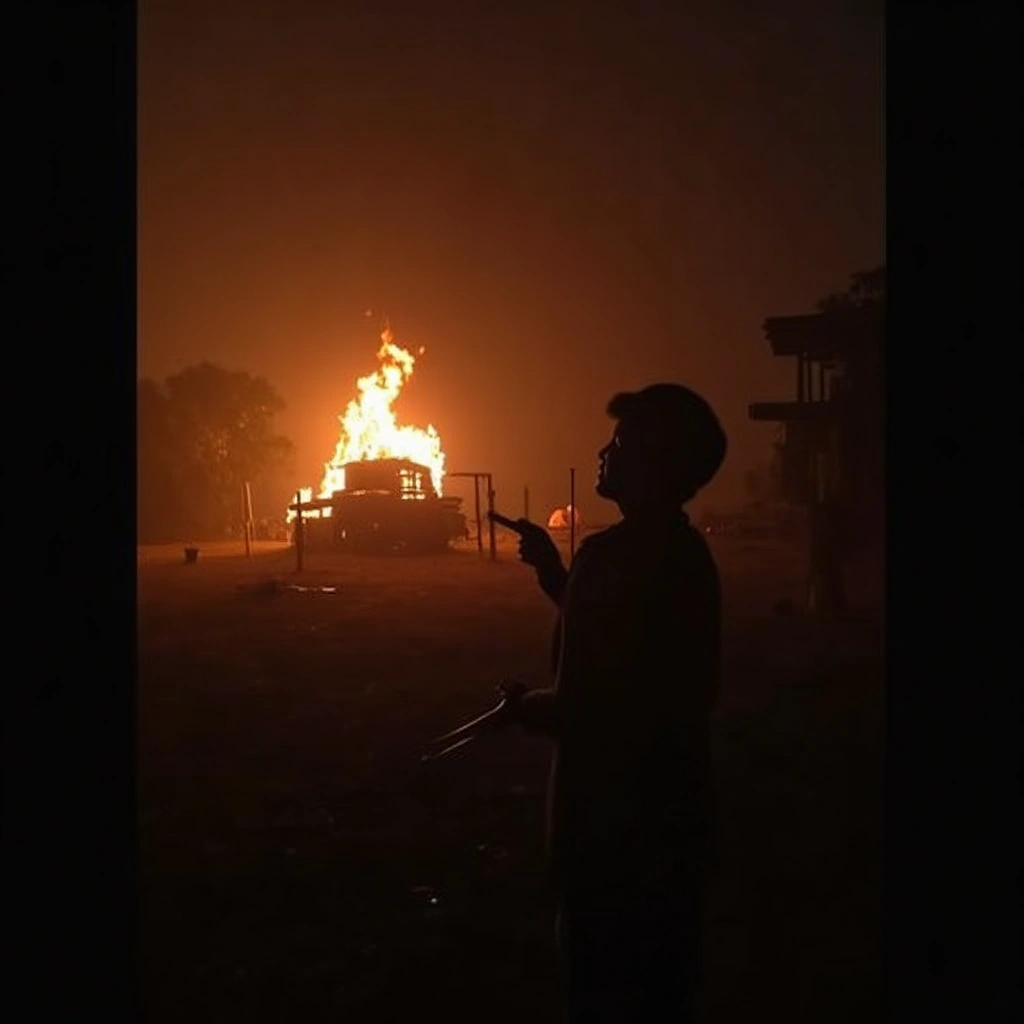
Dhaka: Crude bomb explosions rocked Bangladesh's capital before dawn, while former interim government chief Muhammad Yunus's ancestral home was torched in Chattogram .
Some news stories arrive in a way that makes you wish for a quieter Tuesday. The latest out of Bangladesh is one of them. Violence broke out across the country after the banned Awami League called for a ‘lockdown,’ a call issued by the party’s former prime minister, Sheikh Hasina. Nobody needs a political science degree to see how that plays out. A call for a shutdown in a tense moment tends to become a street-level crisis very quickly.
The details reported so far are grim. Crude bomb explosions were reported in Dhaka, the capital. In Chattogram, the ancestral home of Muhammad Yunus was torched, and at least four people were wounded. Reports also describe arson attacks, vandalism, and more explosions across the country. What stands out is that all of this was reported despite increased security measures. It is a reminder that adding more police to a volatile situation does not automatically make it calmer, especially when groups are determined to make a point.
It is worth pausing on the targeting here. Setting fire to a family home is not a subtle message. It is personal, it is symbolic, and it lands hard on people who had nothing to do with the day’s political arguments beyond sharing a surname with a public figure. Whatever one thinks of Yunus or of the political fight involved, the people hurt in these incidents are the ones who pay the bill. Shops, homes, and bystanders tend to be caught in the middle, and the wounded usually don’t get a say in whose slogans were on the banners.
Coverage of the event came from several outlets, including the Hindustan Times, Deccan Herald, Salem Radio Network News, and Economic news. Their headlines differ a little. Some lead with the fire at Yunus’s home, while others emphasize the shutdown and the protests. That variation is normal in breaking news, where early reports are often incomplete and get revised as facts come in. It is also a good reason to read more than one headline before forming a strong opinion. A single dramatic line rarely tells the whole story.
What happens next will depend on whether the calls for calm are taken seriously by the people with the most influence over the streets. Political rivals rarely de-escalate on their own, and a lockdown call can easily become a test of who can cause the most disruption. For ordinary Bangladeshis, that means uncertainty about getting to work, about whether schools and markets will be open, and about whether the next night will bring another explosion. Nobody wants to live like that, and yet the pattern keeps repeating.
The takeaway is not complicated, even if the politics are. Violence aimed at homes, public spaces, and people does not advance anyone’s cause for long. It mostly deepens the fear and anger that make the next round of unrest more likely. If you are following this story, keep an eye on official statements, verified reporting, and the experiences of people on the ground. Those sources will tell you far more than a rage-filled comment thread ever could.
Inspired by: “Yunus’s ancestral home set ablaze as violence grips Bangladesh” (r/News)