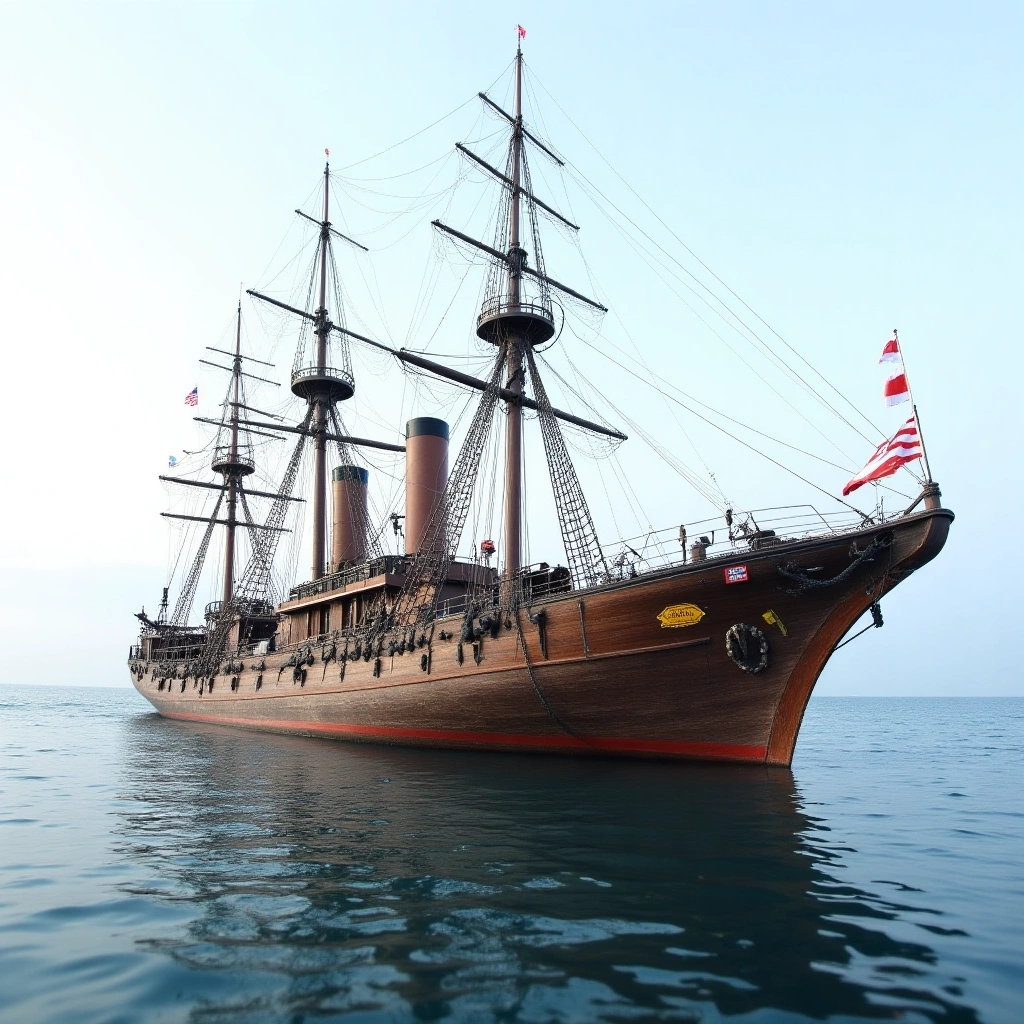
The HMCS Spitfire , the first Australian-built warship. The discovery of its wreck on 21 August came exactly 128 years after the vessel sank off the coast of Queensland.
Every so often a story comes along that makes you stop scrolling and think, ‘Well, that’s a long time to wait for a visitor.’ The discovery of the wreck of Ex-HMAS Spitfire is one of those stories.
The Spitfire holds a special place in Australian naval history. It was Australia’s first warship built domestically, which is a big deal for a young nation that had spent a long time relying on ships built elsewhere. The gunboat was originally launched in Sydney in 1855. Over the decades that followed, it had a long working life, eventually ending up in a far less glamorous role as a fishing boat. In 1898 it sank during a voyage off the far north Queensland coast, and for well over a century nobody knew exactly where it had gone.
That changed when maritime archaeologists from the Australian National Maritime Museum and Queensland’s Department of Environment located the shipwreck. They found it on August 21, which happens to be the 128th anniversary of the sinking. You could call that a coincidence, or you could call it the kind of timing that makes people in the field quietly start planning their celebrations. Either way, it’s the sort of detail that makes headlines, and the story was picked up by a wide range of outlets, from The Guardian and the Sydney Morning Herald to The Age, Brisbane Times, WAtoday, The West Australian and even The Seattle Times.
The phrase ‘remarkable luck’ has been doing a lot of work in the coverage, and it’s easy to see why. Finding a wreck is never simply a matter of pointing at a spot on the map and diving in. Ships that sink in coastal waters can drift, break apart, or be buried by sediment over time, and the seabed is a big, murky place. Archaeologists typically rely on historical records, survey work and a fair amount of patience, and sometimes they still come up empty. So when a team stumbles onto a wreck with a clear link to a known date and a known vessel, it’s understandable that people describe it as lucky.
It’s also a reminder of how much history sits quietly underwater. The Spitfire was once a symbol of Australia’s growing capacity to build its own vessels. Now it’s a piece of evidence about that story, one that can be studied, recorded and, in a sense, returned to the public record. Maritime archaeology doesn’t just dig up old objects for their own sake. It helps fill in gaps in how we understand the past, from shipbuilding techniques to the everyday realities of working vessels.
So here’s to the researchers who spent their time searching cold, dark water for a ship that had been missing for more than a century. They found it, and they found it on the exact anniversary of its loss. Not many of us can say our paperwork was that punctual.
If you’re interested in the story, it’s worth reading the original reporting, which covers the discovery in more detail. Just don’t expect to find a tidy explanation of where every last plank ended up. The sea has never been known for filing its paperwork on time.
Inspired by: “‘Remarkable luck’: wreck of first Australian-built warship discovered exactly 128 years after sinki…” (r/World)