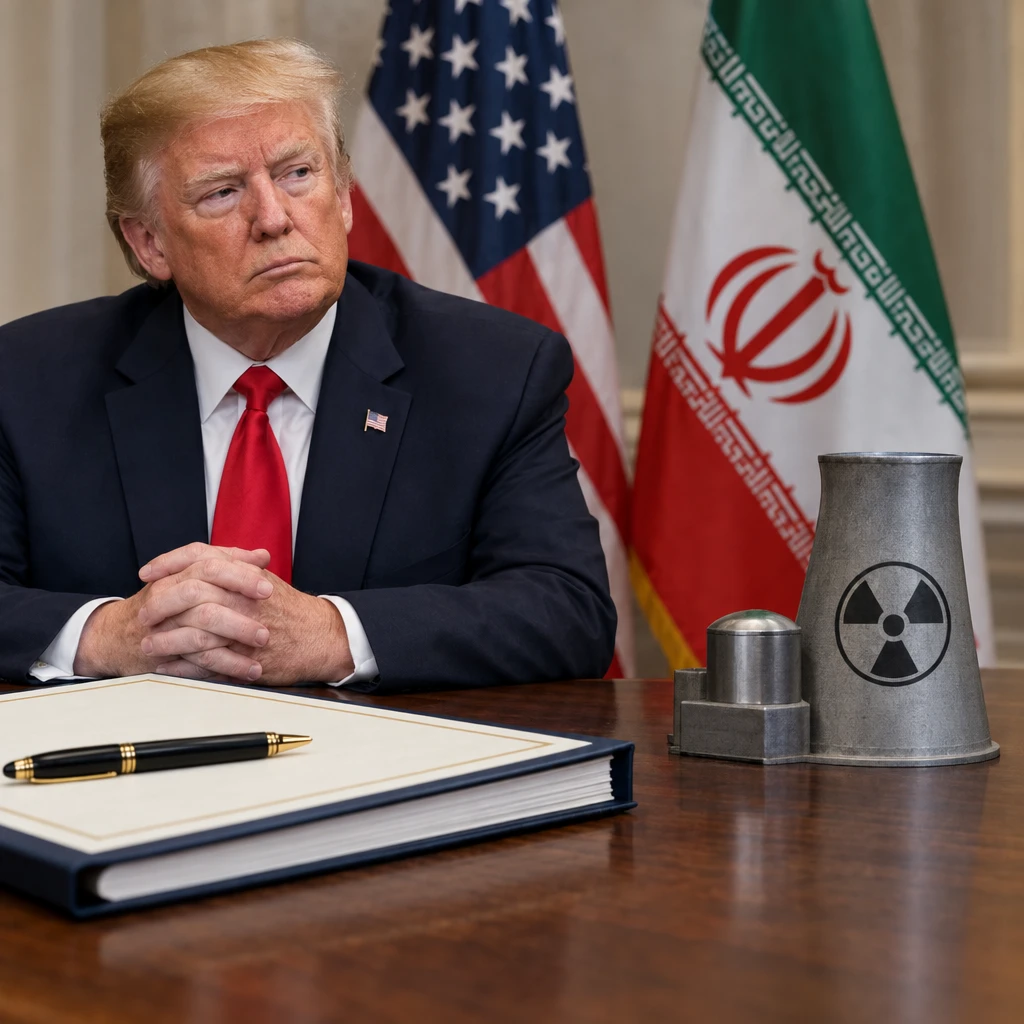
President Trump aims for a permanent agreement that ensures Iran does not acquire nuclear weapons. He stated that Washington would not accept a deal falling short of its expectations.
Every few years, a US president announces that he has finally found the deal that will settle things with Iran for good. Donald Trump’s latest version is a ‘permanent’ agreement, and he is pitching it as a way to stop Iran from ever building nuclear weapons. It’s a bold promise. It’s also one that the history of US-Iran diplomacy gives us plenty of reasons to examine closely.
The core of the announcement is simple. Trump says he wants a deal that prevents Iran from developing nuclear weapons, and he wants that deal to bind future presidential administrations. In other words, he doesn’t want his successors to be able to tear it up the way he is widely seen as having done with earlier arrangements. He pointed to Iran’s track record of not living up to agreements as the reason he thinks the deal has to be built differently this time.
That argument has some weight. Iran’s compliance with past nuclear arrangements has been a long-running point of contention, and critics across the political spectrum have questioned whether Tehran has ever fully played by the rules. Trump is essentially saying that a normal agreement isn’t enough, because Iran has not reliably honored normal agreements in the past. Whether you find that logic persuasive probably depends on how much you trust the other side of the table, and how much you trust the one doing the promising.
The word ‘permanent’ is doing a lot of heavy lifting here. In international diplomacy, nothing is truly permanent. Agreements can be renegotiated, suspended, or abandoned, and the United States has a habit of changing course every time the White House changes hands. If a deal is meant to bind future administrations, it generally needs to be structured in a way that makes it hard to walk away from, such as a treaty that goes through the Senate. Whether a deal can be made truly durable is a question that politicians tend to answer with confidence and historians tend to answer with a raised eyebrow.
Trump also made a point that deserves attention: he said regime change in Iran has never been a US goal. That is a notable clarification. Regime change talk has long been a thorny part of the Iran conversation, and plenty of Iranians and outside observers have been wary of Washington’s intentions. By stating that the aim is limited to preventing a nuclear weapon rather than toppling the government, Trump is trying to lower the temperature and suggest the focus is narrow and practical. Whether that message lands depends largely on whether the actions that follow match the words.
That’s the real test with any announcement like this. Headlines are cheap. Details are expensive. Questions worth asking include what specifically the deal would require Iran to do, how verification would work, what the United States would give in return, and what happens if one side decides the arrangement no longer suits it. None of those questions were fully answered in the brief statement, and a promise to make something permanent is not the same thing as making it work.
It’s also worth noting how the story has been covered. Multiple outlets ran nearly identical headlines, with slight variations in emphasis. Some led with the ‘permanent’ deal, others with the nuclear focus, and others with the rejection of regime change. That’s normal for a story that comes straight from a major political statement, but it’s a reminder to read past the headline and look for the specifics, which are usually where the real story lives.
So where does that leave us? Trump has set a goal that most people on either side of the debate would probably say they want: an Iran that does not build nuclear weapons. The open question is whether a deal can be crafted that Iran will honor, that future administrations won’t simply discard, and that both sides can explain to their own domestic audiences. That is a very tall order, and the history of this issue suggests it will take more than a confident announcement to fill it.
For now, the best approach is cautious interest. Watch for the actual terms, pay attention to how Iran responds, and keep your skepticism handy. In the world of Iran diplomacy, a ‘permanent’ deal is an aspiration until it proves otherwise.
Inspired by: “Trump vows permanent peace deal with Iran, rules out regime change” (r/Politics)