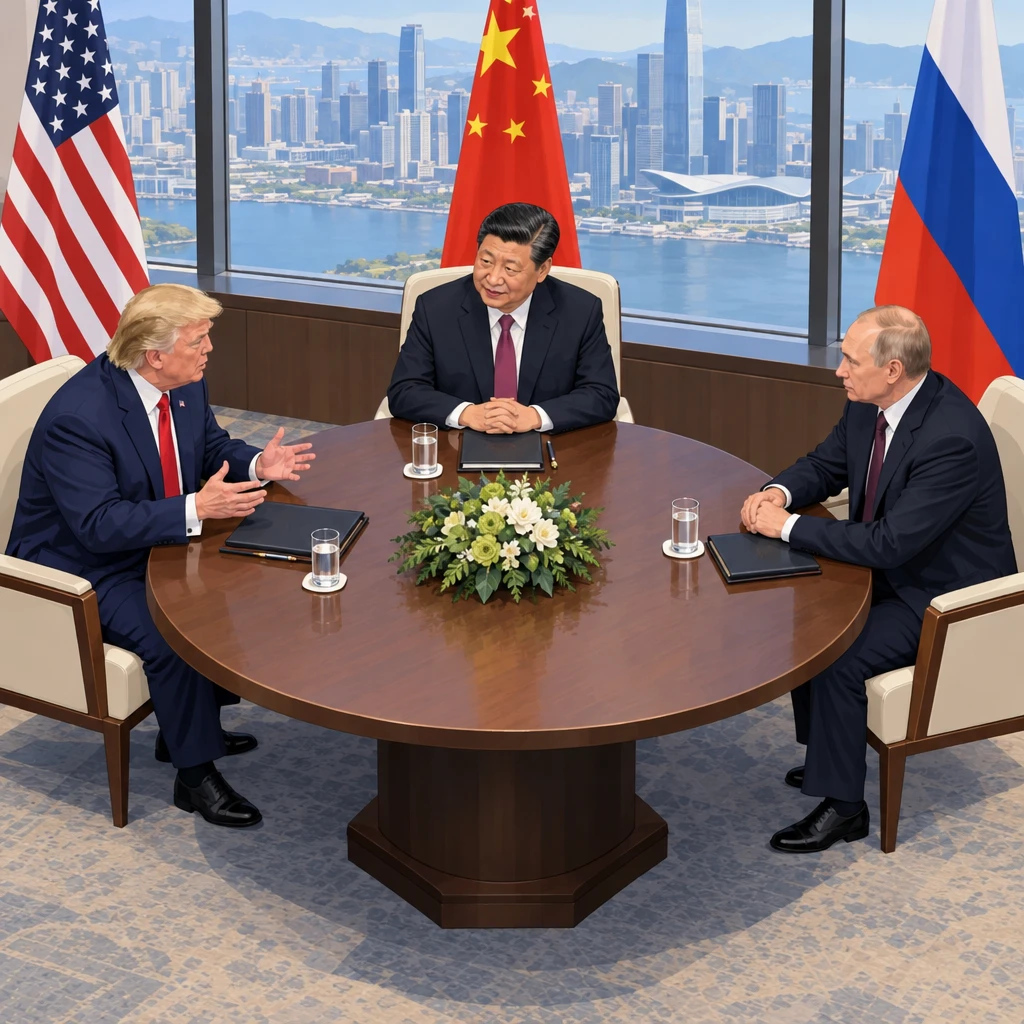
… In the joint statement from China, Russia and the US, the three leaders committed to a dialogue on "reducing nuclear risks and preventing nuclear proliferation". The issue was briefly touched upon at the top of their trilateral meeting, …
Every so often, three of the most powerful people on the planet end up in the same room, and the whole world leans in to see what comes out. That’s what happened when Donald Trump, Vladimir Putin, and Xi Jinping held a trilateral meeting on the sidelines of the APEC summit in Shenzhen, China. If you blinked, you might have missed it. If you didn’t, you probably saw the headlines calling it historic.
According to coverage from several outlets, the leaders focused on three big themes: international peace, nuclear weapons, and how to resolve ongoing conflicts. The war between Russia and Ukraine was a central part of that conversation, which should surprise nobody. It’s hard to talk about global stability these days without that war coming up somewhere near the top of the agenda.
The meeting reportedly lasted about ninety minutes. For a sit-down involving three heads of state and the weight of nuclear arsenals, that’s either a brisk, efficient chat or a very short preview of a much longer negotiation. Diplomacy usually moves at the speed of paperwork, so my money is on the second option, but we’ll see.
Trump described the gathering as “making history,” which is the kind of phrase that presidents tend to use about nearly everything. I’m not saying he’s wrong. Putting a U.S. president, a Russian president, and China’s top leader together in one meeting is rare enough to earn some attention. I’m just saying that when a leader announces that something is historic, it’s wise to wait a bit and see whether history agrees.
Perhaps the most eyebrow-raising detail was Trump referring to Putin as “a friend.” In Western politics, that word can land like a grenade, given how strained relations between Washington and Moscow have been for years over the war in Ukraine, sanctions, and accusations of election meddling. Calling someone a friend in that context is either a deliberate signal of warmer ties or a diplomatic courtesy that might not mean much in practice. Observers will be picking at that word for a while.
What makes the meeting especially interesting is the mix of people involved. Trump and Putin have had their share of public back-and-forth, and Xi has his own complicated relationship with Washington, covering trade, technology, and Taiwan, among other issues. Getting all three in a room together highlights how much the global order is being reshaped by a handful of leaders who don’t always see eye to eye.
One headline from a conservative outlet mentioned that the leaders issued a joint statement on critical issues. The details of that statement matter a great deal, because joint statements can range from meaningful commitments to vague, feel-good language that everyone can sign without really agreeing on anything. Readers should look closely at the actual wording, and at what follow-up steps, if any, are attached to it.
It’s also worth remembering that the Asia-Pacific Economic Cooperation forum is primarily an economic gathering. Having a high-stakes security discussion on its sidelines says something about how intertwined economics, geopolitics, and military concerns have become. Trade routes, energy supplies, and technology all feed into whether a war stays contained or spirals.
So where does that leave us? A ninety-minute meeting is not a peace treaty. It doesn’t end the war in Ukraine, and it doesn’t dismantle any nuclear arsenal. What it does do is keep lines of communication open between leaders who have strong reasons to talk, and that matters more than it sounds. Plenty of crises have grown worse because the people in charge stopped talking to each other.
In the coming weeks, the real story will be in the follow-through: whether talks continue, whether any agreements take shape, and whether the friendly language shows up in actual policy. Until then, treat the word “historic” with a healthy dose of skepticism, keep an eye on the details, and remember that in global politics, the photo op is often the easy part.
Inspired by: “Trump, Xi, Putin Focus on Nuclear and Russia-Ukraine War in Historic Trilateral Meeting” (r/World)