With widespread outages, scammers see an opportunity , according to Rick Forno, associate director of the University of Maryland, Baltimore County Cybersecurity Institute. “It’s a prime opportunity for a criminal or other bad person to try …
There’s a particular kind of dread that sets in when an app stops loading, a payment fails, or your email goes quiet right when you need it. You refresh the page. You restart the router. You start wondering whether the whole internet has decided to take the afternoon off. And that’s exactly the moment when a certain type of person starts licking their lips.
Experts have warned that scammers may be looking to cash in on the recent wave of tech outages. Honestly, nobody should be surprised. Fraudsters are opportunists by trade, and few situations are more opportune than a large number of frustrated, distracted people who are desperate for a fix and not thinking too clearly about where that fix comes from.
Why outages are such an attractive target
When a service goes down, people go looking for answers, and they tend to search fast. They type something like “app not working” or “how to get refund” or “customer support number” and click the first result that looks official. Scammers know this. They can set up lookalike websites, post fake support numbers, or create convincing social media accounts that appear to belong to the company. Some even run ads that float to the top of search results, which is a fun little reminder that paying for visibility doesn’t always mean you’re legitimate.
Outages also create a sense of urgency. If you think your account might be locked, your money might be stuck, or your data might be at risk, you’re more likely to act first and think later. That urgency is the scammer’s best friend.
Common tricks to watch for
While every scam has its own flavor, many outage-related schemes follow familiar patterns:
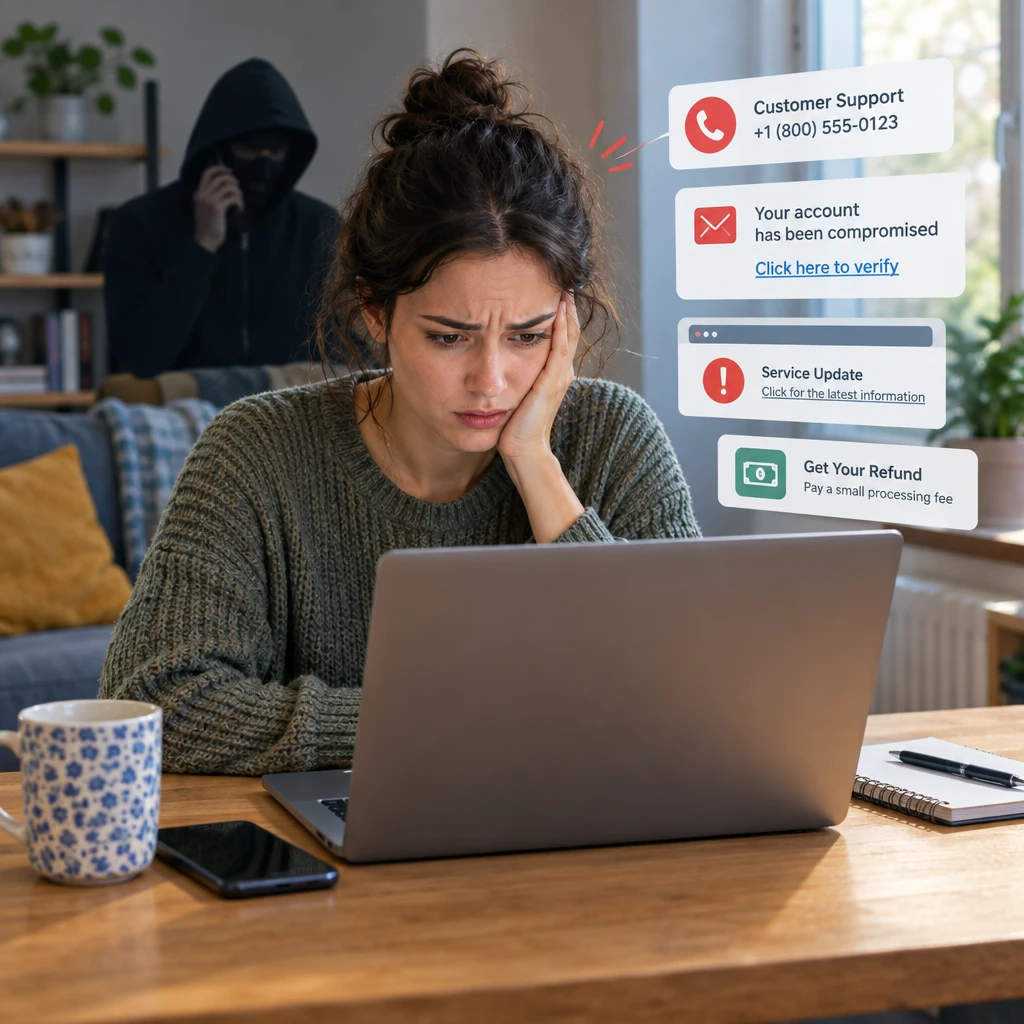
Fake support lines. You call a number you found online, and the person on the other end asks for your account details, a verification code, or remote access to your device. Legitimate companies rarely need you to hand over a one-time code to fix a problem.
Phishing emails and texts. Messages claiming your account was compromised during an outage, or that you need to “verify” your identity to restore access, are a classic move. They often include a link that leads to a page designed to steal your login details.
Fraudulent refund offers. Someone promises you compensation for downtime if you just pay a small processing fee or provide your banking information. Real refunds, when they exist, typically come through official channels and don’t require you to pay someone to receive them.
Fake status pages and updates. Scammers may create sites that look like official status dashboards, feeding you false information or steering you toward malicious downloads.
Fake fixes. Be wary of software or browser extensions promising to repair the outage on your end. Downloading unknown tools during a stressful moment is a fantastic way to end up with malware on top of your original problem.
How to protect yourself
The good news is that a few habits go a long way. Check for official updates directly through the company’s verified website or app, not through links in messages you didn’t expect. If you need customer support, navigate to the official help section yourself rather than trusting a number that appeared in a random ad or post. Never share passwords, one-time codes, or remote access with anyone who contacted you first. And if something feels rushed or pressured, that’s your cue to slow down.
It also helps to turn on two-factor authentication where it’s available, keep your devices updated, and review your bank and card statements regularly. These steps won’t make you immune, but they make you a much harder target.
The bottom line
Tech outages are annoying, and they’re usually temporary. Scams can be far more damaging and far longer lasting. The fraudsters are counting on you to panic, so the best defense is a calm pause and a quick check through trusted sources before you click, call, or pay. The outage will likely be fixed eventually. Your money and personal information are worth protecting in the meantime.
Inspired by: “Scammers may be looking to cash in on recent wave of tech outages, expert warns” (r/RSS)