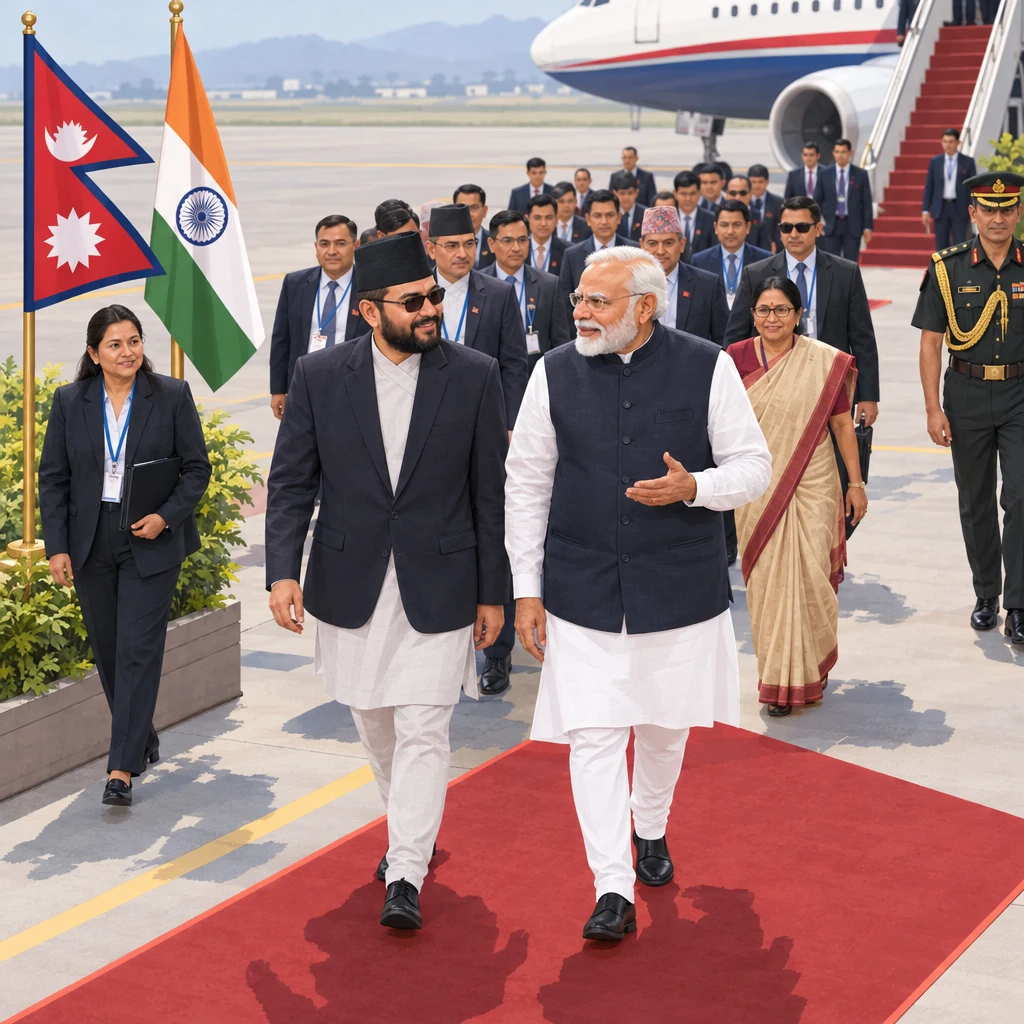
The visit will include delegation-level talks, the inauguration of energy projects and discussions on strengthening bilateral cooperation , Nepal's foreign secretary Amrit Bahadur Rai announced on Friday.
Diplomatic trips usually come with a lot of handshakes, carefully worded statements, and photos of people smiling in matching jackets. Nepal’s Prime Minister Balendra Shah is about to add his own chapter to that tradition. He will travel to India on November 22-23 for a state visit, and it’s his first trip there since taking office. Naturally, the big question is what will come out of it.
The visit is happening at the invitation of Prime Minister Narendra Modi, which makes it an official, formal occasion rather than a quick stopover. Shah is scheduled to meet President Droupadi Murmu during the trip. The main event is the delegation-level talks with Modi on November 23, where the two sides are expected to discuss the state of bilateral ties between their countries.
He won’t be going alone. A 34-member government delegation from Nepal will accompany him to New Delhi. If you’ve ever tried to coordinate a group of 34 people for a single dinner reservation, you can appreciate the logistics involved. Multiply that by government protocol, security arrangements, and a packed schedule, and you get a sense of how much planning goes into a visit like this.
Why does a first visit matter so much? In diplomacy, the first meeting between leaders sets the tone for everything that follows. It’s the opportunity to get to know each other, clarify priorities, and signal to the public what kind of relationship each government wants. A first visit is less about signing a stack of agreements and more about establishing a working rapport. Think of it as the first coffee date before anyone starts talking about a long-term commitment.
India and Nepal share a long border, deep cultural links, and extensive people-to-people ties. That closeness means that relations between the two governments are closely watched, both at home and across the region. Any official talks tend to draw attention from citizens who have family, business, or travel connections on both sides. So when two leaders sit down together, the stakes feel personal for many people, not just for diplomats.
The timing also invites some reflection. A new prime minister has a lot on his plate, from domestic priorities to foreign relations. Choosing India as one of his early destinations is a clear message that the neighbor relationship is a high priority. Whether the talks produce headline-grabbing announcements or quieter, practical progress, the fact that the meeting is happening at all says something about where both governments see the value in staying in regular contact.
So what should you watch for? Look at the joint statements that come out after the November 23 talks, as they usually reveal what both sides agreed to focus on. Pay attention to any mention of trade, infrastructure, energy, or cooperation on regional issues. And keep an eye on the tone. In diplomacy, a warm and cooperative atmosphere can matter nearly as much as the specific outcomes.
For now, the trip is on the calendar: November 22-23, a meeting with the president, a day of talks with Modi, and 34 delegation members ready to take notes. Whatever happens in New Delhi, it will mark the first real chapter of this leader’s engagement with one of Nepal’s most important neighbors. Stay tuned, and maybe brew a strong cup of tea. These talks could take a while.
Inspired by: “Nepal PM Balen Shah’s first India visit on November 23, talks with PM Modi on agenda” (r/World)