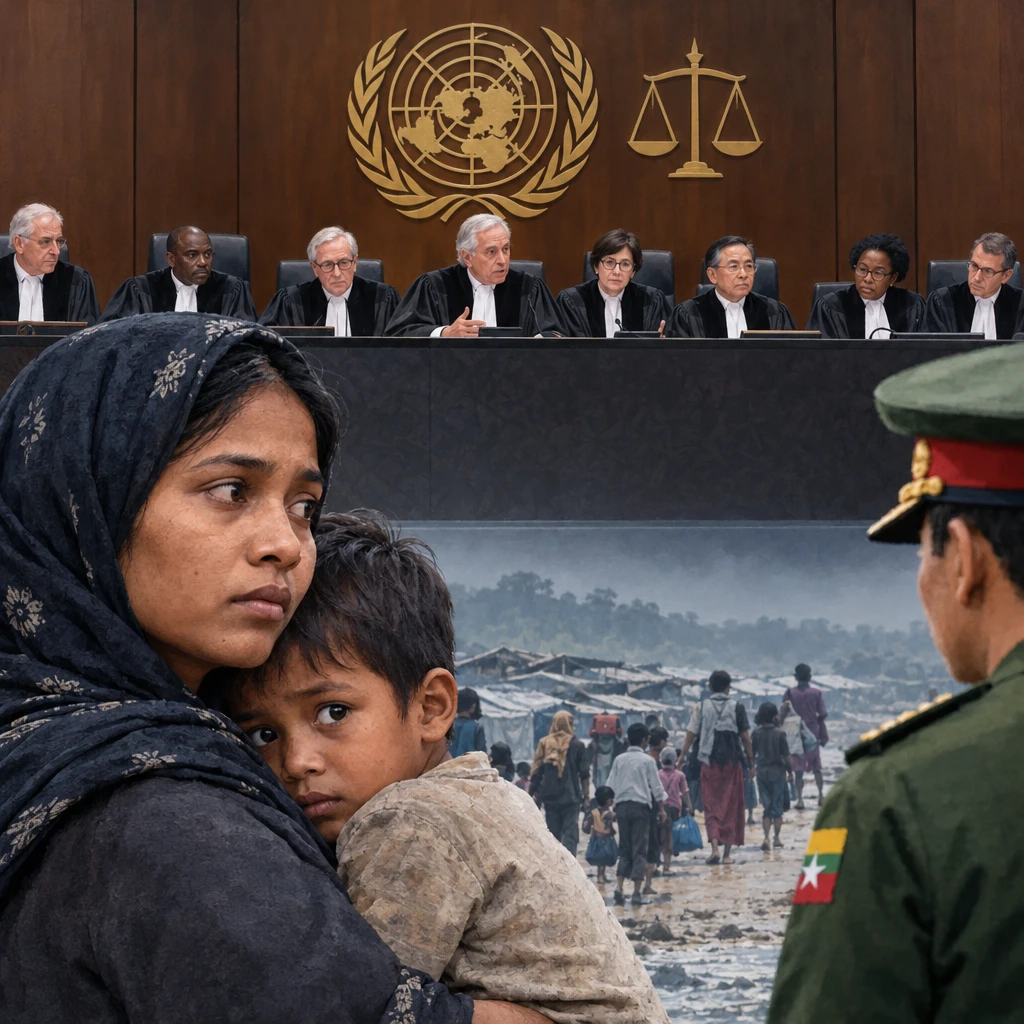
The decision was not unanimous and Myanmar had been unjustly accused , said Khaing Khaing Soe, a government spokesperson. The ruling by the International Court of Justice was the first time the court has held a state responsible for genocide.
When a top United Nations court says your government was responsible for genocide, you might expect a long, thoughtful reply. Myanmar’s government went with a shorter one: the decision was “unfair.” It’s a quick word, and it leaves a lot unsaid, so let’s look at what the court actually found, why the ruling matters, and why one small word is drawing so much attention.
What the court found
The International Court of Justice, the main judicial body of the United Nations, ruled that Myanmar is responsible for genocide against the Rohingya, a Muslim minority. The violence stems from a military operation in 2017. According to the court’s findings, the campaign included killings, sexual violence, and brutality against civilians, including women and children. Estimates suggest roughly 10,000 people were killed.
The decision was not unanimous. It passed by a nine-to-six vote among the judges. That split is worth noting, because it means the court itself was divided on parts of the case. Still, a majority was enough to reach a finding of responsibility, and that majority is what carries legal weight.
Why the word “unfair” stands out
Governments respond to unfavorable international rulings in all kinds of ways. Some accept them quietly, some appeal or ignore them, and some describe them as biased or politically motivated. Calling a ruling “unfair” falls into that last category. It signals rejection without offering a detailed legal argument, which is convenient for a government that wants to show it disagrees but doesn’t necessarily want to get into the evidence.
That’s not to say every critic of a court is wrong. Courts can be imperfect, and divided rulings often invite debate. But “unfair” is a feeling, not a rebuttal. A reader hoping for a point-by-point explanation of why the judges got it wrong will likely come away disappointed.
The coverage and the common language
The story reached audiences through a wide range of outlets, including SBS News, the Associated Press, the Straits Times, Hindustan Times, The Seattle Times, WTOP, Durango Herald, and Salem Radio Network News. Many of them used nearly identical headlines built around the word “dismisses” or “unfair.” That’s standard practice when a wire service like the AP supplies a story, but it also means that if you only skim headlines, you get the government’s reaction before you get the court’s findings. It’s a good reminder to read past the headline.
Why this matters beyond Myanmar
The Rohingya crisis has been a major concern for the international community for years. Genocide is one of the most serious charges under international law, and a formal finding from the ICJ carries significance for victims, for legal accountability, and for how future cases are handled. Victims often wait a long time for any acknowledgment of what happened to them, so a court ruling can matter a great deal even when the accused government rejects it.
The ruling also shows that international courts can review actions by national governments, even when those governments object. Whether Myanmar accepts the outcome or not, the finding is now part of the public record.
The bottom line
Myanmar’s government says the ICJ’s decision is unfair. The court says Myanmar is responsible for genocide against the Rohingya, following a 2017 military operation that killed an estimated 10,000 people and involved serious abuses against civilians. The vote was split, but the majority was clear enough to decide the case.
So the next time you see a headline about a government calling a ruling “unfair,” it’s worth asking a simple question: unfair in what way? The answer often tells you more about the politics than the law, and the details of the ruling are usually where the real story lives.
Inspired by: “Myanmar calls ICJ ruling on genocide ‘unfair’” (r/News)