At a briefing in Brussels on Friday morning, EU and European Commission officials were asked whether agreement had to be reached on tuition fees before the rest of the agreement could go ahead. One of the officials replied: “I think that is an important element so that everything can go ahead.” · Joe Barnes Diplomatic Editor. Dominic Penna Senior Political Correspondent. Sapphire Hope … The European Union has quite literally rolled out the red carpet for Andy Burnham.
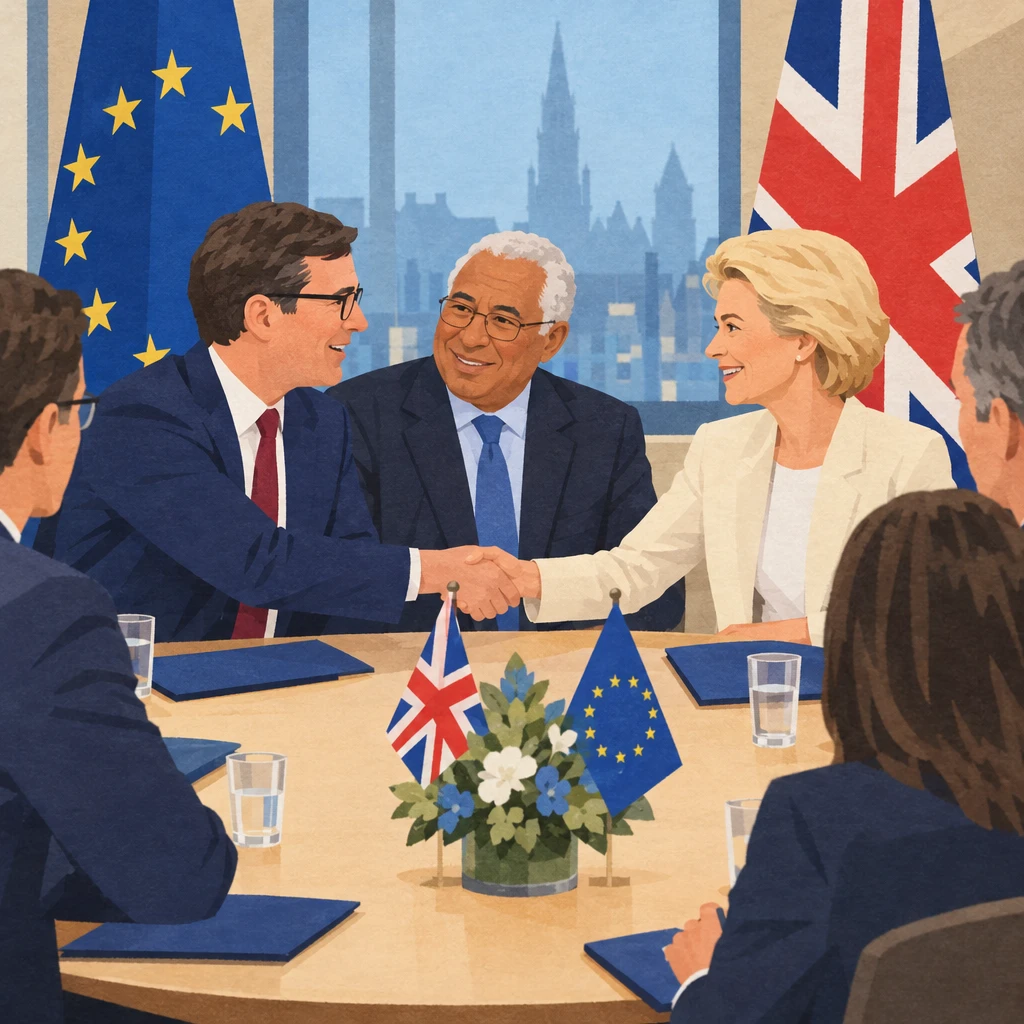
Let’s be honest: when a summit between the UK and the EU gets called “rare,” it usually means everyone has been politely avoiding each other for a while. On Friday, that awkward silence was broken in Brussels, where UK Prime Minister Andy Burnham sat down with some of the most senior figures in European politics. It was a big moment, and it came with the kind of careful optimism you usually see when two old friends who had a messy breakup agree to get coffee.
The guest list alone tells you how seriously this was taken. Burnham met with European Council President António Costa and European Commission President Ursula von der Leyen, the two people who essentially run the day-to-day machinery of the bloc at the top level. The meeting also featured a plenary session that brought UK government ministers and European commissioners into the same room. Anyone who has sat through a long meeting knows that getting that many officials to agree on a lunch order is an achievement, let alone a working agenda.
What makes this summit stand out is how unusual it is. According to the coverage, it was only the second of its kind since the UK left the EU. That is a striking number. Brexit reshaped British politics, trade, travel, and the way both sides talk to each other, yet high-level face-to-face gatherings have been surprisingly thin on the ground. You could say the relationship spent years communicating mostly through press releases, strongly worded statements, and the occasional sigh across the Channel.
So why now? The stated aim is to strengthen ties and deal with ongoing issues linked to Brexit. That sounds sensible, if a little vague, which is pretty standard for diplomacy. Relations between Britain and its nearest neighbours matter for businesses that trade across the border, for people who live, work, or study on either side, and for security cooperation at a time when the continent has plenty of other problems to worry about. Nobody wants to be the one who insists on keeping the drama going just for old time’s sake.
Burnham’s position is a familiar one for a British leader: he has to show voters that the country is getting a better deal from its relationship with Europe, without appearing to walk back the decision to leave. That is a tricky tightrope. Too much warmth and critics will accuse him of backsliding. Too much distance and the business community will wonder why nothing is getting fixed. Summits like this are one way to show that practical problems can be discussed without anyone having to relitigate the 2016 referendum over the cheese course.
The coverage from ABC News, The Independent, and NPR all framed the event in similar terms: a rare chance to repair some of the damage. That word, damage, is doing a lot of work. It suggests that the relationship has been bruised rather than destroyed, and that the people in the room on Friday were trying to figure out what could be patched up and what needs a longer conversation.
Don’t expect miracles from a single afternoon in Brussels. Summits generate headlines, handshakes, and joint statements, but the real test is whether the follow-up work actually happens. The question worth watching is whether this becomes a regular habit or remains a one-off photo opportunity that everyone admires and then forgets. If it’s the former, the UK and EU might finally start treating each other less like exes and more like neighbours who have to share a fence.
For now, the takeaway is simple. After years of frosty distance, the two sides sat down, talked face to face, and agreed that working together is better than not talking at all. In the world of EU-UK relations, that counts as a breakthrough, and it’s worth paying attention to what comes next.
Inspired by: “A rare EU-UK summit as Andy Burnham seeks to mend Brexit damage” (r/Business)