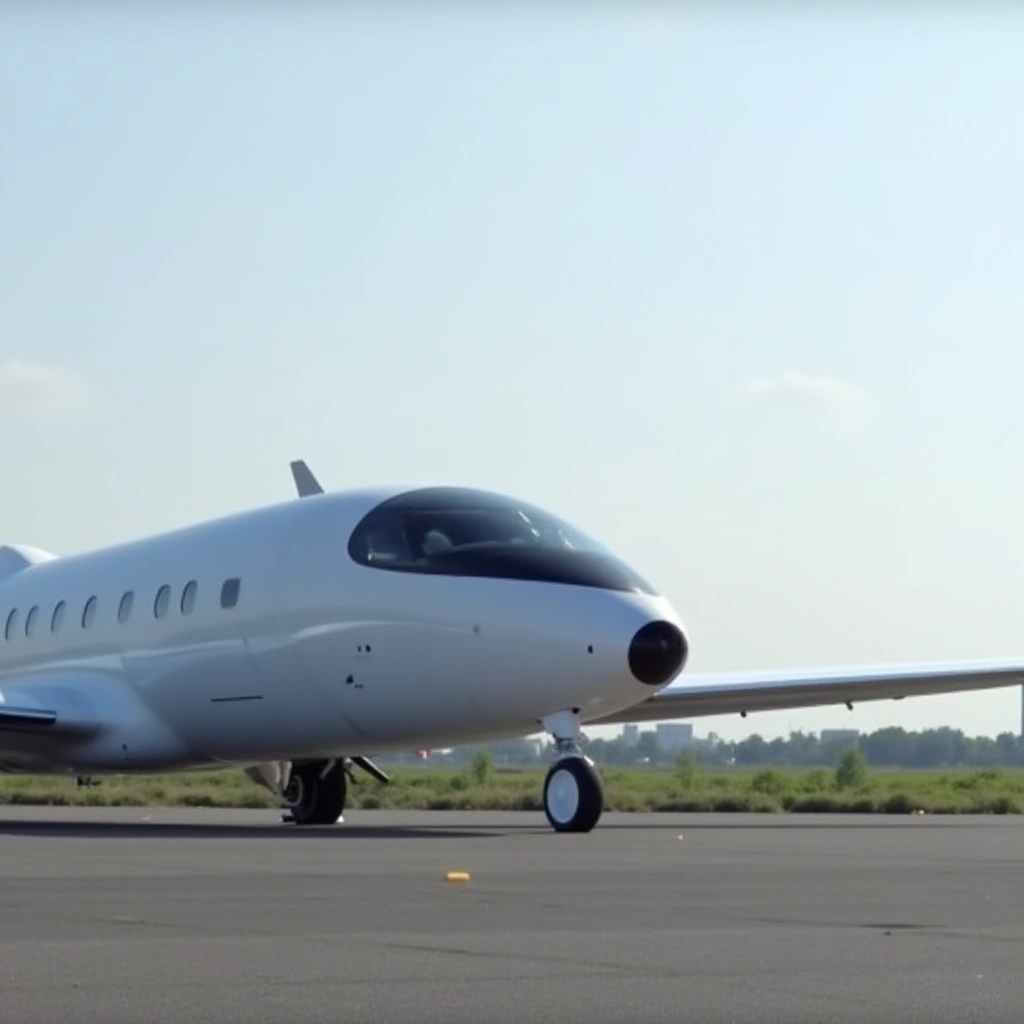
China has successfully flown a 19-seat electric passenger aircraft for the first time , marking a major step towards bringing battery-powered planes into commercial aviation.
There’s a particular kind of headline that makes you put your coffee down. “China’s 19-seat electric passenger plane completes maiden piloted flight” is one of them. Not because electric planes are brand new as an idea (people have been sketching battery-powered aircraft for a while), but because a 19-seat passenger aircraft with actual humans at the controls is a different thing from a drone with a nice paint job.
So let’s look at what happened, what the plane can reportedly do, and why it matters even if you’re not booking a seat on one anytime soon.
Meet the CE-25A
The aircraft is called the CE-25A. It was developed by the Commercial Aircraft Corporation of China, the state-backed manufacturer usually known by its shorter name, COMAC. The maiden piloted flight took place in Shandong province, and the news was covered by outlets including World Times of India and Euronews, the latter describing it as the plane’s first crewed flight.
The headline numbers:
– 19 passengers
– 300 kilometers per hour
– up to 400 kilometers
– distributed electric propulsion
If those figures don’t make you gasp, that’s fine. They aren’t meant to compete with the jet that takes you across an ocean. They describe something more modest and arguably more interesting: a short-hop electric aircraft built for regional routes.
Why 19 Seats Is a Telling Number
Nineteen seats isn’t random. It sits in the commuter aircraft category, the small planes that link smaller cities, connect regional airports, and handle routes where a full-size airliner would fly mostly empty and cost a fortune to run.
That’s exactly where electric aviation makes the most sense right now. Batteries are heavy, and they store far less energy per kilogram than jet fuel. That’s the central headache of electric flight. A huge long-haul airliner running on batteries isn’t happening with today’s technology, unless you’re happy with a plane that’s 90 percent battery and flies about as far as your local bus.
A smaller aircraft on shorter routes is where the math starts to work. Fewer passengers, less weight, shorter distances, more realistic battery demands. The CE-25A’s reported 400-kilometer range fits that niche neatly.
What Is Distributed Electric Propulsion, Anyway?
This is the part that sounds like a buzzword, but it’s a real idea and a clever one.
A conventional aircraft usually has a small number of large engines, often two. Distributed electric propulsion spreads the thrust across multiple smaller electric motors and propellers, often placed along the wings.
Why bother? A few reasons are commonly cited for this approach:
– Electric motors scale down nicely. A small jet engine is a complicated, expensive beast, while electric motors stay relatively simple and efficient at smaller sizes. That makes spreading them out practical.
– Aerodynamic benefits. Placing propellers along the wing can improve airflow over it, which may help with lift and efficiency, especially at lower speeds.
– Redundancy. With several motors instead of two, losing one is less dramatic. Pilots and passengers tend to like that.
The source material describes the CE-25A’s use of this technology as signaling a new era for electric flight. That might sound like press-release language, and it partly is, but distributed propulsion is widely seen as one of the more promising design directions for electric aircraft.
So Is It Fast?
A top cruising speed of 300 kilometers per hour won’t break any records. Commercial jets cruise far faster. But on a regional route of a few hundred kilometers, the difference in total trip time is smaller than you’d think, because much of your journey is spent getting to the airport, going through security, and watching the boarding process unfold at the speed of a glacier with a carry-on bag.
For short regional hops, 300 km/h is respectable. It also tends to beat driving the same distance, especially if the route crosses terrain where roads take the long way around.
Why a Piloted Flight Is a Big Deal
The key word in the headline is “piloted.” Plenty of aircraft projects make progress through models, simulations, and uncrewed tests. Putting a crew aboard is the stage where a project starts to look like an actual aircraft and less like a very expensive science fair entry.
It shows the developers are confident enough in the systems to put humans on board. It doesn’t mean the plane is about to start selling tickets. Aircraft certification is famously slow and demanding, and for good reason, since nobody wants their regional flight to be the one that discovers a new software bug at altitude. But a maiden piloted flight is one of the milestones that has to happen before anything else can.
The Bigger Picture
Aviation is one of the trickier industries to decarbonize. Cars have a fairly clear electric path, but planes are fighting physics, specifically the weight and energy density of batteries. Every serious attempt at electric flight is, in a sense, an attempt to find where batteries are good enough today.
Small regional aircraft are the obvious first battleground, and the CE-25A shows COMAC is betting on that segment. A 19-seat electric plane with a 400-kilometer range won’t replace the global airline fleet, but it could someday handle the kinds of short routes where small, efficient, quieter aircraft make a lot of sense.
A Few Healthy Caveats
Before anyone starts writing poems about the end of jet fuel, some perspective:
– Top speed and maximum range are best-case figures. Real-world performance with a full cabin, weather, and required reserves can differ.
– First flights are beginnings, not finish lines. Testing, refinement, and certification usually take years.
– Infrastructure matters. Electric aircraft need charging at airports, which is its own logistical project.
None of that diminishes the achievement. It just means the honest takeaway is “this is a real step forward” rather than “electric flights for everyone by Tuesday.”
The Bottom Line
China’s CE-25A has completed its maiden piloted flight in Shandong province, putting a 19-seat electric passenger aircraft into the air with a crew on board. With a reported top cruising speed of 300 kilometers per hour, a range of up to 400 kilometers, and distributed electric propulsion, it’s aimed squarely at the regional, short-hop market where electric aviation has its best near-term shot.
It’s not going to fly you across a continent. But it is a meaningful sign that electric passenger flight is moving from concept art to actual runways. And honestly, any aircraft that might one day make a short regional trip quieter and cleaner deserves at least a polite round of applause, preferably before the seatbelt sign turns off.
Inspired by: “China’s 19-seat electric passenger plane completes maiden piloted flight” (r/World)