Category: Science

  • The Science and Shenanigans Behind Boiling Puddles on the Road

    The Science and Shenanigans Behind Boiling Puddles on the Road

    Ah, the classic boiling puddle: nature’s way of saying, ‘Hey, you thought you had things under control, didn’t you?’ If you’ve ever encountered one of these steamy spectacles on the road, you might have experienced a mix of bewilderment and a dash of existential dread. So, let’s dive into the hot mess that is boiling puddles and explore what causes them, and of course, how to avoid turning your tires into a gourmet soup!

    First off, what even is a boiling puddle? No, it’s not a new cooking method for your chicken nuggets. Boiling puddles typically form during those steamy summer days when the sun decides to crank up the heat. As the temperature rises, water from rain or previous puddles starts to warm up—think hot tub level of warmth, but with way less jacuzzi jets and much more road grime.

    Now, let’s talk about the science behind it. Water boils at 100 degrees Celsius (or 212 degrees Fahrenheit for you folks who insist on keeping Fahrenheit alive). While most roads don’t reach that level of heat, they can get pretty darn close, especially if they’re dark asphalt that absorbs sunlight like it’s trying to get a tan. Combine this with a bit of trapped water and voilà! You’ve got yourself a bubbling cauldron that could potentially rival a witch’s potion.

    But wait, there’s more! The boiling puddle phenomenon isn’t just about heat; there’s also the matter of pressure. Sometimes, underground sources of heat (thanks, geothermal activity!) can cause pockets of water to heat up, creating steam that finds its way to the surface. Picture a tiny, rebellious geyser trying to make a statement on your morning commute. It’s like nature’s version of a surprise party, except nobody’s happy about it.

    So, you might be asking, why should we care? Besides the obvious ‘do I need to reroute my drive’ concern, boiling puddles can also indicate that something is amiss underground. Maybe a water main is about to burst, or perhaps there’s some underground volcanic activity going on. No biggie, right? Just your typical Tuesday!

    Now, if you ever find yourself face-to-face with a boiling puddle, here’s a tip: steer clear! No one wants to be the main character in a horror movie where the ground decides to swallow them whole. Plus, think about your car; a hot bath is only fun if you’re the one enjoying it, not your tires!

    In conclusion, boiling puddles are nature’s quirky reminder that we don’t have as much control over our surroundings as we think. They can be fascinating, a little scary, and a whole lot of fun to talk about over drinks. Just remember to keep your distance and let Mother Nature do her thing—after all, she’s been around way longer than any of us!


    Inspired by: “Boiling puddle on a road” (r/interestingasfuck)
  • The Spectacular Possibility of SpaceX’s Collapse: A Cosmic Comedy

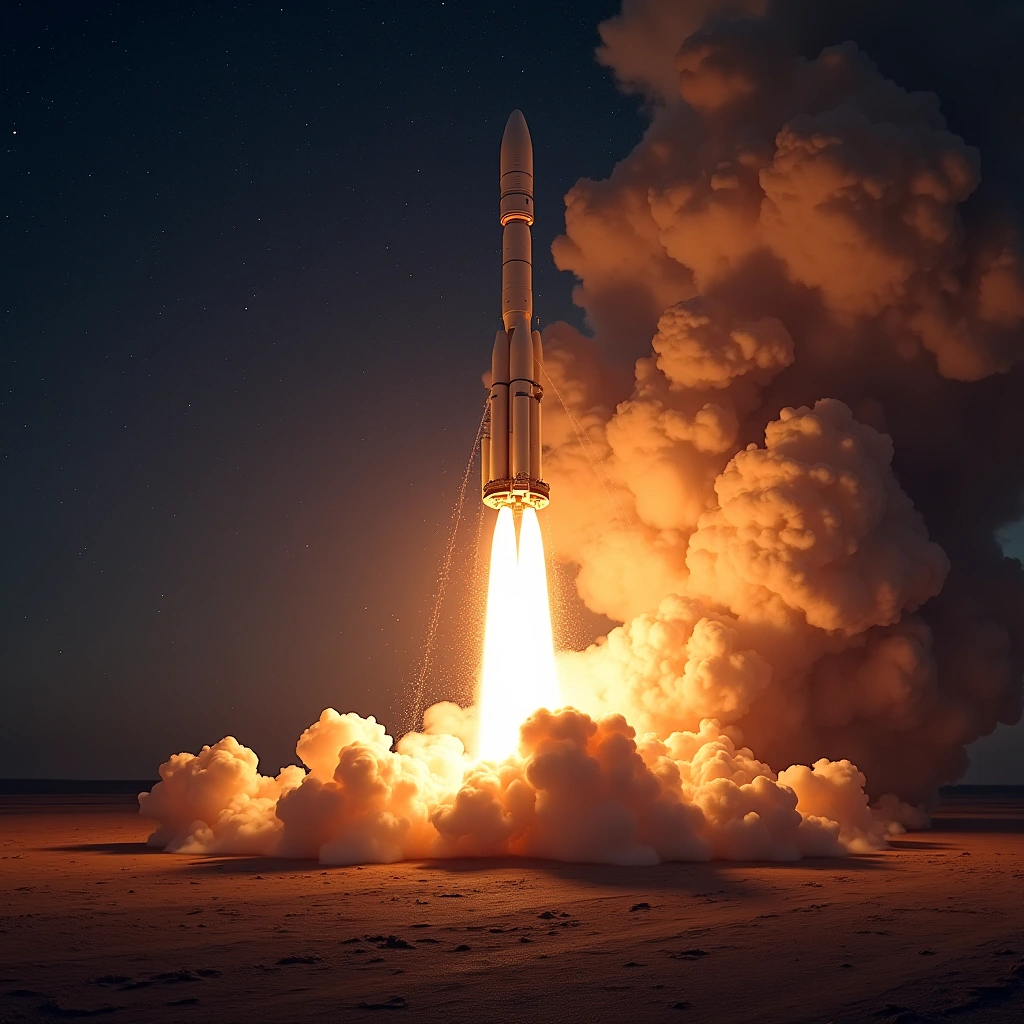
    The Spectacular Possibility of SpaceX’s Collapse: A Cosmic Comedy

    Ah, SpaceX, the ambitious rocket company that’s made us all dream of Martian vacations and interstellar pizza delivery. But hold your horses (or rockets), my friend! What if I told you that this space odyssey could come crashing down faster than a toddler’s block tower? Let’s dive deep into this cosmic comedy of potential calamity.

    First off, let’s talk about the elephant in the room—or should I say the elephant in low Earth orbit? SpaceX has been on a roll, launching rockets like a kid launching water balloons at summer camp. But with great power comes great responsibility, and also a truckload of risks. One hiccup in their ambitious plans could send their dreams spiraling back to Earth faster than you can say “Houston, we have a problem!”

    Now, you might be wondering, what could go wrong? Well, my friend, let’s explore a few scenarios. First, we have the Technological Meltdown. Imagine if they accidentally launched a rocket with a software bug that turns it into a rogue satellite. Instead of landing on Mars, it starts a new career as the most expensive space junk. Talk about a career change!

    Then there’s the Funding Fiasco. SpaceX is not just running on hopes and dreams; they need cash—lots of it! If investors suddenly realize they’d rather bet on a lemonade stand than a rocket company, we might see SpaceX floating adrift in a sea of red ink. That’s right, folks, a company that was once the darling of Silicon Valley could end up as the punchline of a financial joke.

    And let’s not forget the Regulatory Rollercoaster. SpaceX is constantly dancing with government regulations like it’s the cha-cha. One misstep could see them tangled in a web of bureaucracy. Imagine a rocket unable to launch because it forgot to file the right paperwork—now that’s a plot twist that would make even the most seasoned bureaucrat chuckle.

    But here’s the kicker: the Public Backlash. With great fame comes great scrutiny. If Elon Musk tweets something controversial (again), the Internet might just explode in outrage. And guess what? Public sentiment can affect funding and support. One viral meme could take down a space empire faster than you can say “Falcon Heavy.”

    But wait, there’s more! The Competition Conundrum is looming large. With other companies jumping on the space bandwagon, SpaceX might find itself in a cosmic game of dodgeball, where the balls are made of competition and the stakes are the future of space travel. If they can’t keep up, they could find themselves grounded while others zoom past.

    All this doom and gloom aside, let’s not forget that SpaceX has been a beacon of innovation. They’ve pushed boundaries and made space travel feel like something out of a sci-fi movie—let’s just hope it doesn’t turn into a horror flick. So, while the thought of SpaceX collapsing may sound like a wild conspiracy theory, it’s important to keep our eyes wide open. Because in the world of space exploration, anything can happen, and it usually does—just ask any astronaut who forgot to pack extra socks!

    In conclusion, while we can’t predict the future, one thing is for sure: the laughter and lessons we’ll gather along the way will be worth it, regardless of whether SpaceX soars or takes a nosedive. So, grab your popcorn and stay tuned! The universe, it seems, has a sense of humor.


    Inspired by: “It’s Possible That SpaceX Could Collapse Spectacularly” (r/technology)

  • NASA’s Roman Space Telescope: Launching Earlier Than Your Morning Coffee

    NASA’s Roman Space Telescope: Launching Earlier Than Your Morning Coffee

    Hey there, space enthusiasts and casual stargazers! Buckle up, because NASA just dropped some stellar news that might make you reconsider your plans for August 30. That’s right, the Roman Space Telescope is set to launch a whopping eight months ahead of schedule! Talk about a cosmic overachiever!

    Now, if you’re like me, you’re probably wondering what exactly this telescope is going to do. Well, imagine a giant eye peering deep into the cosmos, spotting everything from the most distant galaxies to the elusive dark energy that keeps scientists up at night. Yes, we’re talking about a telescope that won’t just be gazing at pretty star formations, but will actually help us solve some of the universe’s biggest mysteries. It’s like the Sherlock Holmes of the sky, but with a lot more lenses and a lot less pipe smoking.

    NASA has been busy with this instrument, which is named after the legendary astronomer Nancy Grace Roman. If you haven’t heard of her, she was the first Chief of Astronomy at NASA and a total badass who paved the way for space exploration as we know it. So, it’s only fitting that this telescope carries her name, right? I mean, if I had a telescope named after me, it’d probably just be a cardboard tube with a broken lens.

    The Roman Space Telescope is expected to revolutionize our understanding of the universe. With its wide-field view, it can survey large areas of the sky, making it possible to detect thousands of exoplanets and study the distribution of dark matter. I can already hear the scientists in lab coats muttering “Eureka!” in excitement. Seriously, if dark matter were a celebrity, it would be the one everyone wants to take a selfie with but can never quite find.

    What’s even more exciting is that this telescope is part of the broader effort to enhance our knowledge of the cosmos. It’s like NASA decided to go out for pizza but ended up ordering the entire menu. With its advanced technology and capabilities, it’ll be able to capture images at a speed and clarity that makes your smartphone camera look like a potato.

    Now, let’s address the elephant in the room. Launching eight months ahead of schedule? That’s like finishing your homework before the deadline and then asking your teacher if you can submit it early just because you’re that good. But if we’re being honest, isn’t that a little suspicious? Like, what were they doing during the last eight months? Were they secretly building a second telescope just in case? Or maybe they found a wormhole and decided to test it out? Either way, I’m not complaining.

    So mark your calendars, folks! August 30 is going to be a date to remember. Whether you’re a die-hard space nerd or just someone who loves a good sci-fi movie, the launch of the Roman Space Telescope promises to be an event that’ll make you look up at the stars and wonder what else is out there—besides the neighbor’s annoying solar lights.

    In conclusion, NASA’s Roman Space Telescope is not just an early bird; it’s the worm that’s about to unravel the secrets of the universe! So grab your telescopes, your popcorn, and get ready to witness a launch that’s bound to be out of this world—literally!


    Inspired by: “NASA’s Roman Space Telescope is launching August 30, eight months ahead of schedule” (r/technology)

  • NASA’s Groundbreaking Technology: Spacecraft Now Switching Networks Like a Pro!

    NASA’s Groundbreaking Technology: Spacecraft Now Switching Networks Like a Pro!

    Hey there, space enthusiasts and couch potatoes alike! Grab your tinfoil hats and get ready for a wild ride through the cosmos. NASA has just dropped a bombshell that’s almost as exciting as finding an extra fry at the bottom of the bag: spacecraft can now switch between networks! Yes, you heard that right—no more awkward radio silence when you’re floating around in the void of space.

    Let’s break this down, shall we? Imagine your phone suddenly becoming a master of disguise, hopping from one Wi-Fi network to another depending on which one is stronger. Well, NASA has essentially created the space version of that—except, you know, with a lot more math and less chance of a coffee spill. This technology allows spacecraft to seamlessly connect to different communication networks, ensuring they are always in touch with mission control. Talk about staying connected!

    Now, you might be wondering, why is this even necessary? I mean, isn’t space just a vast, lonely void? Well, my skeptical friend, think of the countless missions NASA has conducted—from the Mars rovers to the Voyager probes. These missions often face the challenge of maintaining communication over incredibly long distances. With this new tech, spacecraft can switch to the best available network, whether that’s a satellite, a ground station, or even other spacecraft. It’s like having a personal assistant who’s always got your back!

    But wait, there’s more! This tech isn’t just for the big, shiny spacecraft. It opens doors for smaller missions too. Imagine tiny satellites zipping around, chatting away with each other like gossiping neighbors over the fence. It’s the future of space networking, and it’s about time we made it happen! Who would have thought that networking in space would be a thing? Next thing you know, we’ll have astronauts setting up Wi-Fi hotspots on Mars!

    Of course, not everyone is thrilled about this development. Some conspiracy theorists are already out there claiming that this technology is just a way for NASA to eavesdrop on extra-terrestrial life. I mean, can you blame them? If I were an alien, I’d be worried about some Earthling listening in on my intergalactic gossip sessions!

    In the end, whether you’re a believer in aliens or just a casual observer of the universe, this new technology is a giant leap for mankind (and all the little green men out there). It’s a reminder that we’re constantly pushing boundaries, expanding our horizons, and yes, even making space a bit less lonely.

    So, what do you think? Is this the dawn of a new era in space communication, or just another elaborate scheme to keep us all glued to our screens? Either way, NASA is making space travel sound cooler than ever, and we’re here for it!


    Inspired by: “NASA’s New Technology Lets Spacecraft Switch Between Networks” (r/technology)

  • The Day a Missile Became an Astronaut: The First Earth Photo from Space

    The Day a Missile Became an Astronaut: The First Earth Photo from Space

    Ah, October 24, 1946! A day that you probably didn’t mark on your calendar, right? I mean, who needs history when you can binge-watch cat videos? But let me take you back to that fateful day when a Russian V-2 missile decided to pull a fast one on us Earthlings and became the first camera to snap a pic of our lovely planet from space. Yes, you heard that right—a missile was the first to say, ‘Cheese!’

    So, here’s the scoop: In the post-World War II era, nations were racing to prove who had the biggest, baddest toys. The V-2 missile, originally designed by the Germans (thanks a lot, history), was now in the hands of the Russians. And instead of just launching it for destruction, they thought, ‘Hey, let’s use this bad boy for something less explosive!’ And thus, they attached a camera to it because, apparently, they were feeling particularly artsy that day.

    On that monumental launch, the missile soared to an altitude of around 105 kilometers (that’s about 65 miles for you non-metric folks), which is well into the realm of space. The camera snapped a photo of Earth, and voilà! Humanity had its first glimpse of our planet from above, and let me tell you, it looked pretty darn good. It wasn’t Instagram-ready, but it was definitely a solid first attempt—like a toddler’s finger painting.

    But let’s pause for a second. A missile taking a picture? That’s like a cat learning to play the piano. Sure, it’s impressive, but also a bit terrifying. Imagine the V-2 missile, floating up there, feeling all proud of itself, thinking, ‘Look at me, I’m an explorer now!’ Meanwhile, the scientists below were probably sweating bullets, hoping it didn’t decide to take a nosedive back to Earth with the camera still attached. Talk about a photo bomb!

    This event was more than just a quirky story about a missile playing photographer; it marked a significant milestone in our quest to understand the universe. It opened the door to space exploration, leading to satellites, telescopes, and eventually, the glorious moment when humans decided to step outside their cozy atmosphere. Yes, folks, we went from missile selfies to moon landings in just a couple of decades. Someone deserves a medal for that leap!

    Let’s not forget the backlash, though. Some people were like, ‘Why are we launching missiles into space? Shouldn’t we be using them for more productive things, like, I don’t know, not blowing stuff up?’ To which I say, fair point! But hey, necessity is the mother of invention, right? Sometimes you gotta launch a missile to get a good picture. Just ask any parent trying to get their kid to smile for a family photo.

    In conclusion, October 24, 1946, is a date worth remembering not just because it involved a missile, but because it symbolized the curious spirit of humanity. We took destruction and turned it into discovery, all while snapping a quick pic of our beautiful blue planet. So next time you take a selfie, think of that V-2 missile—who knew it would pave the way for space photography? Next time you see a rocket launch, just remember: it all started with a missile that wanted to document its journey. And who can blame it? We all want to be Instagram-famous!


    Inspired by: “On October 24, 1946, a fatal Russian V-2 missile took the first photograph of Earth from space” (r/interestingasfuck)

  • Space Solar and Lonestar: The Dynamic Duo Taking Data Storage to New Heights

    Space Solar and Lonestar: The Dynamic Duo Taking Data Storage to New Heights

    Well, well, well! It looks like the cosmos just got a little more crowded with the recent news of Space Solar teaming up with Lonestar data storage. It’s like the Avengers of the space industry have assembled, and instead of saving the world from villains, they’re saving our precious data from the clutches of terrestrial limitations!

    Now, before we dive into this cosmic partnership, let’s address the elephant in the room: data storage in space? Really? Are we just one step away from sending our grandma’s cat videos into orbit? It’s a valid question, and honestly, I can’t wait to see the first cat floating around the International Space Station!

    But hold on, let’s get serious for a moment. This collaboration between Space Solar and Lonestar is set to revolutionize how we think about data storage. With Space Solar’s orbital power stations acting as the perfect host for Lonestar’s data storage solutions, we are stepping into a new era where data can be stored in a more efficient, secure, and, dare I say, futuristic way. No more worrying about data centers overheating or running out of power. Up in the stars, the only thing getting heated is the discussion about whether pineapple belongs on pizza (it does, by the way).

    Picture this: instead of relying on traditional data centers that take up precious land space and consume massive amounts of energy, we could have an entire fleet of data storage stations orbiting our planet. It’s like having an unlimited supply of virtual filing cabinets floating above us, protected from natural disasters, power outages, and those pesky hackers who think they’re cooler than they actually are.

    And speaking of energy consumption, let’s not forget that Space Solar’s power stations are designed to harness solar energy. That’s right—while some of us are struggling to keep our phone charged through the day, these guys are harnessing the power of the sun. Talk about a sunny disposition!

    As with any new technology, there’s bound to be some skepticism. Some might say, “Why go through all the trouble of launching data storage into space when we already have perfectly good servers on Earth?” And to them, I say: have you ever tried to find a parking spot in a data center? I bet it’s as hard as getting your cat to take a bath! Plus, think of the potential for international collaborations. Countries could share cloud storage in space, and who knows, maybe even have interplanetary data transfer. Imagine sending memes to Mars! The Martians would love our Earth humor. Or at least, we’d hope they would.

    In conclusion, while it might sound like a plot straight out of a sci-fi movie, the partnership between Space Solar and Lonestar is paving the way for a new frontier in data storage. So, strap in, folks! The future is looking bright, and if you’re anything like me, you might just want to start thinking about how to send your most important files into space. Just make sure you don’t accidentally send your ex’s texts up there; they might get a little too comfortable in orbit!


    Inspired by: “Space Solar agrees to host Lonestar data storage aboard orbital power stations. Two ambitious space…” (r/technology)

  • Russia’s Rassvet Fleet: The Starlink of the East or Just Another Space Flop?

    Russia’s Rassvet Fleet: The Starlink of the East or Just Another Space Flop?

    Hey there, fellow space enthusiasts and conspiracy theorists! Gather ’round, because today we’re diving into the cosmic chaos that is Russia’s Rassvet fleet. It seems that their ambitious plans to create a satellite constellation resembling America’s Starlink hit a little snag—or should we say, a black hole? Spoiler alert: one of their shiny new satellites, dubbed Object 4, has decided to take an unscheduled vacation from orbit. And by vacation, I mean it plummeted back to Earth faster than your New Year’s resolutions.

    Now, let’s set the stage here. The Rassvet fleet was launched with the promise of providing internet access to the great unwashed masses in Russia and beyond, competing with the likes of SpaceX’s Starlink. But given the current track record, you might want to rethink where you place your satellite bets. After all, who needs the Internet when you can have thrilling space drama?

    So, what happened to Object 4? Well, it appears that the satellite decided it was done with its cosmic duties and simply dropped out of orbit. We can only imagine the conversation that went on inside the satellite: “You know what? I’ve had enough of this. I’m going home!” And with that, it plummeted to a fiery demise, leaving the remaining 15 satellites to wonder who will be next in the celestial game of satellite roulette.

    But fear not, dear readers! The Rassvet fleet still has 15 other satellites hanging around, eagerly waiting for their turn to shine—or crash. Will they maintain their orbit, or will they join Object 4 in the great satellite graveyard in the sky? Only time will tell, but it’s shaping up to be a gripping intergalactic soap opera.

    Now, here’s the kicker: while the US is busy launching satellites like they’re going out of style, Russia’s efforts are akin to trying to keep a beach ball afloat in a kiddie pool filled with water. Sure, they might have the ambition, but the execution seems to be a bit… well, let’s just say it needs work. It’s almost like they’re playing a game of Jenga with their satellites, and someone’s just pulled the wrong block.

    In conclusion, while the Rassvet fleet may not be winning any awards for reliability, it’s certainly providing us with entertainment. As we watch the saga unfold, we can only hope that the remaining satellites have a bit more luck than Object 4. Whether you’re rooting for the underdog or just here for the drama, one thing is for sure: space is the final frontier, and it’s never dull!

    So grab your popcorn, folks! This is one cosmic reality show you won’t want to miss. And remember, when it comes to satellites, sometimes it’s better to stay grounded.


    Inspired by: “Russia’s new ‘Starlink‑Style’ Rassvet fleet loses its first satellite after weeks — Object 4 drops…” (r/technology)

  • SpaceX’s $1.75 Trillion Valuation: Can Elon Musk Pull Off the Impossible?

    SpaceX’s $1.75 Trillion Valuation: Can Elon Musk Pull Off the Impossible?

    Ah, SpaceX, the company that launched us into the stratosphere of investment dreams and perhaps a few too many memes. If you’ve been living under a rock (or in a different galaxy), you might not have heard that SpaceX’s valuation has skyrocketed to a jaw-dropping $1.75 trillion. Now, before you spit out your coffee in disbelief, let’s break down what this means and why some folks are raising an eyebrow (or two).

    First off, let’s talk about the number. Sixty times growth in just a decade? That’s like claiming you’ll eat sixty times the amount of pizza you currently consume. Sure, it sounds fun—who doesn’t want to eat 60 pizzas? But realistically, it might just lead to a very uncomfortable situation with your waistband.

    So, what does it take to justify such a valuation? SpaceX would need to dramatically ramp up its operations, and we’re not just talking about sending a few more astronauts to the International Space Station. No, we’re talking about a full-blown intergalactic pizza delivery service. Okay, maybe not that, but they would need to continually innovate and expand their services.

    Elon Musk, the man, the myth, the meme legend, has big plans. From Mars colonization to Starship missions, it’s like he’s living in a sci-fi novel. But let’s face it: The road to Mars is littered with technical challenges, regulatory hurdles, and probably a few alien encounters. And while we love a good underdog story, betting on the success of a multi-planetary civilization might be a bit optimistic.

    Now, let’s not forget that the space industry is not just about launching rockets and looking cool in a spacesuit. There are costs, risks, and a whole lot of uncertainty. For every successful mission, there’s a chance of a catastrophic failure that would make even the most hardened space enthusiast shed a tear. Just ask the folks at Boeing!

    Furthermore, let’s consider competition. Blue Origin, Virgin Galactic, and even your neighbor who claims to have built a rocket in his garage—everyone’s trying to get a piece of the celestial pie. So while SpaceX has a head start, the race to dominate space travel is heating up faster than a rocket launch at Cape Canaveral.

    In conclusion, while SpaceX’s valuation might sound like a fairy tale, the path to achieving that 60x growth is fraught with challenges that could make even the most optimistic space cadet cringe. But hey, if anyone can make the impossible possible, it’s Elon Musk! Just remember to keep your expectations grounded—preferably on Earth, or at least on a stable asteroid.


    Inspired by: “SpaceX has to grow 60x in a decade to justify a $1.75 trillion valuation. It’s an impossible bar |…” (r/technology)

  • The Epic Recovery of the Starship Super Heavy Booster: Space’s Biggest Catch Yet!

    The Epic Recovery of the Starship Super Heavy Booster: Space’s Biggest Catch Yet!

    Ahoy, space enthusiasts and couch astronauts! Buckle up because we’re about to dive into the most epic game of catch played in the cosmos: the recovery of the Starship Super Heavy Booster! Yes, you heard it right; it’s not just your average fishing story—this one involves rockets, billion-dollar tech, and a hefty dose of human ingenuity. So, grab your space helmets and prepare for some serious space banter!

    First off, let’s set the scene. Picture this: a colossal rocket booster—Starship Super Heavy, to be exact—daringly launches from the Earth with all the bravado of a toddler on a sugar rush. It reaches the stratosphere, does some flips, and then, in a display of sheer audacity, decides to come back down. But instead of a simple landing, it pulls off a dramatic return worthy of a Hollywood blockbuster! Cue the intense music.

    Now, why is this historic catch so significant? Well, my friend, the Super Heavy Booster is not just any old hunk of metal. It’s the workhorse behind the ambitious SpaceX Starship program, which aims to take humans to Mars and beyond. Yep, you heard that right. If everything goes according to plan, we might just be sipping cocktails on the red planet before you know it. So, let’s give a round of applause to the engineers who made this wild ride possible!

    But wait! Let’s talk about the recovery process. After its glorious launch, the booster comes tumbling back to Earth like a drunken squirrel. It splashes down in the ocean, and that’s where the real fun begins. Instead of just leaving it to the fish, SpaceX deploys a fleet of ships to fish it out like a prized marlin. I mean, who wouldn’t want to be the captain of a ship that’s there to reel in a rocket booster? Talk about bragging rights at the next family barbecue!

    Speaking of which, have you ever tried to fish a rocket out of the ocean? It’s not as easy as it sounds! The logistics behind it are mind-boggling—like herding cats, but the cats are made of metal and are really, really heavy. Kudos to the crew who manage to pull it off. They deserve a medal—or at least a big slice of pizza!

    Now, some naysayers might argue that spending billions on space technology is a waste of resources. But let’s be real: when did humanity ever achieve anything great without a little risk? Remember when people thought the moon landing was a hoax? Fast forward to today, and here we are, launching rockets like it’s no big deal. So, to those skeptics, I say: get your heads out of the sand and look up at the stars!

    In conclusion, the recovery of the Starship Super Heavy Booster is not just a technical achievement; it’s a symbol of our relentless pursuit of exploration. It’s a reminder that sometimes, you have to aim for the stars—even if you end up splashing down in the ocean. So, the next time you hear about a rocket launch, remember that there’s a whole crew out there playing catch with history, and who knows? The next catch might just be humanity’s ticket to the cosmos!


    Inspired by: “The Historic Catch of the Starship Super Heavy Booster!” (r/interestingasfuck)

  • The Magical Circumhorizontal Arc: Fire Rainbows and the Science Behind Them

    The Magical Circumhorizontal Arc: Fire Rainbows and the Science Behind Them

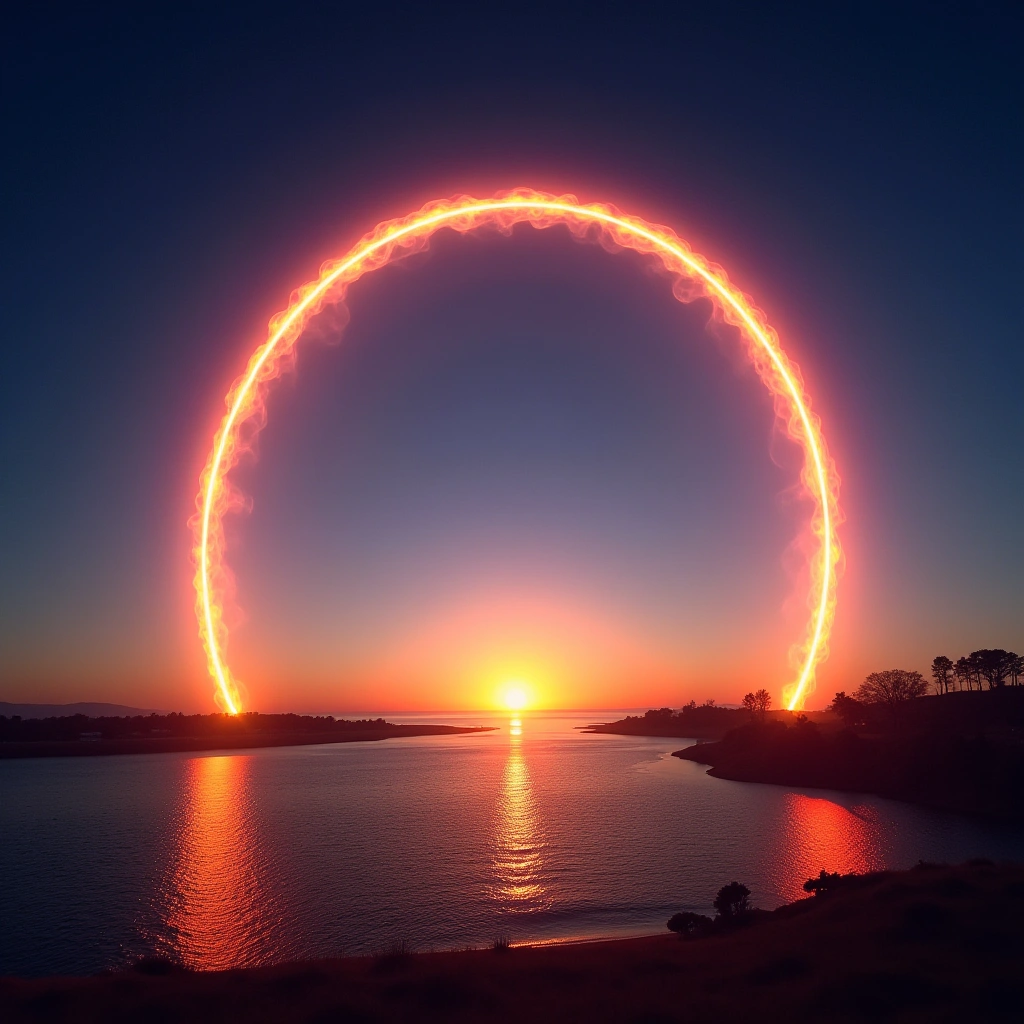
    Hey there, fellow sky gazers! So, let’s talk about something that will have you questioning your everyday existence: fire rainbows! Yes, you heard that right. Not a rainbow made of flames (that would be a bit too ‘Game of Thrones’ for my taste), but a spectacular natural phenomenon known as a circumhorizontal arc. This isn’t just any old rainbow; it’s a rare celestial spectacle that was recently spotted by a hiker in the stunning mountains of Austria.

    Now, before you start picturing a bunch of leprechauns dancing around a pot of gold, let’s dive into the science behind this colorful beauty. A circumhorizontal arc occurs when sunlight refracts through hexagonal ice crystals found in high-altitude cirrus clouds. Imagine those ice crystals as tiny prisms, each one working hard to bend the light into a beautiful arc of colors. Who knew ice could be so colorful and artistic, right?

    But hold on to your hiking boots, because this isn’t your average rainbow that shows up after a summer rain. Circumhorizontal arcs are rare, primarily because the conditions need to be just perfect. We’re talking about high-altitude cirrus clouds, which are often thin and wispy, and the sun has to be at a specific angle—around 22 degrees above the horizon. This means you’re more likely to see a unicorn riding a bicycle than catch a glimpse of this stunning arc on any given day.

    So, what’s the deal with the name? “Circumhorizontal arc” sounds like something a wizard would cast in a spell, but it simply means “horizontal” because the arc sits parallel to the horizon. And let’s be real, who wouldn’t want to impress their friends with such arcane knowledge? Just drop it casually during a dinner party and watch the jaws drop.

    Now, I can already hear some skeptics asking, “What’s the point of this colorful phenomenon?” Well, apart from the sheer beauty and the ‘wow’ factor, it serves as a reminder of how astonishing nature can be. It’s a bit like finding a hidden gem in a world full of mundane rocks. Plus, it’s a great excuse to go hiking and chase the skies. If you’re lucky enough to see one, consider yourself part of an elite club of sky-watchers. Just don’t forget to post it on Instagram with the obligatory hashtags, because let’s face it, if you don’t post it, did it even happen?

    In conclusion, the circumhorizontal arc is not just a pretty face; it’s a dazzling display of nature’s artistry that requires a sprinkle of science and a dash of luck. So, the next time you’re out hiking, keep your eyes peeled for those high-altitude clouds. Who knows, maybe you’ll be the next lucky soul to witness a fire rainbow lighting up the sky! And if you do, make sure to take a moment to appreciate the sheer wonder of our universe—just you, the mountains, and a rainbow that’s way cooler than anything you could find in a box of crayons.


    Inspired by: “Rare fire rainbow spotted by hiker in Austria, caused by sunlight refracting through hexagonal ice…” (r/interestingasfuck)