Category: Health

  • The Vaccine-Autism Myth: A New Executive Order on the Horizon?

    The Vaccine-Autism Myth: A New Executive Order on the Horizon?

    So, imagine this: you’re scrolling through Reddit, sipping your morning coffee, and you stumble upon a title that makes you do a double-take. “Report: White House drafting executive order linking vaccines and autism.” You might think, “Wait, what year is it again?” Because this isn’t exactly breaking news; it’s more like a rerun of a show that was canceled years ago due to lack of evidence.

    White House officials are mulling an executive order that would target vaccines and autism amid a push by President Donald Trump to take more action on the issue, an administration official familiar with the deliberations told CNN.

    Let’s break this down, shall we? The vaccine-autism link has been debunked more times than I can count. It all started back in 1998 when Andrew Wakefield published a fraudulent study that claimed a connection between the MMR vaccine and autism. Spoiler alert: that study was retracted, Wakefield lost his medical license, and yet the myth persists like an unwanted house guest who refuses to take the hint.

    Now, the idea of the White House drafting an executive order on this topic is just… well, it’s like watching a bad sequel to a movie that was already terrible. It’s hard to believe we’re still having this conversation, but here we are. The current administration seems to be stirring the pot, and for what? To appease a small but vocal group of vaccine skeptics? Because science clearly says otherwise.

    Let’s take a moment to appreciate the irony here. In a world where we have mRNA vaccines saving lives and technology advancing at breakneck speed, we’re still grappling with outdated and debunked theories about autism? It’s almost as if we’re trying to throw the clock back to a time when people believed the Earth was flat. Spoiler alert: it’s not.

    If the White House is indeed drafting this executive order, it raises some serious questions. Will it come with a side of misinformation? A sprinkle of pseudoscience? Maybe a dash of fear-mongering? Because that’s what it feels like we’re heading towards. Public health should be based on facts, not conspiracy theories that refuse to die.

    And let’s not forget the impact this could have. Parents might hesitate to vaccinate their children out of fear, which could lead to outbreaks of diseases that we’ve worked so hard to eradicate. It’s like deciding to stop wearing seatbelts because you heard from a friend that they can cause back pain. Sure, it’s a possibility, but the risk of not wearing one is far greater.

    In conclusion, if this executive order is indeed in the works, we need to stand up and say, “Not today, misinformation!” We must prioritize science and facts over fear and myths. Because at the end of the day, our children’s health should never be a political pawn.

    So, as we wait to see what unfolds, let’s keep the conversation going, stay informed, and maybe, just maybe, we can prevent this old myth from resurfacing once again. And if you see any links between vaccines and autism, please let me know—preferably with a side of credible evidence. Until then, let’s stick to the facts and keep our kids safe. Cheers!


    Inspired by: “Report: White House drafting executive order linking vaccines and autism” (r/technology)
  • Vaccines and Autism: Debunking the Myths Amidst Executive Orders

    Vaccines and Autism: Debunking the Myths Amidst Executive Orders

    So, it seems we’ve got a new headline making the rounds – the White House is reportedly drafting an executive order that links vaccines to autism. Wait, what? Did someone just say vaccines and autism in the same breath again? I thought we buried that debate ages ago, but here we are, back in the ring like it’s a bad sequel nobody asked for.

    White House officials are drafting an executive order focused on the childhood vaccine schedule and autism, according to four people familiar with the matter.

    Now, let’s take a step back and unpack this. The mere mention of vaccines and autism has been a hot-button issue, one that has sparked conversations (and sometimes heated arguments) at dinner tables across America. On one side, you have the scientific community, armed with research and facts, and on the other, a myriad of conspiracy theories fueled by misinformation and, let’s be honest, a sprinkle of panic.

    To put it plainly, the scientific consensus is that there is no causal link between vaccines and autism. The original study that suggested this connection was not just flawed; it was retracted, and the author lost his medical license. Yet, like a persistent cold that just won’t go away, the myth continues to circulate. It’s almost impressive how misinformation can outlive its original source.

    Now, why on Earth would the White House consider drafting an executive order on this topic? It’s almost as if they’re trying to stir the pot. Maybe they think it’ll be a good way to get some attention, or perhaps they’re just trying to appease a vocal minority. Either way, it raises eyebrows and questions about the rationale behind linking vaccines to autism in any official capacity.

    Let’s not forget that vaccines have saved millions of lives. They’ve eradicated diseases that once ran rampant, like polio and smallpox. So, the idea that we would even entertain the notion of linking something so beneficial to a condition that affects many families is not just irresponsible; it’s downright baffling.

    In a world where we already have enough to worry about – from climate change to the latest social media trend that no one quite understands – do we really need to add more confusion to the vaccine debate? It’s like adding pineapple to pizza; some people are all for it, while others are ready to start a revolution over it.

    The bottom line is that we need to focus on facts and science. Vaccines are crucial for public health, and perpetuating the myth that they cause autism does a disservice to everyone, especially to those who are genuinely concerned about their children’s health.

    So, if you find yourself in a conversation about this topic, remember: it’s not about choosing sides; it’s about choosing facts. And who knows? Maybe we can finally put this debate to rest and save our energy for more pressing issues, like figuring out how to make Mondays less painful. Until then, let’s keep the conversation going, but let’s make sure it’s based on science, not sensationalism.


    Inspired by: “Report: White House drafting executive order linking vaccines and autism” (r/technology)

  • Meta’s $567 Million Wake-Up Call: Addressing Kids’ Mental Health Online

    Meta’s $567 Million Wake-Up Call: Addressing Kids’ Mental Health Online

    In a move that has sent ripples through the tech world, a court has ordered Meta, the parent company of Instagram and Facebook, to shell out a whopping $567 million. Why, you ask? Well, it turns out that the digital playgrounds these platforms provide have been affecting kids’ mental health, and someone finally decided to hold them accountable. Who knew that scrolling through endless selfies and cat videos could have consequences?

    A New Mexico court has ordered Instagram and Facebook parent company Meta to pay $567 million to address harms to young people from its platforms in the second phase of a landmark trial.

    This hefty fine is not just a slap on the wrist; it’s a wake-up call for Meta and other tech giants that have, for too long, operated under the assumption that their platforms are harmless. Spoiler alert: they’re not. The court’s decision stems from concerns that these platforms have become breeding grounds for anxiety, depression, and a host of other mental health issues among the youth.

    Now, before you jump to conclusions, let’s clarify that social media isn’t entirely the villain here. It’s a double-edged sword. On one hand, it connects people, facilitates communication, and allows for the sharing of memes that make us laugh until we cry. On the other hand, it can also lead to comparison culture, cyberbullying, and the dreaded FOMO (Fear of Missing Out). You know, the stuff that makes you question your life choices while scrolling through your ex’s vacation photos.

    The court ruling mandates that Meta must invest this money into resources and initiatives aimed at improving the mental well-being of its young users. This could mean anything from developing better content moderation policies to creating features that promote positive interactions. Could we finally get a ‘take a break’ button that doesn’t just lead us to more cat videos? One can only hope.

    Critics have long argued that tech companies need to take more responsibility for the impact their platforms have on users, especially vulnerable populations like children and teenagers. It seems like Meta is finally being forced to take a long, hard look in the mirror—though, let’s be honest, it’s probably a filtered version of themselves.

    As we move forward, it’ll be interesting to see how Meta plans to allocate this hefty sum. Will they throw money at the problem and hope it goes away? Or will they genuinely invest in creating a safer online environment for kids? Only time will tell, but one thing’s for sure: the pressure is on.

    In the meantime, parents might want to keep an eye on their kids’ social media habits. Maybe it’s time for a family discussion about the pros and cons of Instagram filters, or how to handle that pesky online jealousy. After all, no one wants to be the parent who finds out their kid has been crying over likes and follows instead of focusing on real-life friendships.

    So, here’s to hoping that this court ruling is a step in the right direction, not just for Meta, but for all social media platforms. Because at the end of the day, kids deserve a safe online space, and a little less drama in their digital lives. And let’s face it, we could all use a little less drama, right? Cheers to that!


    Inspired by: “Court orders Instagram and Facebook’s Meta to pay $567M to address kids’ mental health online” (r/technology)

  • AI and Viruses: A Double-Edged Sword in Medical Science

    AI and Viruses: A Double-Edged Sword in Medical Science

    So, here we are, folks. Scientists have officially entered the realm of mad science—using artificial intelligence to create new kinds of viruses. I mean, who thought we’d be living in a sci-fi movie plot? On one hand, we have the potential for groundbreaking medical advances. On the other hand, there’s the small matter of creating something that could potentially wipe us out. Talk about a mixed bag of goodies!

    Artificial intelligence is a double-edged tool in virology: it holds enormous potential to improve diagnostics, outbreak preparedness, and therapeutic discovery, but it also presents significant risks through its capacity to design, optimize, …

    Let’s break this down a bit. For those of you who might be thinking, “Why on earth would we want to create new viruses?”—the answer lies in medical research. Scientists are hoping that by understanding and manipulating viruses, they can develop better treatments for diseases. AI can analyze massive amounts of data much faster than a human could. It can identify patterns, predict outcomes, and, in this case, help design viruses that could target specific diseases or even enhance vaccines. It’s like giving a really smart kid a science lab and telling them to make something cool.

    But then, there’s the darker side of this equation. The possibility that this technology could be misused to invent dangerous pathogens is a little unsettling. I mean, if we’re not careful, we could be creating the next supervillain’s weapon of choice. Imagine a world where someone decides to play God with viruses. It’s not exactly the plot twist we were hoping for, is it?

    Now, before you start picturing lab coats and test tubes exploding in a cloud of chaos, let’s remember that scientists are usually pretty cautious—most of them, anyway. There are regulations in place, and ethical guidelines that would make even the most rogue scientist think twice. But let’s be real: when has a little thing like ethics stopped someone determined to create a zombie apocalypse?

    The conversation around AI in virology is essential. We need to weigh the benefits against the risks. On one hand, we could revolutionize how we fight diseases. On the other, we might accidentally create a virus that turns everyone into, I don’t know, overly enthusiastic cat people. And while that sounds adorable, I think we can all agree that too many cat memes are a public health crisis unto themselves.

    In conclusion, as we march forward into this brave new world of AI and viral engineering, let’s keep our fingers crossed that we’re heading toward a future filled with medical miracles rather than viral catastrophes. Because if the AI starts sending out invitations for a viral party, you might want to RSVP with a solid “Thanks, but no thanks!”


    Inspired by: “For the first time, scientists have used AI to create new kinds of viruses, raising hopes for medic…” (r/technology)

  • Betting on Health: A Risky Game or the Future of Medical Funding?

    Betting on Health: A Risky Game or the Future of Medical Funding?

    Let’s dive into a topic that feels like it was ripped straight from a bizarre sci-fi novel: betting on medical outcomes. Yes, you heard that right. There’s a company called Kalshi that wants you to wager on the health futures of individuals, including children battling serious illnesses like cancer.

    That’s why at HealthRate, we have one simple message for employers, brokers, and TPAs trying to model catastrophic claim risk on their own: “Don’t try this at home.” … In philosophy, the Lottery Paradox asks: If you know one ticket will win, but each ticket is unlikely to win, is it rational to believe each ticket will lose? It’s a cautionary tale about how we misjudge low-probability, high-impact events. In healthcare, self-funded employers fall into the same trap every day, especially with organ transplants, gene therapies, and CAR-T treatments.

    Now, before we get into the nitty-gritty, let’s address the elephant in the room: betting on someone’s medical future is a pretty loaded concept. I mean, we’re talking about life and death here, not whether or not your favorite sports team will win the championship. Yet, in a world where crowdfunding for medical bills has become a norm, perhaps this isn’t as far-fetched as it sounds.

    Kalshi operates on the premise that people can bet on various future events. This includes everything from the likelihood of a political event happening to, yes, the health outcomes of individuals. Now, one could argue that this opens up a new avenue for funding. If you’re willing to put your money where your mouth is, you could potentially help families cover exorbitant medical bills while also having a vested interest in the outcome. Sounds like a win-win, right?

    But let’s not gloss over the ethical conundrum here. On one hand, you have the potential for financial support for families who are feeling the crushing weight of medical expenses. On the other hand, it feels a bit like commodifying human suffering. Are we really okay with the idea that someone might profit from the misfortune of others?

    And let’s be honest, betting on the health of someone’s child—especially when that child is fighting cancer—takes a certain level of gall. It’s like saying, “Hey, I’m really rooting for your kid, but I’m also going to take a gamble on whether they make it through this treatment or not. How’s that for support?”

    There’s also the question of accuracy. How do you even determine the odds? Is there a medical expert on hand to weigh in, or is it just a roll of the dice? Because if we’re betting based on statistics, we all know that statistics can be manipulated to tell whatever story you want.

    And let’s not forget the emotional toll this could take on families. Imagine being a parent already dealing with the gut-wrenching stress of having a child with cancer, only to find out that people are placing bets on your kid’s health. It’s like adding insult to injury, with a side of existential dread.

    In conclusion, while the idea of betting on medical futures might seem innovative—or even a little cheeky—it raises serious ethical questions that we can’t afford to ignore. Sure, it might help some families with medical bills, but at what cost? As we navigate this brave new world of healthcare and finance, let’s just hope we don’t end up in a situation where we’re betting on who will win the next round of chemotherapy. Because that’s a game nobody should have to play.


    Inspired by: “My son has cancer. Kalshi wants you to be able to bet on his medical future” (r/technology)

  • Montana: The Next Experimental Medical Hub? Let’s Dive In!

    Montana: The Next Experimental Medical Hub? Let’s Dive In!

    If you’ve ever found yourself wondering where the next big thing in medicine will happen, you might want to keep your eyes on Montana. Yes, that Montana—home to wide-open spaces, some of the best barbecue you’ll ever eat, and now, a budding plan to become an experimental medical hub. I can hear you now, “Wait, what?” Let’s break this down, shall we?

    Once its treatment is rubber-stamped, the company can set the price of the drug and sell it via experimental treatment clinics, the first of which is likely to be up and running around the end of this year. Montana’s latest right-to-try legislation is unique.

    So, what’s the deal? Montana has decided that it wants to step up its game in the healthcare sector. The state’s plan involves creating a medical innovation district that will allow for experimental treatments and cutting-edge research. Think of it as a place where science meets the great outdoors—because who wouldn’t want to try the latest in medical advancements while enjoying a breathtaking view of the Rocky Mountains?

    Now, before you start packing your bags and booking a one-way ticket to Montana, let’s talk about what this really means. Essentially, the state is looking to attract researchers, startups, and even big pharmaceutical companies to set up shop in the Treasure State. They want to create an ecosystem where innovation can thrive, and, let’s be honest, who doesn’t want an ecosystem that’s not just full of trees and wildlife?

    This plan has been pushed forward with the help of local government initiatives and a sprinkle of enthusiasm from the community. You’ve got to admire the ambition! It’s like they’ve looked at Silicon Valley and thought, “We can do that, but with more cows!”

    Of course, with any ambitious plan, there are challenges. The state will have to navigate regulatory hurdles, funding issues, and of course, the age-old question of whether or not they can convince people that Montana is the place to be for medical innovation. I mean, sure, it’s beautiful and all, but will it have the same allure as a bustling city filled with coffee shops and tech meet-ups?

    But let’s not forget about the potential here—if successful, Montana could lead the way in developing new treatments and therapies that could change lives. Imagine a world where cutting-edge medical research is just a hop, skip, and a jump away from the nearest hiking trail. You could literally go from a clinical trial to a scenic view in a matter of minutes. Who wouldn’t want that?

    In conclusion, while the idea of Montana becoming an experimental medical hub may sound a bit far-fetched at first, there’s something exciting about the potential for innovation in unexpected places. So, keep an eye on this state; it might just surprise you. And who knows? Maybe one day, you’ll be able to say you were ahead of the curve when it comes to Montana’s rise as a medical powerhouse. Or at least, you can say you were in the right place at the right time—preferably with a plate of barbecue in hand.


    Inspired by: “Montana’s plan to become an experimental medical hub just pushed forward” (r/technology)

  • Casio’s New Smart Ring: The Future of Health Monitoring or Just a Fancy Accessory?

    Casio’s New Smart Ring: The Future of Health Monitoring or Just a Fancy Accessory?

    In a world where technology is constantly evolving, Casio has decided to take a leap into the future with its latest product: a smart ring that features health sensors and a digital watch. Yes, you heard that right—a ring! Because apparently, wearing a watch on your wrist was just too mainstream.

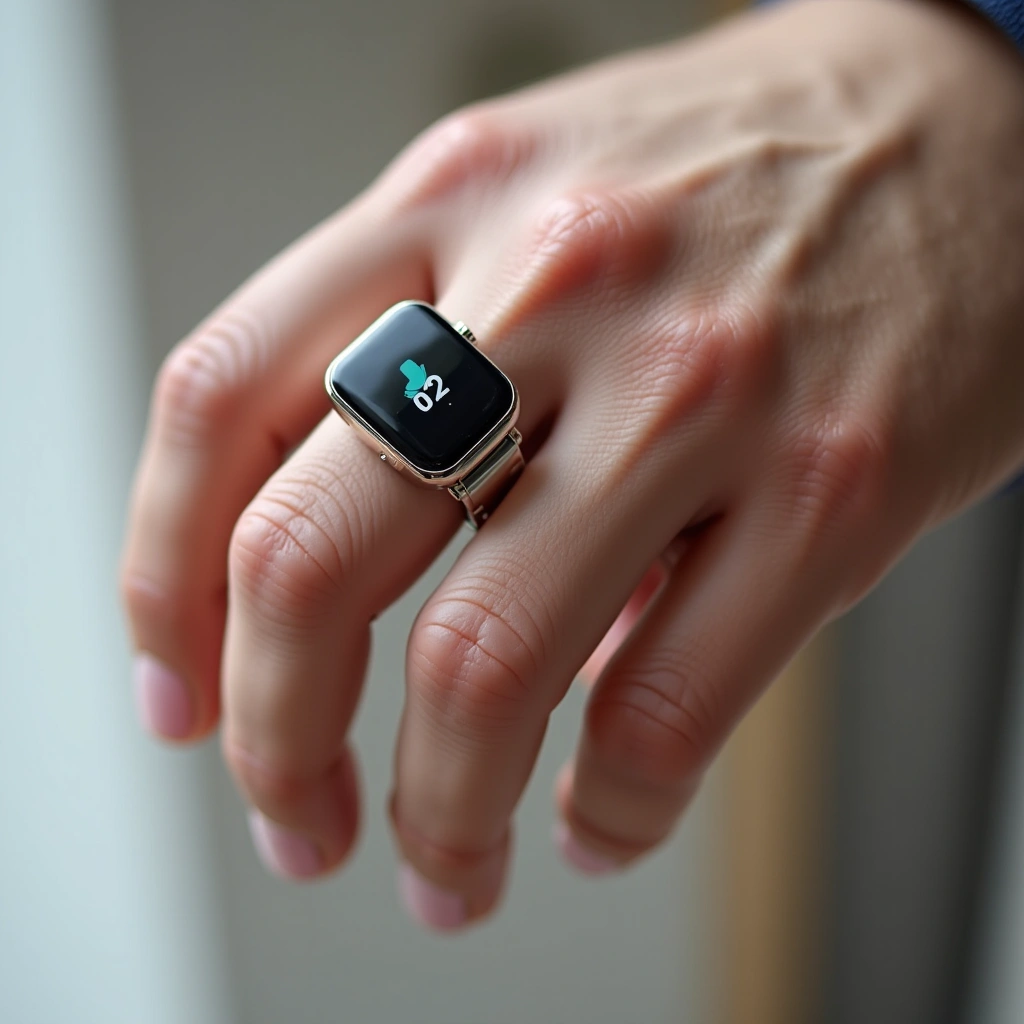
    Casio’s CRW-H001M-8 breaks the smart ring industry consensus by integrating a functional LCD display and full health sensors into a single device, distinguishing it from screenless competitors like the Oura Ring. Launched in China for approximately $294, it tracks heart rate, SpO2, sleep, and temperature while retaining classic Casio timekeeping features, offering a unique blend of wearable tech and traditional watch aesthetics. Although heavier and bulkier than minimalist trackers, its dual-power architecture allows the display to run for two years on a non-rechargeable battery while the health sensors last four to six days, positioning it as a versatile alternative for users who want immediate data access without a smartphone.

    Now, before you roll your eyes and think this is just another gimmick, let’s take a closer look at what this smart ring brings to the table. First off, it’s Casio, a brand that’s been around long enough to know a thing or two about durability and functionality. Remember the indestructible G-Shock watches? Well, it seems they’re now trying to bring that same ruggedness to your finger.

    So, what exactly does this smart ring do? It’s packed with health sensors that can track various metrics like heart rate, sleep quality, and possibly even your stress levels when you realize your favorite show has been canceled. It’s basically like having a personal trainer and a therapist all wrapped around your finger—literally. And if you’re worried about style, fear not! This ring is designed to look sleek and modern, which means you can wear it proudly without feeling like a tech nerd.

    Additionally, the smart ring doubles as a digital watch. Yes, you can now tell time without having to awkwardly glance at your wrist. It’s like having a mini smartphone on your finger—perfect for those who want to keep their hands free for more important things, like scrolling through social media or trying to remember where they left their car keys.

    But let’s get real for a second. Is this smart ring really necessary? I mean, we’ve already got smartwatches, fitness trackers, and smartphones that do everything short of making us breakfast. But maybe that’s the point. Casio is targeting those who want to keep their tech low-key and minimalistic. If you’re someone who prefers not to wear a bulky watch but still wants to keep tabs on your health, this might just be the gadget for you.

    Of course, there’s also the question of battery life. If it’s anything like my smartphone, I’ll be charging it every night, which is just another thing to add to my already long list of nightly rituals. And let’s not forget about the potential for losing it. It’s a ring, after all—one minute it’s on your finger, the next it’s rolling under the couch, never to be seen again.

    In conclusion, Casio’s smart ring might be the future of health monitoring, or it could just be another tech fad that will fade into obscurity faster than you can say “Bluetooth.” But if you’re intrigued by the idea of wearing your health stats on your finger and want to feel a little more connected to your well-being, it’s worth keeping an eye on. Who knows? This could be the accessory that finally makes you feel like a superhero—minus the spandex suit.

    So, what do you think? Are you ready to embrace the smart ring revolution, or do you prefer to stick with your good old-fashioned watch? Let us know in the comments!


    Inspired by: “Casio has unveiled a smart ring featuring health sensors and a digital watch” (r/technology)

  • A Groundbreaking Moment: Merseyside Lung Cancer Patient Receives World’s First New Vaccine

    A Groundbreaking Moment: Merseyside Lung Cancer Patient Receives World’s First New Vaccine

    In a world where medical advancements sometimes feel like they’re moving at a snail’s pace—while we wait for that miracle cure for all ailments, including our addiction to scrolling through cat memes—there’s some genuinely exciting news coming out of Merseyside. A local lung cancer patient has made history by becoming the first person in the world to receive a newly developed vaccine aimed at treating lung cancer. Yes, you read that right! This isn’t just another jab; this could be a game-changer in the fight against one of the deadliest forms of cancer.

    Chris Jones, a 68-year-old from Hoylake, Merseyside, has become the first patient globally to receive a personalized lung cancer vaccine as part of the NEOVACC Phase I clinical trial at the Clatterbridge Cancer Centre. The bespoke treatment uses ‘doggybone DNA’ technology to target genetic mutations specific to her advanced non-small cell lung cancer, aiming to boost her immune system’s ability to fight the disease after standard immunotherapy proved insufficient.

    Now, before we dive into the nitty-gritty details, let’s take a moment to appreciate the sheer audacity of this development. Vaccines have traditionally been our go-to for preventing diseases like measles, mumps, and, let’s be honest, the occasional case of the flu that leaves us binge-watching Netflix in bed. But a vaccine for cancer? That’s like finding out your favorite pizza place is now serving gourmet sushi. Mind-blowing!

    So, what exactly is this vaccine? Well, it’s designed to trigger an immune response specifically targeting lung cancer cells. Think of it as a superhero cape for your immune system, giving it the power to recognize and fight off those pesky cancer cells before they can wreak havoc. The patient, whose name we’ll keep under wraps for now to protect their privacy (because who wants to be the center of attention during a medical breakthrough?), has bravely stepped up to be the first to trial this innovative treatment.

    The vaccine is part of a larger clinical trial that aims to gather data on its effectiveness and safety. Clinical trials can often feel like the Wild West of medicine—lots of excitement, a few risks, and everyone hoping for a happy ending. But let’s not forget the real heroes here: the researchers and medical professionals tirelessly working behind the scenes to bring this vaccine to life. They deserve a standing ovation, or at least a nice cup of coffee and a donut.

    But, of course, with great power comes great responsibility. This vaccine, while promising, is still in the early stages of research. Experts are cautiously optimistic but remind us that the journey from trial to widespread use can be a long and winding road. It’s like waiting for your favorite band to drop a new album—exciting but with plenty of room for disappointment if things don’t pan out.

    As we cheer on our Merseyside hero, let’s keep our fingers crossed that this vaccine will pave the way for more breakthroughs in cancer treatment. After all, if a simple jab could potentially save lives and improve the quality of life for lung cancer patients around the globe, that’s a cause worth rallying behind.

    In the meantime, let’s raise a glass (or a cup of tea, if that’s more your style) to medical innovation, the brave patients participating in clinical trials, and the researchers who are working hard to change the world—one vaccine at a time. Who knows? Maybe one day we’ll look back at this moment and say, ‘Remember when we were just getting flu shots?’ Here’s to a future where we can add cancer vaccines to our list of annual immunizations, right next to the flu and that weird one you get for traveling to certain countries.

    Stay tuned for more updates on this fascinating story, and let’s keep our fingers crossed that this is just the beginning of a new era in cancer treatment!


    Inspired by: “Merseyside lung cancer patient first in world to get new vaccine” (r/technology)

  • A Kidney for Everyone: The Medical Breakthrough That Changes Everything

    A Kidney for Everyone: The Medical Breakthrough That Changes Everything

    In a world where medical miracles can sometimes feel like a distant fantasy, recent news has brought a glimmer of hope for those with kidney issues. Yes, you read that right! A groundbreaking medical advancement has made it possible for a patient with absolutely zero options to receive a kidney transplant. And no, this isn’t a plot twist from a medical drama series—this is real life, and it’s pretty incredible.

    A transplant team also worries about other immune signals, tissue compatibility, organ condition, timing, infection risk, surgery itself, and the medicines needed afterward. … A transplant isn’t just a plumbing procedure. It’s a long conversation between the donor organ and the recipient’s immune system. That’s why even a breakthrough focused on blood type alone is significant. It addresses one real barrier, but not the whole set of barriers. The idea behind this research is elegant. If the kidney’s A marker is one reason the immune system objects, what if you remove that marker before the organ is transplanted?

    So, let’s dive into this fascinating development, shall we? First off, let’s get one thing straight: kidney transplants aren’t exactly a walk in the park. For many folks suffering from chronic kidney disease, the options can feel as limited as the remaining battery life on your phone when you forgot your charger. Typically, patients rely on either finding a suitable donor or going through the long and often tedious process of being placed on a waiting list. Spoiler alert: waiting lists can be longer than the line at your local coffee shop on a Monday morning.

    But what happens when you’ve exhausted all your options? Enter the latest medical breakthrough that’s turning the tide for patients who thought they were out of luck. Researchers and medical professionals have been working tirelessly to develop innovative transplant techniques that can help even those who have been deemed unsuitable candidates for traditional transplants.

    Imagine being in a position where every door seems to be closing on you, and suddenly, someone hands you a golden ticket to a new lease on life. That’s essentially what’s happening here. This breakthrough involves advanced techniques and technologies that allow for transplants in patients with complex medical histories or those who have faced numerous obstacles in finding a donor. In other words, it’s like finding that elusive last slice of pizza at a party—unexpected but oh-so-satisfying.

    Now, let’s not gloss over the fact that this is still a complex and evolving field. While the breakthrough is exciting, it doesn’t mean we’re throwing caution to the wind and giving out kidneys like they’re candy at a parade. There are still rigorous evaluations and criteria to ensure that the patients receiving these transplants are the right candidates for the procedure. After all, we can’t have everyone running around with spare kidneys like they’re accessories.

    The implications of this breakthrough are profound. Not only does it open up new possibilities for patients who have previously felt hopeless, but it also paves the way for further research and innovation in the field of organ transplantation. It’s a win-win situation that makes you want to do a little happy dance (you know, the one that you do when you find out your favorite show got renewed for another season).

    In conclusion, this medical breakthrough is a beacon of hope for those facing dire medical challenges. It’s a reminder that science is continuously evolving and that there’s always room for innovation—even in the realm of organ transplants. So, here’s to the researchers, doctors, and everyone involved in making this miracle happen. May the future be bright and full of kidneys for all (well, not literally all, but you get the idea).

    Until next time, stay healthy, stay hopeful, and maybe keep an eye out for that last slice of pizza—you never know when you might need it!


    Inspired by: “Medical breakthrough allows kidney transplant for patient with zero options” (r/technology)

  • Breaking News: A New HIV Vaccine Shows Promising Results in Preclinical Study!

    Breaking News: A New HIV Vaccine Shows Promising Results in Preclinical Study!

    Hey there, fellow health enthusiasts! Gather ’round because we have some exciting news to discuss that might just make you jump out of your seat (or at least spill your coffee in surprise). A new HIV vaccine has shown unprecedented success in preclinical studies, and trust me, this isn’t just another ‘my cat can do tricks’ kind of news. We’re talking about a breakthrough that could potentially change the landscape of HIV prevention.

    While a highly effective vaccine could greatly reduce HIV transmission, eradication would depend on multiple factors, including vaccine coverage, durability, and integration with other prevention strategies. Source: hn This article is for informational purposes only and is not medical advice. Always consult a qualified healthcare professional about your specific situation.

    Let’s face it, HIV has been the unwelcome guest at the party of public health for far too long. Despite decades of research and development, the elusive quest for an effective vaccine has felt more like chasing a mirage in the desert. But hold on to your hats, because the latest research suggests we might just be getting closer to that oasis.

    In this preclinical study, researchers have reported success rates that are, quite frankly, unprecedented. Now, I know what you’re thinking: ‘Preclinical? What does that even mean?’ Well, it’s like being in the rehearsal phase before the big Broadway debut. The researchers are testing the waters with animals before they take their show to the humans. And from what we hear, the animal trials are looking pretty promising.

    The vaccine works by training the immune system to recognize and combat the HIV virus effectively. It’s like giving your body a superhero cape and telling it to go fight crime—except the crime is a virus, and the cape is metaphorical, because let’s be real, no one wants to see a bunch of caped humans running around.

    But before you start planning the celebration party (with cake and balloons, of course), let’s remember that preclinical studies are just the first step. There’s still a long road ahead, filled with clinical trials, regulatory approvals, and probably a few bureaucratic hurdles that would make even the most patient person roll their eyes.

    Still, this news has sparked hope in the scientific community and among advocates for those living with HIV. If this vaccine makes it through to the final production line, it could mean fewer new infections and a step closer to eradicating HIV altogether. And that’s something worth cheering for!

    So, what’s next? Researchers will continue to monitor the vaccine’s efficacy and safety as they prepare for human trials. If all goes well, we might just find ourselves in a world where HIV is no longer a threat. And wouldn’t that be nice?

    In conclusion, while we may not be popping champagne just yet, it’s safe to say that the future is looking a little brighter for HIV prevention. So, let’s keep our fingers crossed, stay informed, and support the ongoing research. Who knows? We might just be witnessing a historical moment in the fight against HIV. Now, if only we could solve the mystery of why socks disappear in the dryer, we’d be all set!


    Inspired by: “New HIV vaccine shows unprecedented success in preclinical study” (r/technology)