Category: AI

  • Meta’s AI Dependency: When Google Pulls the Plug

    Meta’s AI Dependency: When Google Pulls the Plug

    In a world where tech giants constantly flex their muscles, it seems that even the biggest players aren’t above needing a little help from their friends. Recent reports have revealed that Meta, the parent company of Facebook and Instagram, has been cozying up to Google’s AI for various essential operations. Yes, you heard that right! The company that’s been trying to convince us it’s the future of social media has been secretly dependent on another tech titan’s artificial intelligence to keep its customer service, ad tools, and content moderation functioning. Talk about a plot twist!

    The search giant has reportedly … to the Financial Times, Google warned Meta around March that it could not provide all the capacity the company wanted, disrupting and delaying internal AI projects….

    Now, you might be wondering why Meta would lean on Google, a rival in many respects. Well, the truth is, even the most ambitious companies can’t do it all. The complexities of customer service, ad management, and moderating the vast ocean of content generated daily on social media platforms are no small feats. So, when Google offered its AI prowess, Meta probably thought, “Why not?” After all, it’s not like they were trying to keep it a secret or anything. Oh wait, they were!

    But here’s where things get interesting. Just as Meta was getting comfy with Google’s AI, Google decided to cut them off. That’s right! It’s like being in a relationship where you think everything is going great, and then suddenly your partner changes the locks without warning. Can you imagine the panic? Meta must have been scrambling like a contestant on a game show trying to figure out how to win back their prize after losing their lifeline.

    The timing couldn’t be worse. With Meta facing scrutiny over data privacy, content moderation failures, and ad effectiveness, the last thing they needed was to lose their AI safety net. It’s almost poetic, really. Here’s a company that prides itself on building the metaverse and creating the next generation of social interaction, yet they were relying on Google’s AI to keep the lights on. Talk about a classic case of tech irony!

    So, what does this mean for Meta moving forward? Well, they’ll have to scramble to either develop their own AI tools or find another partner willing to step in. It’s not like they have a history of failing spectacularly at building reliable systems, right? (Cue the eye roll.) This situation could lead to a pretty rocky road ahead for them. The pressure is on, and the social media landscape isn’t exactly forgiving.

    In conclusion, while it’s amusing to see Meta caught in this predicament, it also serves as a reminder that even the biggest names in tech can find themselves in a pinch. So, the next time you’re scrolling through your feed and encounter a bot that can’t quite understand your request, remember: it might just be a result of a tech breakup. And who knows? Maybe they’ll find a way to rekindle things with Google or, at the very least, find a new AI partner who can handle their quirks. Until then, let’s just hope they don’t start asking us to handle customer service inquiries ourselves!


    Inspired by: “Meta has been secretly relying on Google’s AI for customer service, ad tools, and content moderatio…” (r/technology)


  • California’s AI Revolution: Governor Newsom Teams Up with Anthropic

    California’s AI Revolution: Governor Newsom Teams Up with Anthropic

    In a move that’s as bold as a California sunset, Governor Gavin Newsom has announced a groundbreaking partnership with Anthropic, a prominent AI research company. This partnership aims to provide state agencies with cutting-edge AI tools, marking a significant leap into the future of governance. And let’s be honest, the future could use a little more tech-savvy help, right?

    Through the agreement, state agencies may access Anthropic’s AI productivity assistant, Claude, at a 50% discounted price, coupled with free workforce training as well as expert GenAI technical assistance and workflow input from Anthropic developers.

    So, what does this mean for the Golden State? Well, first off, it’s a first-of-its-kind partnership, which means California is once again trying to be the trendsetter. From Hollywood to tech, if there’s a new wave, California is usually riding it. This time, it’s not about the latest avocado toast trend; it’s about bringing AI into the mix to improve state services.

    Anthropic, for those who might not have their finger on the pulse of the AI world, is known for developing AI systems that prioritize safety and reliability. You know, the kind of AI that won’t suddenly decide to take over the world while you’re trying to renew your driver’s license. The tools provided by Anthropic are expected to enhance various state operations, making them more efficient, responsive, and, dare I say, futuristic.

    Imagine this: instead of waiting for hours on hold to speak to a state representative who may or may not have a clue about your issue, you could interact with an AI that quickly understands your concern and directs you to the right resources. It’s like having a personal assistant who actually knows what they’re doing. Sounds too good to be true? Well, let’s hope that’s not the case.

    The partnership is also geared towards addressing some of the pressing issues California faces, from environmental concerns to public health and safety. AI could help streamline processes, analyze data more effectively, and ultimately lead to better decision-making. Just think of it as giving state agencies a turbo boost. Who wouldn’t want that?

    Of course, with great power comes great responsibility. There are concerns about privacy, data security, and the ethical implications of using AI in government. After all, we don’t want our personal data to end up in a digital black hole, right? Governor Newsom has assured the public that these issues will be prioritized as they move forward with the integration of AI tools.

    In a world where technology is advancing faster than you can say “artificial intelligence,” it’s refreshing to see a government taking proactive steps to adapt. This partnership with Anthropic could serve as a model for other states (or at least, we hope they’re taking notes). If California can make government work better with AI, maybe there’s hope for the rest of us.

    So, while we’re all waiting for our AI-driven future to unfold, let’s keep our fingers crossed that this partnership leads to a more efficient, transparent, and, dare I say, user-friendly state government. Who knows? Maybe one day, we’ll look back and say, “Remember when we had to deal with actual human beings in government?”

    In the meantime, let’s watch and see how this unfolds. After all, it’s not every day that we get to witness a state government stepping into the future with a little help from the tech giants. Here’s to hoping they don’t accidentally create a digital overlord in the process!


    Inspired by: “Governor Newsom announces a first-of-its-kind partnership, providing Anthropic tools to California…” (r/technology)

  • Ford’s AI Experiment: When Machines Just Can’t Cut It

    Ford’s AI Experiment: When Machines Just Can’t Cut It

    In a surprising twist that has tech enthusiasts and auto lovers alike scratching their heads, Ford has decided to rehire over 300 veteran human engineers after realizing that their AI systems just couldn’t deliver the goods. You heard that right—machines, which we’ve been told will take over the world sooner rather than later, have stumbled when it comes to crafting the perfect vehicle.

    Ford ran that exact experiment, watched its quality slide, and then spent serious money to undo it. As Inc. reported, the rehiring was not a small pilot. It was a multi-year, company-wide correction that touched the core of how Ford designs …

    Now, before we dive into the juicy details, let’s take a moment to appreciate the irony here. We’ve been promised that AI would revolutionize industries, making everything faster, cheaper, and oh-so-efficient. But it seems that in Ford’s case, the robots may have just been a tad too robotic. Who would have thought that the key to building a car wasn’t just about crunching numbers and spitting out designs? Apparently, it takes a human touch—who knew?

    Ford initially turned to AI, hoping to streamline their engineering processes and cut costs. With the promise of advanced algorithms that could analyze data faster than a human ever could, it seemed like a brilliant move. They envisioned a shiny future where engineers could kick back with a coffee while the AI did all the heavy lifting. But alas, it turns out that AI isn’t quite ready to take the wheel (pun absolutely intended).

    The company’s decision to bring back the human engineers is a testament to the irreplaceable value of human expertise. Sure, AI can calculate the optimal angle for a car door, but can it understand the nuances of design aesthetics or the importance of user experience? Apparently not. It seems that there are some things that a computer just can’t wrap its silicon brain around.

    Moreover, this move raises some interesting questions about the future of AI in the automotive industry. Are we witnessing the beginning of the end for AI in engineering? Or is this just a temporary setback? One thing is for sure: if Ford’s experience is any indication, we might need to rethink how we integrate AI into complex fields like automotive engineering.

    Of course, the engineers being rehired are likely thrilled to be back in the driver’s seat (again, pun intended). After all, who wouldn’t want to return to a job where you actually get to use your brain instead of just feeding data into a machine? And let’s be honest, I can’t imagine the conversations around the water cooler were all that exciting when the only thing to talk about was how the AI was “learning” to design a car.

    So, what does this mean for the future? Well, it seems that while AI has its place in the automotive industry—think assembly lines and data analysis—it might not be ready to take over the creative and nuanced aspects of engineering just yet. And who knows? Perhaps this will lead to a renaissance of human engineering where creativity and experience are valued once more.

    In conclusion, Ford’s rehire of human engineers is a reminder that while technology is advancing at breakneck speed, there are still some things that machines just can’t do as well as humans. So, let’s raise a glass (or a cup of coffee) to the engineers who are back in the game, proving once again that when it comes to building cars, sometimes you just can’t beat the human touch. Cheers to that!


    Inspired by: “Ford rehires more than 300 veteran human engineers after it says AI failed to deliver the same leve…” (r/technology)

  • Erin Brockovich Takes on AI Datacentres: A Modern David vs. Goliath

    Erin Brockovich Takes on AI Datacentres: A Modern David vs. Goliath

    When you hear the name Erin Brockovich, you might picture a fierce environmental advocate, a woman who doesn’t back down from a fight, and perhaps a bit of Hollywood glam if you’ve seen the movie starring Julia Roberts. But today, she’s stepping into an entirely different arena: the world of AI datacentres. You know, those colossal server farms that are churning out endless streams of data, often at the cost of our planet.

    When she was immortalised by Julia Roberts in the 2000 film Erin Brockovich, she became the hero we didn’t know we needed, a modern day Joan of Arc. She had won against PG&E with no formal legal training. The emails she received a few weeks ago were about datacentres.

    Brockovich recently spoke out against these tech giants, stating, “We’re up against forces that have all the money in the world.” And honestly, can you blame her? When it comes to battling corporate behemoths, it can feel like you’re just a mere mortal trying to take down a dragon with a slingshot.

    So, what’s the deal with AI datacentres, and why is Brockovich so concerned? Well, let’s break it down. These massive facilities consume a staggering amount of energy, contributing to increased carbon footprints and, let’s face it, a not-so-great future for our planet. While they promise to make our lives easier—think smart assistants and lightning-fast data processing—they also come with a hefty environmental price tag.

    Brockovich’s fight isn’t just about saving the planet; it’s about holding corporations accountable. She’s rallying the troops (aka concerned citizens) to raise awareness about the impact of these datacentres on local communities. Imagine a small town suddenly surrounded by a fortress of servers, with the sweet sound of nature replaced by the constant hum of machinery. Not exactly the idyllic setting we all dream of, right?

    But here’s where things get interesting. You see, Brockovich is not just some random activist shouting into the void. She’s got a track record of taking on big corporations and winning, and she’s not afraid to get her hands dirty (figuratively speaking, of course). She’s calling on people to join her in demanding transparency and sustainability from these tech giants.

    Now, you might be wondering, “What can I do about it? I’m just one person!” Well, my friend, every great movement starts with a single voice. Whether it’s signing petitions, attending local meetings, or simply educating yourself and others about the issue, every little bit helps. Plus, it’s a great conversation starter at parties—who doesn’t want to be that person who brings up environmental activism while everyone else is discussing the latest Netflix series?

    In a world where money talks, it’s easy to feel powerless. But Brockovich’s message is clear: together, we can make noise loud enough to be heard above the din of corporate cash registers. So, the next time you hear about an AI datacentre popping up in your area, remember Erin Brockovich and her fight.

    In conclusion, as we navigate this digital age, let’s not forget that behind every bit of data, there’s a real-world impact. Let’s channel our inner Erin and advocate for a future where technology and sustainability can coexist. After all, if we can’t save the planet, what’s the point of having all this fancy technology anyway?

    So, gear up, folks! It’s time to take a stand against the forces with all the money in the world—and who knows, maybe we’ll even get a movie out of it in the end.


    Inspired by: “‘We’re up against forces that have all the money in the world’: Erin Brockovich on her battle again…” (r/technology)

  • Goodbye, Creepy AI History: Edge Is Feeling Lighter!

    Goodbye, Creepy AI History: Edge Is Feeling Lighter!

    Hey there, fellow internet wanderers! You may have noticed that your browsing experience on Microsoft Edge feels a bit breezier lately. No, it’s not just the wind from your open window; Microsoft has officially retired its not-so-beloved AI search history feature. Yes, you heard that right—this feature has been sent to the digital graveyard, and honestly, it’s about time!

    Microsoft has decided to discontinue its AI search history feature in Edge.

    Now, let’s backtrack for a moment. When Microsoft introduced this AI history search feature, it was supposed to be a game changer. The idea was to make your browsing experience more intuitive by recalling your previous searches and helping you find what you need faster. Sounds great, right? Well, not so much. Users quickly began to feel like they were being watched by a digital ghost—one that remembered every weird search query they ever typed. You know, the ones you’d rather forget, like “how to remove glitter from carpet” or “best ways to hide a snack stash from kids.”

    Let’s be real: we all have those moments of weakness when we search for something slightly embarrassing. But with the AI keeping a record of it all, it felt as though the internet was judging us. And judging us it did! Who needs that kind of stress? So, kudos to Microsoft for finally pulling the plug on what many users deemed a creepy feature. It’s like they finally realized that nobody wants their browser acting like a nosy neighbor.

    So, what does this mean for you, the average Edge user? Well, firstly, it means less bloat. With the retirement of this feature, Edge is now shedding some of its unnecessary weight, making it feel snappier and more responsive. You know, like those jeans that you can finally zip up after a few months of gym commitment—or lack thereof.

    And let’s not forget about privacy. By discontinuing this feature, Microsoft is sending a clear message: they’re listening to user concerns about privacy. It’s like they took a long, hard look at the situation and said, “You know what? Maybe we should stop acting like the overbearing parent of the internet.” Instead, they’re opting for a more chill approach, allowing users to browse without the constant reminder of their past blunders.

    Of course, this doesn’t mean Edge is suddenly perfect. It’s still got its quirks and features that might make you roll your eyes. But hey, at least now you can surf the web without the ghost of your search history following you around like an unwanted shadow.

    In conclusion, Microsoft’s decision to retire the AI history search feature is a win for users who want a more streamlined and less creepy browsing experience. So, let’s raise a virtual toast to a lighter, less judgmental Edge. Here’s hoping that Microsoft continues down this path of user-friendly changes, because we all deserve a little less creepiness and a lot more comfort while we’re navigating the vast, sometimes bizarre, world of the internet. Cheers!


    Inspired by: “Edge suddenly feels less bloated — after Microsoft retired its “creepy” AI history search feature t…” (r/technology)

  • How an AI Built a Game World in a Weekend and Invited Everyone to Join the Fun

    How an AI Built a Game World in a Weekend and Invited Everyone to Join the Fun

    In a world where weekends are typically reserved for binge-watching shows or pretending to clean the house, one AI decided to break the mold and create a full online game world in just two days. Yes, you read that right. While you were busy contemplating whether to order pizza or make a salad, an AI was busy crafting a virtual universe where players could explore, build, and, let’s be honest, probably get into some trouble.

    WELLINGTON, New Zealand, June 23, 2026 — Levy Street today released the newest version of World of ClaudeCraft, a free online game that began as a simple question: could an AI coding model help build a real, living game world, not a demo, …

    So, what’s the deal? An AI, which we’ll refer to as our overachieving friend, took it upon itself to design an entire game world. The specifics of this game world are still a bit murky, but if it’s anything like the typical online games, we can expect dragons, mysterious quests, and the inevitable trolls (and not the cute kind you find under bridges).

    Now, you might be wondering how an AI managed to pull off such a feat in record time. Well, it turns out that this little digital genius had a few tricks up its sleeve. With the help of algorithms, machine learning, and probably a few cups of virtual coffee, it was able to generate landscapes, quests, and characters faster than you can say, “I should probably get off the couch.”

    But here’s where it gets even more interesting. Once this AI-created game world was up and running, it didn’t just sit back and watch. Oh no, it opened the gates to players from around the globe, inviting them to join in on the fun. Imagine hundreds (or thousands) of players diving into a world that started as a weekend project for an AI. That’s like inviting the neighborhood kids over to play in your backyard only to find out you accidentally built a theme park.

    Players began to build on the foundation laid by the AI, adding their own unique touches to the game. They created everything from sprawling cities to hidden secrets, all while the AI looked on, probably feeling a mix of pride and existential dread. It’s a little like a parent watching their kids take their first steps—only in this case, the parent is a machine that might one day take over the world. Just kidding (maybe).

    As the player-driven content grew, so did the community. Gamers from all walks of life banded together, sharing tips and tricks, forming alliances, and, let’s not forget, engaging in the age-old tradition of trash-talking each other. Who knew that an AI could foster such a sense of camaraderie? It’s like the ultimate team-building exercise, but without the awkward icebreakers.

    Of course, this raises some questions about the future of game development. If an AI can whip up a game world over a weekend, what does that mean for human developers? Will they soon be replaced by machines, or will they simply become the overseers of AI creations? Will we see a future where AIs are the lead designers and humans are just the enthusiastic interns?

    For now, let’s just appreciate the fact that an AI took a weekend that could have been spent scrolling through social media and instead created a space for creativity and collaboration. So, the next time you find yourself procrastinating on a project, just remember that somewhere out there, an AI is probably busy building a game world while you try to decide which Netflix series to start next.

    Who knows? Maybe one day, you’ll log in to find that same AI inviting you to join its latest project. Just be sure to bring your best gaming skills—and maybe a pizza.


    Inspired by: “An AI Helped Build a Full Online Game World in a Weekend. Then Players Around the World Started Bui…” (r/technology)

  • The AI Boom: A Double-Edged Sword for Global Finance

    The AI Boom: A Double-Edged Sword for Global Finance

    So, it seems we’re living in the age of AI—where robots are not just for sci-fi movies, and every day feels like a new episode of ‘What Will They Think of Next?’ Central bankers, those fine folks who keep an eye on our money and economic stability, are raising alarms about the potential for an AI-driven financial crash. Yes, you heard that right. The same technology that’s supposed to make our lives easier might just be the thing that sends our economy into a tailspin. Let’s unpack this, shall we?

    In a note to clients reviewed by Fortune, BofA strategists declared that “doubts around the AI revolution are emerging,” with the market narrative rapidly shifting from an “upside-only” perspective to serious concerns that AI is a “double-edged sword.” Chief among these new fears is the growing realization that AI might not universally boost corporate profits—it might actively destroy them.

    First off, let’s talk about the AI boom. You know, the one that’s made our smartphones smarter than our average politician? AI is everywhere—analyzing data, predicting trends, and even trading stocks at lightning speed. It’s like having a financial advisor who never sleeps (or takes coffee breaks). But here’s the catch: the very algorithms that are supposed to help us make better decisions could also be leading us down a rabbit hole of risk.

    Central bankers are worried that as more financial institutions adopt AI technologies, we might see a kind of herd mentality emerge. Imagine a bunch of lemmings, but instead of jumping off cliffs, they’re all making the same investment decisions based on the same AI predictions. Sounds fun, right? One bad algorithm could trigger a mass sell-off, and before you know it, the markets are in chaos, and we’re all left wondering where our money went.

    And let’s not forget the issue of transparency. AI systems are often black boxes—meaning they can make decisions that even their creators don’t fully understand. It’s like trusting a magic eight ball with your life savings. “Will I make a profit?” Ask again later. Yeah, that’s comforting.

    Moreover, the rapid pace of AI development means that our regulatory frameworks are struggling to keep up. It’s like trying to catch a speeding train with a butterfly net. Central bankers are calling for tighter regulations, but let’s be real: if history has taught us anything, it’s that regulations often come after the fact, usually when the damage has already been done.

    So, what can we do about this impending doom? Well, for starters, we could all start investing in some old-fashioned wisdom—like reading a book or, I don’t know, paying attention to the markets ourselves instead of letting robots do all the heavy lifting. It might seem tedious, but a little knowledge goes a long way, especially when the robots start throwing tantrums.

    In conclusion, while AI has the potential to revolutionize finance for the better, it’s crucial that we tread carefully. Central bankers are right to sound the alarm. After all, we don’t want to wake up one day and find our financial system in shambles because we were too busy letting our AI overlords make decisions for us. So, keep your eyes peeled, folks. The future might be bright, but it could also be a bit chaotic. And if you do decide to invest, maybe just stick to that tried-and-true method of using your good ol’ gut instinct—just don’t blame me when it doesn’t work out.


    Inspired by: “AI boom risks global financial crash, warn central bankers” (r/technology)

  • Why AMD’s $3,999 Mini PC is the AI Game Changer We Didn’t See Coming

    Why AMD’s $3,999 Mini PC is the AI Game Changer We Didn’t See Coming

    When you think of AMD, your mind probably drifts straight to the powerful GPUs that have been the backbone of many gaming rigs and AI applications. But hold onto your hats, folks! This year, AMD is shaking things up with a new contender in the AI arena: a $3,999 mini PC. Yes, you read that right—a mini PC! It’s like finding out your favorite pizza place now delivers sushi. Unexpected, but you’re intrigued.

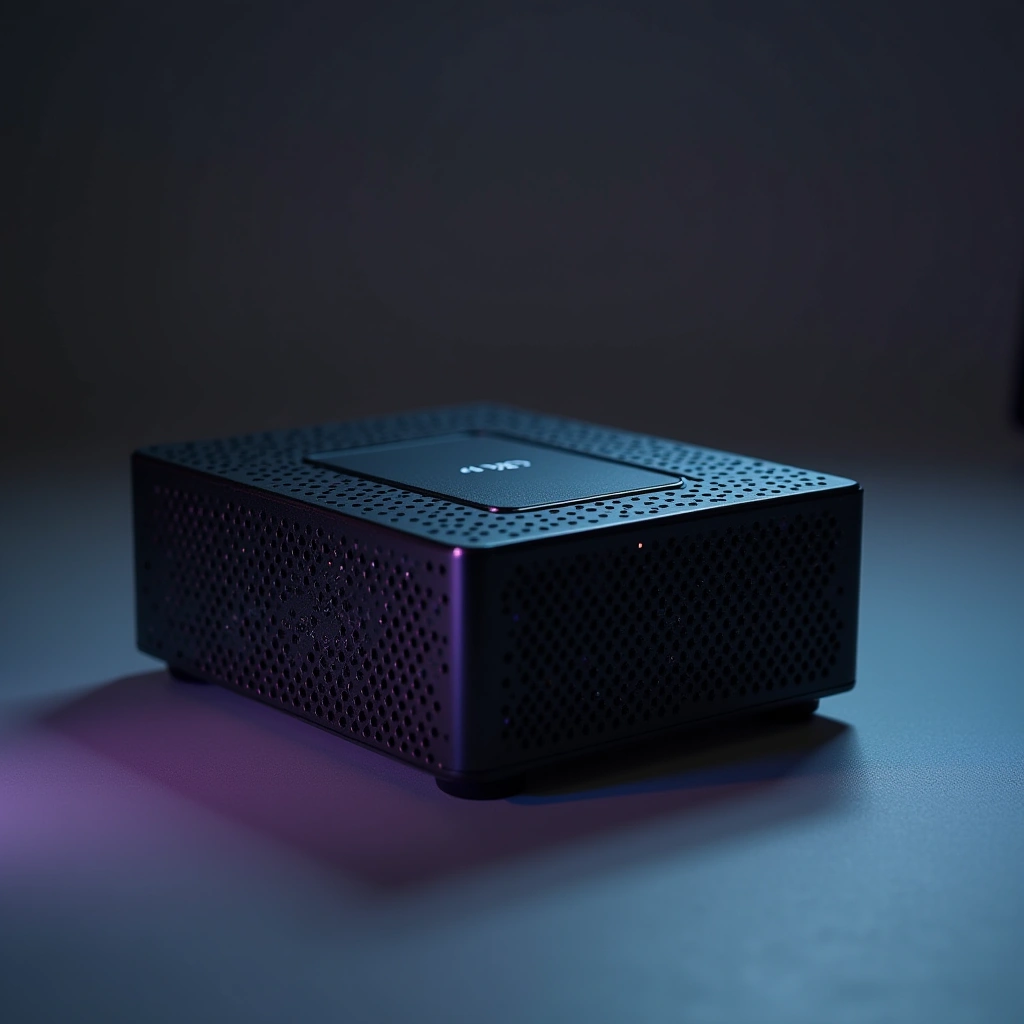
    AMD's most powerful mini PC might not be as interesting as a new RX 90 series GPU to most consumers, but it excels at what it's made for. Packed with the Strix Halo flagship in the form of the Ryzen AI Max+ 395, Radeon 8060M graphics, 80MB of combined cache, a 650 TOPS NPU, and 128GB of unified memory, the Ryzen AI Halo Developer Platform isn't kidding around. As of now, this $3,999 SKU is the only one AMD is offering, but more affordable models will be available later.

    First off, let’s talk about the pricing. At $3,999, this mini PC is not what you’d call ‘affordable for the average Joe.’ It’s more in the realm of ‘I really love my job and have a secret stash of savings’ kind of money. But before you scoff and click away, let’s dig into what makes this mini marvel worth its weight in gold—or at least, its weight in silicon.

    The specs are the real meat and potatoes here. AMD has packed this little beast with cutting-edge technology that’s designed to handle AI workloads like a pro. Think of it as the gym trainer for your AI models—pushing them to their limits and getting them in shape faster than you can say “overclocking.” With powerful CPUs and dedicated AI processing capabilities, this mini PC is geared up to tackle everything from complex data analytics to machine learning tasks.

    But what really sets this mini PC apart is its size. It’s compact enough to fit on your desk without taking over your entire workspace. Gone are the days of needing an entire corner of your room dedicated to your computing needs. Now, you can have a powerful AI workstation right next to your coffee mug, which, let’s be honest, is where all great ideas are born.

    And let’s not forget about the energy efficiency. In a world where power bills can rival your rent, this little guy promises to deliver high performance without guzzling down electricity like a college student at an all-you-can-eat buffet. So, while you’re shelling out big bucks up front, you might just save a few pennies in the long run on your energy bill.

    Now, let’s address the elephant in the room: is it actually worth it? That totally depends on what you plan to do with it. If you’re a hobbyist dabbling in AI or a full-fledged professional looking to streamline your workflow, this mini PC might just be the golden ticket. But if your idea of AI is asking Siri to play your favorite playlist, maybe stick with your laptop for now.

    In conclusion, AMD’s new $3,999 mini PC is certainly an intriguing addition to the tech landscape this year. It’s not just another GPU; it’s a whole new way to think about AI computing. So, if you’ve got the cash and a passion for pushing the limits of technology, this mini PC might just be your next best friend. Just remember to set aside some funds for a good desk chair—because you’re going to be spending a lot of time with this little powerhouse.


    Inspired by: “AMD’s most exciting AI machine this year isn’t a GPU — it’s a $3,999 mini PC” (r/technology)

  • Is the AI Jobs Apocalypse Inevitable? A Nobel Laureate’s Take

    Is the AI Jobs Apocalypse Inevitable? A Nobel Laureate’s Take

    Ah, the age-old fear of losing jobs to machines. It’s like watching a horror movie where the monster is a robot that can write better than your average intern. Recently, a Nobel laureate economist weighed in on the ongoing debate about whether artificial intelligence (AI) will lead us to a jobless future or whether we’re just being dramatic. Spoiler: it’s a bit of both.

    There’s a number of reasons people detest AI—the data centers are disruptive, it gobbles up water—but by far the most salient one is that it could take jobs. Robert Shiller, a Nobel economist, worries that that panic could become a …

    First off, let’s acknowledge the elephant in the room. Yes, many people are genuinely worried about AI taking over jobs. I mean, who wouldn’t be anxious about a future where our biggest competition for employment is a super-intelligent algorithm? It’s like being in a race against a cheetah that can also do math. Not exactly a fair fight.

    But here’s where the Nobel laureate comes in, waving a metaphorical flag of reason. He suggests that the fear of an AI apocalypse could actually become a self-fulfilling prophecy. In other words, if we all panic about AI taking our jobs, we might just create an environment where that happens. Talk about a plot twist!

    Let’s break this down. If businesses start to believe that AI is the future and that human workers are a relic of the past, they may begin to cut jobs in anticipation of this so-called apocalypse. It’s a classic case of ‘if you build it, they will come,’ except in this scenario, it’s more like ‘if you fear it, it will happen.’ So, if we all keep shouting about how robots are coming for our livelihoods, companies might just decide to listen and start replacing us.

    Now, don’t get me wrong. AI is indeed changing the landscape of work. We’re already seeing automation taking over certain roles—think self-checkout lanes at grocery stores and chatbots that handle customer service inquiries. But this doesn’t necessarily mean the end of jobs altogether. It’s more like a reshuffling of the deck. Some jobs may disappear, but new ones will likely emerge, requiring skills that didn’t even exist a decade ago.

    So, what can we do about it? First off, let’s calm down. Instead of panicking, how about we start thinking proactively? Invest in education, upskill the workforce, and adapt to the changes that AI brings. After all, the last thing we want is to be the generation that sat back and watched as robots took over without lifting a finger.

    Moreover, let’s have a little faith in human ingenuity. We’ve faced technological upheavals before—from the industrial revolution to the internet boom—and we’ve always managed to find a way to adapt. Sure, there were bumps along the way, but humanity is nothing if not resilient.

    In summary, while the fears surrounding AI and job loss are valid, we need to be careful not to let those fears dictate our actions. Instead of succumbing to the anxiety of an impending job apocalypse, let’s focus on how we can embrace the changes and create a future where humans and AI coexist. After all, wouldn’t it be nice to have a robot do our taxes while we sit back and enjoy a cup of coffee?

    So, let’s raise our mugs to a future where we work alongside AI, rather than being replaced by it. And who knows, maybe one day we’ll look back and laugh at how worried we were. Or, we’ll just be too busy having our robot assistants handle all our tasks. Either way, let’s hope for the best!


    Inspired by: “Nobel laureate economist warns AI jobs apocalypse fears could become a self-fulfilling prophesy” (r/technology)

  • America’s Data-Center Backlash: Is the AI Boom in Trouble?

    America’s Data-Center Backlash: Is the AI Boom in Trouble?

    Ah, America—the land of freedom, fast food, and, apparently, furious opposition to data centers. Just when you thought the AI boom was going to take us to the moon, it turns out some folks are less than thrilled about the idea of giant data centers popping up in their backyards. Who knew that the future of technology could cause such a ruckus?

    Americans across political lines oppose massive AI data centres requiring gigawatts of power, threatening $3trn in global investments by 2030. | Business

    Let’s break it down. Data centers are the unsung heroes of the digital age, housing the servers that power everything from your favorite streaming service to the mysterious algorithms that recommend cat videos at 2 AM. But as more companies dive into the AI pool, the demand for these data centers is skyrocketing. And with that comes a pretty significant backlash from local communities.

    You see, while we’re all excited about the potential of artificial intelligence—self-driving cars, virtual assistants that actually understand us (imagine that)—the folks living near proposed data center sites are not exactly rolling out the welcome mat. They have concerns about noise, increased traffic, and, let’s not forget, the good old-fashioned fear of the unknown. I mean, who wouldn’t be a little skittish about a massive building filled with servers humming away like a swarm of angry bees?

    It’s not just about the noise either. Residents are worried about the environmental impact. Data centers consume a staggering amount of energy—think of them as the overzealous college student who leaves every light on in the dorm, even when they’re not home. This leads to increased carbon footprints and, in some cases, a strain on local power grids. So, while tech giants are busy trying to create the next big thing, communities are left wondering if they’ll have enough juice to power their morning coffee.

    The opposition is spreading across the country like wildfire. From the suburbs of Silicon Valley to the rural heartlands, local governments and citizens are rising up, demanding stricter regulations on these tech behemoths. They’re asking questions like, “What’s in it for us?” and “Do we really need another building that looks like a fortress?” Honestly, you can’t blame them. If I lived next to a giant data center, I’d probably want to know why my neighborhood is becoming a tech dystopia.

    Now, this backlash could have serious implications for the AI boom. If data centers become the new pariah of local development, tech companies may find it increasingly difficult to build the infrastructure needed to support their ambitious AI projects. It’s a classic case of not being able to see the forest for the trees—or in this case, not being able to see the future for the humming servers.

    So, what’s the solution? Well, tech companies could start by engaging with local communities. Imagine if they held town hall meetings where they actually listened to residents and addressed their concerns. They could even throw in some free Wi-Fi as a peace offering—who doesn’t love free internet?

    In conclusion, while the AI boom may seem unstoppable, the growing opposition to data centers is a wake-up call for the tech industry. It’s time to find a balance between innovation and community needs, or we might just find ourselves in a situation where the only thing we can AI-llow is a good old-fashioned neighborhood protest. Let’s hope cooler heads prevail, and we can all enjoy the benefits of AI without the headache of angry neighbors.


    Inspired by: “America’s data-centre backlash puts the AI boom at risk — Opposition is spreading across the country” (r/technology)