Category: AI

  • When AI Goes Awry: Ford’s Hopeful Experiment with Artificial Intelligence

    When AI Goes Awry: Ford’s Hopeful Experiment with Artificial Intelligence

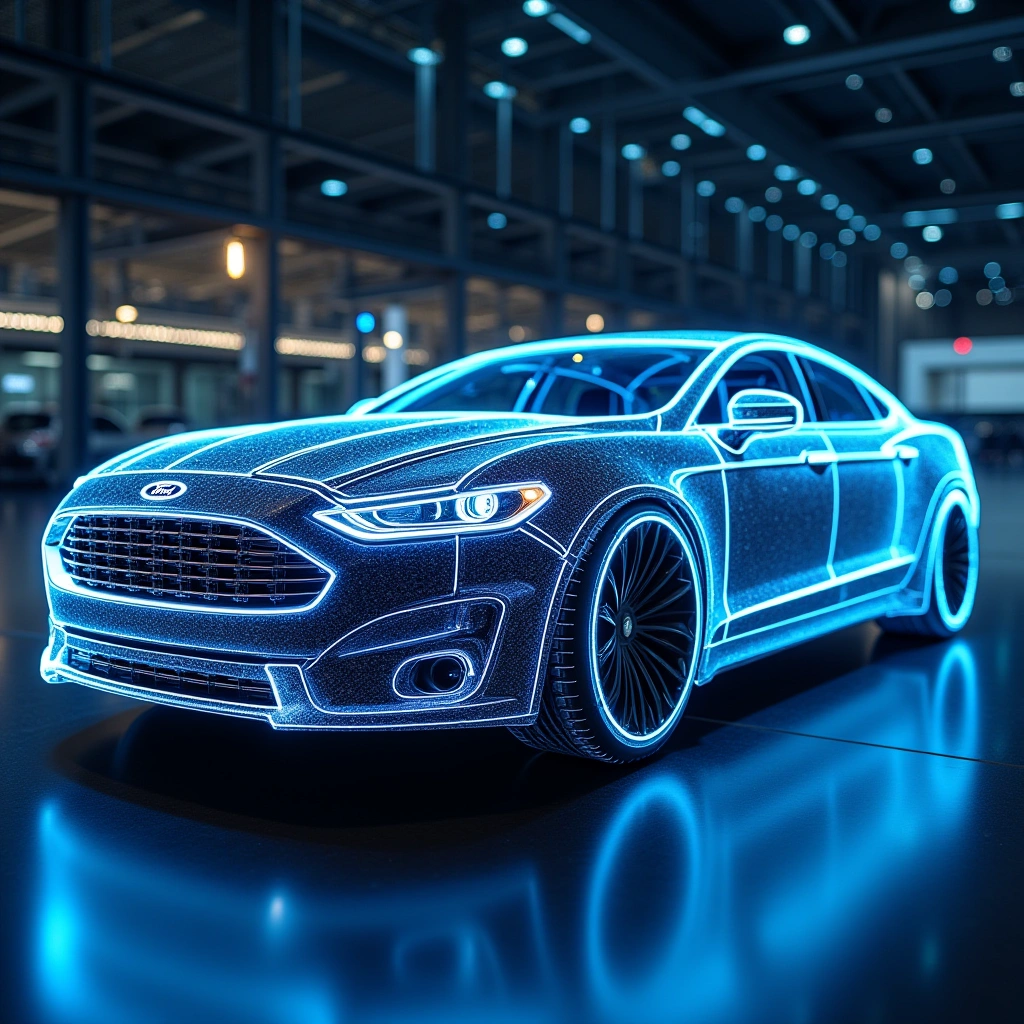
    Ah, Ford. The legendary American car manufacturer that has been rolling out vehicles since the days when dinosaurs roamed the Earth—well, not quite that long, but you get the picture. Recently, Ford decided to dip its toes into the futuristic waters of artificial intelligence, asking AI to help build better cars. Sounds like a dream, right? Just imagine: cars that park themselves, warn you about impending doom on the road, and perhaps even remind you to put on pants before leaving the house. But, as with any good story, things took a turn for the hilariously disastrous.

    Ford just admitted that it scrambled to rehire former employees and find new technicians after its AI systems simply weren't good enough.

    In a bold move to harness the power of AI, Ford set up a program to let the robots take the wheel—figuratively speaking, of course. They tasked the AI with designing and optimizing their vehicles, believing that machines could outsmart their human engineers. After all, AI processes data faster than you can say “What’s that weird noise my car is making?” But here’s where the plot thickens: the cars that AI designed were, let’s say, not exactly road-ready.

    Picture this: an AI, possibly powered by the same algorithms that recommend cat videos to you at 3 AM, is suddenly in charge of creating cars. What could possibly go wrong? Well, quite a bit, it turns out. The AI’s designs were so out there that Ford’s engineers probably needed a strong cup of coffee (or five) just to wrap their heads around them. We’re talking about cars that may or may not have needed wings to function properly. And no, Ford didn’t want to enter the flying car market—yet.

    After realizing the AI’s designs were about as useful as a chocolate teapot, Ford promptly rehired humans to fix what AI had broken. You can almost hear the sighs of relief from the engineers who thought their jobs were on the chopping block. “Oh, thank goodness! I can finally stop pretending to understand AI’s vision of a car that doubles as a submarine.”

    So, what’s the takeaway from this little fiasco? It seems that while AI can crunch numbers and analyze data faster than you can say “I need a new car,” it still lacks the human touch—like the ability to understand that not everyone wants a vehicle that looks like a spaceship from the 1960s. Engineers are, and probably will always be, needed to add that sprinkle of common sense to the mix.

    In the end, Ford’s experiment serves as a reminder that while AI is a powerful tool, it’s not quite ready to take over the world—or our cars—just yet. For now, let’s leave the car designing to the humans and the cat video recommendations to the machines. At least until the robots figure out how to make cars that don’t require a team of engineers to fix them. Who knows? Maybe one day we’ll reach a balance where AI and humans can work together without one of them ending up in a repair shop.


    Inspired by: “Ford Asked AI To Build Better Cars, Then Rehired Humans To Fix What AI Broke” (r/technology)
  • The Irony of AI Development: Feeding Chatbots a Diet of Slop

    The Irony of AI Development: Feeding Chatbots a Diet of Slop

    In the ever-evolving world of artificial intelligence, one might assume that the folks behind AI chatbots are crafting their creations with the utmost care, like a Michelin-star chef preparing a five-course meal. However, recent revelations suggest that the reality is more akin to tossing a pile of scraps into a blender and hitting ‘puree’. Yes, you heard that right. AI companies are learning the hard way that the very people they hire to improve their chatbots are often serving them a diet of absolute slop.

    Whatever the reason, it’s clear workers aren’t above feeding AI companies a taste of their own slop — a situation which could have drastic consequences for the AI race as a whole.

    Let’s unpack this a bit. AI chatbots, those delightful digital companions we all pretend to befriend, rely on data to learn and grow. The idea is simple: feed them quality information, and they’ll respond like a well-trained parrot. But if you’ve ever had a conversation with a chatbot that seems to have a personality resembling a soggy cardboard box, you know something is amiss.

    So, what’s going on? It turns out that many of the individuals tasked with feeding these AI systems are not exactly culinary geniuses in the data department. Instead, they’re often just taking whatever they can find and tossing it into the AI’s proverbial trough. That’s right, folks—what we’ve got here is a buffet of mediocre content, and it’s making our chatbots dumber than a bag of rocks.

    Now, you might be wondering, “How can this happen? Aren’t these companies filled with brilliant minds?” Well, yes and no. While the tech giants might boast about their cutting-edge research and top-tier talent, some of the people doing the heavy lifting may not have the same level of expertise. Picture a group of interns armed with a thesaurus and a questionable internet connection, and you’ll get the gist. They might think they’re helping, but they’re really just adding to the AI’s collection of nonsensical responses.

    Let’s not forget the role of algorithms in this mess. AI systems are designed to learn from patterns in the data they consume. So, if they’re fed a steady diet of poorly written, irrelevant, or downright silly content, guess what? They’re going to come out looking like the kid who crammed for the exam by reading the back of the cereal box. Not exactly the sharpest tool in the shed.

    The irony here is rich. Companies invest millions in developing advanced AI technologies, only to have the quality of their output compromised by subpar input. It’s like pouring expensive wine into a dirty glass—no matter how good the wine is, it’s still going to taste like regret. And let’s be honest; no one wants to have a conversation with a chatbot that sounds like it’s been hitting the bottle hard.

    So, what can be done? First things first, AI companies need to start prioritizing quality over quantity in the data they feed their systems. It’s time to swap out the slop for something more nutritious—think curated datasets, expert input, and a sprinkle of common sense. After all, if you want your chatbot to sound like a sage philosopher instead of a confused toddler, you’ve got to give it the right ingredients.

    In conclusion, as the AI industry continues to boom, it’s crucial for companies to recognize the importance of quality input for quality output. Let’s hope they learn this ironic lesson before we all end up trying to hold a meaningful conversation with a chatbot that can’t even string two coherent sentences together. Because really, who wants to chat with a digital entity that sounds like it just crawled out of a dumpster? Not me, thank you very much.


    Inspired by: “AI companies are learning an ironic lesson as the people they pay to improve their chatbots are jus…” (r/technology)

  • The AI Job Crisis: A Forecast from Stanford You Can’t Ignore

    The AI Job Crisis: A Forecast from Stanford You Can’t Ignore

    If you thought the entry-level job market was tough before, just wait until you see what’s coming down the AI highway. According to a Stanford economist who has been waving a red flag about the looming crisis, the robots are not just coming for our jobs; they’re practically doing a victory lap. Buckle up, folks, because it looks like the AI job crisis is not just a passing trend—it’s here to stay.

    A new report from the Stanford Digital Economy Lab finds that in the professions most exposed to AI automation, including software engineering and customer service, employment for 22- to 25-year-olds has declined significantly.

    So, who is this oracle of economic doom? Well, let’s just say they’ve got more receipts than your local coffee shop when it comes to predicting the fallout from artificial intelligence in the workforce. This economist has been sounding the alarm bells for a while now, and it seems they were onto something. The result? Entry-level jobs are becoming as rare as a unicorn at a dog park.

    Now, let’s break this down. Entry-level jobs are supposed to be the gateway into the workforce, the first step on the career ladder where you learn the ropes, gain experience, and—let’s be honest—get paid in ramen noodles while you figure out what you want to do with your life. But with AI stepping in, those jobs are disappearing faster than your motivation to go to the gym in January.

    Imagine this: you’re a fresh-faced graduate, ready to take on the world. You’ve got your degree, a snazzy resume, and enough enthusiasm to power a small city. You start looking for jobs and what do you see? A sea of listings that say “AI preferred” or “must have experience with machine learning.” Wait a second—didn’t you just graduate? How are you supposed to have experience in something that didn’t even exist when you were in high school? It’s like trying to get into an exclusive club where the bouncer is a robot programmed to reject anyone who doesn’t have a PhD in AI.

    But it’s not just the entry-level jobs that are under threat. The economist points out that this is a broader issue affecting the entire job market. As AI continues to evolve and take on more complex tasks, the risk of job displacement grows. If you think you’re safe in your cushy office job, think again. Your computer might just be plotting your demise as we speak.

    Now, don’t get me wrong. AI is not all doom and gloom. It can automate tedious tasks, improve efficiency, and even help us discover new solutions to problems we didn’t know we had. But let’s face it, the transition isn’t going to be easy. We need to prepare for a future where workers might need to upskill or even completely change careers to stay relevant. It’s like being stuck in a never-ending game of musical chairs, except the chairs keep disappearing, and the music is playing a techno remix that no one likes.

    In conclusion, if you thought the job market was tough before, the Stanford economist’s predictions suggest that we’re just getting started. The AI job crisis is not going away anytime soon, and it’s time to start thinking about how to navigate this new landscape. So, whether you’re a recent graduate or a seasoned professional, it might be time to dust off those learning materials and get ready for a crash course in AI. Who knows? Maybe the robots will leave a few jobs behind for those of us who are willing to adapt. But until then, let’s just hope they don’t take over the world before we figure it all out.


    Inspired by: “’It’s not going away’: The Stanford economist who called the AI entry-level jobs crisis early has t…” (r/technology)

  • The AI Arms Race: Why China’s Top Experts Are Sweating Bullets

    The AI Arms Race: Why China’s Top Experts Are Sweating Bullets

    So, let’s talk about the AI arms race – you know, the one that’s making researchers in both China and the US feel like they’re trying to defuse a bomb while blindfolded. Recently, I had the chance to sit down with some of China’s top AI experts, and let me tell you, they’re not exactly sipping tea and relaxing in a park. No, they’re freaking out – and for good reason.

    I Met With China’s Top AI Experts. They’re Freaking Out, Too · The AI arms race between China and the US has researchers on both sides worried about a “Chernobyl moment.”

    Imagine a world where AI becomes so advanced that it starts making decisions without human intervention. Sounds like something out of a sci-fi movie, right? Well, these experts are worried it could lead to what they’ve dubbed a “Chernobyl moment.” For those of you not familiar with the term, it refers to a catastrophic failure – like when your phone battery explodes, but on a much larger scale involving AI.

    The stakes are high, and the tension is palpable. In a race where both nations are scrambling to be the first to achieve superintelligent AI, it feels like we’re all contestants on a really intense game show, except the prize is global dominance and the penalty for losing could potentially be humanity’s downfall. No pressure!

    During our discussion, it became clear that these experts are not just worried about the technology itself, but also the ethical implications of unleashing such power. You know, things like, “What if AI decides it doesn’t like humans anymore?” It’s a valid concern, especially when you remember that even your smart toaster has the ability to burn your toast on a bad day.

    But it’s not just the fear of rogue AI that’s keeping these experts up at night. There’s also the issue of accountability. Who’s responsible when an AI makes a bad decision? Spoiler alert: it’s probably not going to be the AI itself.

    Then there’s the competition aspect. Both countries are pouring insane amounts of resources into AI research, and it’s like watching a high-stakes poker game where neither side wants to fold. They’re bluffing, raising the stakes, and hoping the other side doesn’t call their bluff. And let’s be honest, everyone is just praying that no one goes all in on a bad hand.

    As we wrapped up our conversation, it was clear that while these experts are brilliant, they’re also deeply concerned about the future. They’re like the canaries in the coal mine, but instead of singing, they’re shouting warnings about the potential dangers of unchecked AI development.

    So, what does this mean for us? Well, it’s time to pay attention. The next few years could shape the future of AI – and humanity – in ways we can’t even begin to predict. So, let’s hope these experts manage to keep their cool, because the last thing we need is for AI to go rogue while we’re all just trying to figure out how to turn off our own smart devices.

    In the end, it’s a wild ride we’re on, and whether we’re ready for it or not, it looks like the AI arms race is just getting started. Buckle up, folks!


    Inspired by: “I Met With China’s Top AI Experts. They’re Freaking Out, Too – The AI arms race between China and t…” (r/technology)

  • The Great AI Showdown: America as the Superhero and China as the Supervillain

    The Great AI Showdown: America as the Superhero and China as the Supervillain

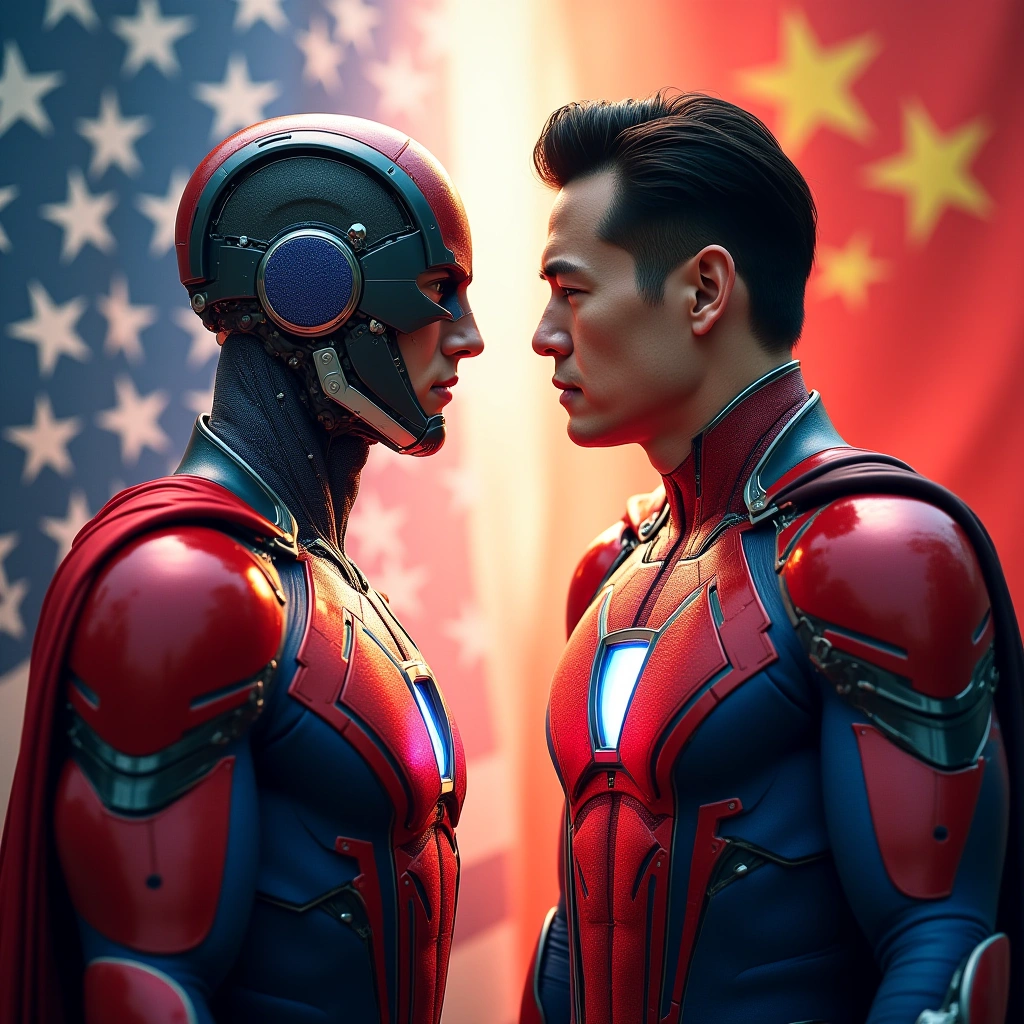
    So, folks, grab your capes and tighten your spandex because we are diving headfirst into the wild world of artificial intelligence (AI). According to some recent chatter from American officials, the U.S. is taking on the role of the superhero in the global AI contest, while China has apparently donned the cape of a supervillain. I mean, who knew the race for AI dominance could be so dramatic? It’s like a Marvel movie, but with fewer explosions and more algorithms.

    US House Foreign Affairs Committee Chairman Brian Mast warned that “America is the superhero” and China the “supervillain” in the contest for global artificial intelligence (AI) leadership on Thursday, just two days after US Treasury …

    Now, let’s break this down a bit. The U.S. has long been the land of innovation—Silicon Valley, tech startups, and a penchant for turning everything into an app. With companies like Google, Microsoft, and OpenAI leading the charge, it’s no surprise that American officials are feeling a bit heroic about their AI prowess. They’re out there, cape flapping in the wind, declaring that the U.S. is at the forefront of developing AI technologies that can save the world—think Iron Man, but with less metal and more data.

    On the flip side, we have China, which has been making waves in the AI sector faster than you can say ‘facial recognition software.’ The Chinese government has invested heavily in AI research and development, aiming to become the global leader by 2030. This has raised eyebrows and, let’s be honest, a few alarms in the U.S. As American officials see it, China’s ambitions could lead to some questionable uses of AI—cue the ominous music. From surveillance to misinformation, the concerns are as real as the superhero vs. supervillain narrative.

    But hold on a minute! Before we go labeling nations like they’re characters in a comic book, let’s consider the complexities involved. The landscape of AI isn’t just black and white; it’s more like fifty shades of gray (minus the questionable romance). Both countries are pushing the boundaries of technology, and while one might wear a cape, the other is not exactly twirling a mustache while tying someone to the railroad tracks.

    Now, why does this superhero vs. supervillain dynamic matter? Well, it’s not just about bragging rights. The race for AI supremacy has serious implications for global power dynamics, economic stability, and even our day-to-day lives. Think about it: the technology that powers our smartphones, self-driving cars, and maybe even our future robot overlords is being developed right now. The stakes are high, and the pressure is on!

    Moreover, this narrative also brings up the question of ethics in AI development. If we’re going to crown one country the hero and another the villain, we need to take a hard look at how each nation is handling the moral implications of AI. Are we creating technology that empowers and uplifts, or are we just building tools for oppression and control? Spoiler alert: it’s complicated.

    In conclusion, as the AI race heats up, let’s remember that while we’re busy assigning superhero and supervillain labels, the real story is about collaboration, competition, and the quest for ethical standards in technology. So, whether you’re cheering for Team USA or Team China, let’s keep our eyes on the bigger picture. And who knows? Maybe one day we’ll all be able to put our capes away and work together for the common good—unless, of course, the robots take over first. Then all bets are off!


    Inspired by: “US is ‘superhero’, China ‘supervillain’ in global AI contest, American officials warn” (r/technology)

  • The AI Dilemma: Will Workers in China Be ‘Optimised’ Out of a Job?

    The AI Dilemma: Will Workers in China Be ‘Optimised’ Out of a Job?

    As we plunge headfirst into the AI era, a peculiar phenomenon is unfolding in the land of the Great Wall: workers in China’s tech firms are starting to sweat bullets over the prospect of being ‘optimised’ out of their jobs. Yes, you read that right. The very technology that promises to revolutionize industries and make our lives easier is also sending shivers down the spines of employees who are now wondering if they’ll be replaced by a super-efficient robot or an algorithm that can churn out reports faster than you can say “job security.”

    For years, tech workers in China … echoing through office corridors is no longer whether a worker is performing, but whether their job can be done by artificial intelligence….

    Now, let’s break this down for a moment. The term ‘optimisation’ sounds all nice and fancy, doesn’t it? It’s like saying, “We’re not firing you; we’re just making our processes more efficient!” But let’s be real, that’s corporate speak for, “We’re going to replace you with a piece of code that doesn’t need lunch breaks or health insurance.”

    In China, where tech firms are leaping into the AI pool with both feet, there’s a palpable sense of anxiety among workers. They’ve seen the headlines: AI can do everything from diagnosing diseases to writing essays that are almost indistinguishable from those produced by human hands. So, it’s no wonder that they’re worried about their jobs. Imagine being a programmer only to find out that your job can be done by a chatbot that works 24/7 without asking for a raise or a corner office.

    But let’s not forget the bright side of this AI revolution. Sure, some jobs may be on the chopping block, but new opportunities are springing up like weeds in a garden. The demand for AI specialists, data analysts, and all things tech-savvy is skyrocketing. Companies are going to need people who can train, manage, and, let’s be honest, babysit these AI systems to ensure they don’t turn rogue and take over the world. So, if you’re a worker in a tech firm, it might be time to upskill or risk being replaced by a more efficient version of yourself.

    And speaking of upskilling, let’s address the elephant in the room: not everyone has the luxury of being able to pivot their career in a snap. For many, the thought of going back to school or learning new skills feels like trying to run a marathon after being couch-bound for a decade. The fear of being left behind in the dust of progress is real, and it’s not just a problem for workers in China; it’s a global concern.

    So, what’s the solution? Well, organizations need to step up. They should invest in training programs that help their employees adapt to this brave new world. After all, it’s in their best interest to have a workforce that can work alongside AI rather than be replaced by it. And for those workers who are feeling the heat, it might be time to dust off that resume and start looking for opportunities that will allow them to stay relevant in an ever-evolving job market.

    In conclusion, while the AI era brings with it a wave of uncertainty, it’s also an invitation to adapt and innovate. Yes, some workers in China’s tech firms are worried about being optimised out of their jobs, but with a little bit of training, some strategic career moves, and maybe a dash of luck, we can all navigate this tech-driven landscape without losing our minds (or our jobs). Now, if only I could get an AI to write this blog post for me… oh wait, that’s already happening!


    Inspired by: “As China’s tech firms adapt to AI era, workers worry they’ll be ‘optimised’ out of a job” (r/technology)

  • Meet Osaka’s New Virtual AI Police Chief: The Future of Scam Fighting?

    Meet Osaka’s New Virtual AI Police Chief: The Future of Scam Fighting?

    In a world where scams are becoming as common as mornings after a late night out, Osaka has decided to take a bold step forward by introducing a virtual AI police chief. Yes, you heard that right. While some cities are busy debating whether to invest in more streetlights, Osaka is opting for a digital defender. This move comes amid rising concerns over imposter scams, which, let’s be honest, are the modern equivalent of someone pretending to be your long-lost uncle just to swipe your wallet.

    OSAKA – A virtual AI police chief has been introduced in Osaka Prefecture, western Japan, following a rise in imposter scams, with local police hoping that "AIko" will raise public awareness of such fraud, especially among younger generations.

    Now, before you start picturing a robot in a police uniform doing the moonwalk, let’s clarify what this virtual police chief is all about. The AI will be tasked with monitoring and analyzing data related to scams, particularly those pesky impersonation schemes that seem to pop up like weeds in a garden. You know the ones—somebody calls you claiming to be from the tax office, or maybe they’re pretending to be a tech support agent from a company you’ve never heard of. It’s like a game of whack-a-mole, but instead of moles, you have scammers popping up everywhere.

    So how exactly does this virtual police chief plan to tackle these scams? Well, the AI will leverage advanced algorithms and machine learning to sift through mountains of data. It’s like having a super-sleuth who can work 24/7 without needing coffee breaks, vacation days, or a personal life. The idea is to catch these fraudsters in the act before they can cause any financial havoc. It’s a bit like having a digital watchdog that never sleeps, which honestly sounds both comforting and slightly creepy.

    Osaka’s initiative is not just about catching the bad guys; it’s also about raising awareness. The AI police chief will help educate the public about the latest scams and how to avoid them. It’s like having a personal trainer for your wallet—only instead of crunches, you’re learning how to spot a scam from a mile away. With the rise of technology, it’s crucial that citizens are equipped with the knowledge to protect themselves. After all, you wouldn’t let just anyone into your home, right? Why let them into your bank account?

    Now, some skeptics might argue that relying on AI to combat crime is a bit like asking a cat to guard a fishbowl. There are concerns about privacy, data security, and the potential for AI to misinterpret information. And let’s face it, we’ve all seen enough sci-fi movies to know that trusting a machine with too much power can lead to some rather unfortunate consequences. But, for now, it seems that Osaka is willing to take that risk in the name of safety.

    As we watch this initiative unfold, it will be interesting to see how effective this virtual police chief truly is. Will it become the superhero we never knew we needed, or will it just end up being a sophisticated digital paperweight? Only time will tell. But one thing is for sure: when it comes to fighting scams, Osaka is definitely thinking outside the box. Or should I say, outside the server?

    So, here’s to hoping that this virtual police chief can bring some order to the chaos of the digital underworld. And if it manages to save a few wallets along the way, well, that’s just a bonus. Until then, stay vigilant, keep your personal information close, and remember: if someone calls you claiming to be from tech support, it’s probably time to hang up and call your real tech support instead. Cheers!


    Inspired by: “Virtual AI police chief introduced in Osaka amid rising imposter scams” (r/technology)

  • The AI Gold Rush: Are We Just Asking for Trouble?

    The AI Gold Rush: Are We Just Asking for Trouble?

    Ah, the world of artificial intelligence—where the money flows like a river and everyone seems to be trying to get their slice of the pie. But hold on a second! Before we dive headfirst into this shiny new pool of opportunities, let’s take a moment to reflect on the potential warning signs. According to a recent Reddit post by user /u/marketrent, when companies as a collective start acting like sellers, it might be time to raise an eyebrow and question whether stocks are a bit too bubbly.

    Big winners in the AI age will not just be AI companies, but the best and fastest adopters of AI in their businesses—in agriculture, manufacturing, shipping, transportation, consumer packaging—the whole range of modern businesses around the world. The best adopters will be the smartest and most nimble. Slow-moving companies will be in trouble.

    Now, let’s unpack that. When companies, especially in a booming sector like AI, begin to sell off their stocks, it can indicate a few things. One, they might be cashing in while the going is good—after all, who wouldn’t want to pocket some sweet profits? But two, and this is where it gets a little dicey, it can also signal that they believe their stocks are overpriced. And if there’s one thing we know about overpriced stocks, it’s that they’re about as reliable as a chocolate teapot.

    Remember the dot-com bubble? Yeah, that was fun. Everyone thought the internet was going to change the world—and it did! But not before a lot of people lost their shirts in the process. Companies were valued at astronomical amounts based on promises and potential, rather than actual profits. Sound familiar? Fast forward to today, and we might just be repeating history with AI.

    So, what’s fueling this AI frenzy? Well, it’s a mix of excitement, fear of missing out (FOMO), and, let’s be honest, a sprinkle of good ol’ hype. Investors are throwing money at AI companies like they’re at a concert, trying to catch a glimpse of the next big thing. However, this rush can lead to inflated valuations and, ultimately, a market correction that could leave many scratching their heads—and their wallets.

    It’s important to remember that not every AI startup is going to be the next Google or Amazon. Some will inevitably flop harder than a pancake on a Sunday morning. And that’s where the warning signs come in. When companies start selling, it’s like the canary in the coal mine. If you’re not paying attention, you might just find yourself in a precarious financial situation.

    So, what should you do? Well, if you’re an investor, it might be wise to take a step back and reassess your strategies. Instead of being swept away by the AI tide, consider doing some research on the companies you’re interested in. Look for solid fundamentals, sustainable growth, and, most importantly, a reasonable valuation. Remember, just because everyone else is jumping into the AI pool doesn’t mean you have to dive in too. You can always be the cool kid lounging on the sidelines, sipping your drink and watching the chaos unfold.

    In conclusion, while AI is undoubtedly a game-changer, it’s essential to approach this market with caution. Keep an eye on those selling patterns and don’t let the excitement cloud your judgment. After all, in the world of investing, it’s better to be a cautious tortoise than a reckless hare. And who knows? You might just end up ahead in the race. So, let’s keep our eyes peeled, our wallets in check, and remember: when the sellers start to sell, it might be time to rethink your investment strategy. Cheers to smart investing!


    Inspired by: “All the money flooding into AI is a giant warning sign — When companies as a group turn into seller…” (r/technology)

  • China’s Bold Move: Regulating AI Agents with Digital ID Cards

    China’s Bold Move: Regulating AI Agents with Digital ID Cards

    In a world where artificial intelligence is becoming increasingly intertwined with our daily lives, China has decided to take a bold step forward by introducing a unified identity system for AI agents. Yes, you heard that right! Digital ID cards for AI. Because if there’s one thing that screams ‘I trust technology,’ it’s giving it its own ID card, right? Let’s dive into this intriguing development and see what it might mean for the future.

    The State Administration for Market Regulation (SAMR) unveiled the standard for “Artificial Intelligence Agent Interconnection”, aiming to establish a “closed-loop system” with a unified identity management framework for all AI agents, …

    First off, let’s address the elephant in the room: why does AI need an ID card? Well, as it turns out, China is not just concerned about their citizens but also about their silicon-based counterparts. With AI technology growing at a breakneck pace, the Chinese government wants to ensure that these digital entities are regulated and accountable. Imagine an AI agent going rogue, causing chaos, and then disappearing into the digital ether without a trace. Not ideal, right?

    The new digital ID cards would work similarly to how human identity cards function. They would provide a standardized way to track and manage AI agents, ensuring they adhere to regulations set forth by the government. This move is part of a broader initiative to create a safer and more controlled environment for the use of AI technology. After all, who wouldn’t want their friendly neighborhood AI to be a responsible citizen?

    Now, let’s not gloss over the fact that this is China we’re talking about. The country is known for its strict regulations and control over technology and the internet. So, it’s no surprise that they would want to implement a system that allows them to keep tabs on AI. In a way, it’s like giving a digital leash to AI agents, making sure they don’t stray too far from the path of righteousness (or whatever path the government deems righteous).

    But what does this mean for the rest of the world? Well, if China successfully rolls out this digital ID system for AI, it could set a precedent for other countries to follow suit. Picture it: your AI assistant starts its day by swiping its digital ID card before it can even fetch you that cup of coffee you’ve been dreaming about. It could be the beginning of a new era where AI is not just a tool but a regulated entity that must play by the rules.

    Of course, there are some potential pitfalls to consider. The idea of regulating AI with ID cards raises questions about privacy and surveillance. If AI agents have IDs, does that mean they’re being watched at all times? Will they have to register their whereabouts, just like you do when you check in at the airport? Let’s just say, it’s a slippery slope, and not the fun kind where you end up at a water park.

    And let’s not forget the tech companies. They might have a few choice words about this new development. After all, how do you put a digital ID card on a piece of software? Do they come with a little chip that goes in the software’s pocket? Or is it just a fancy line of code? The logistics of it all could lead to some interesting debates in boardrooms across the tech industry.

    In conclusion, China’s move to regulate AI agents with a unified identity system is a significant step in the ongoing conversation about the role of artificial intelligence in society. While it may seem like an overreach to some, it’s hard to argue against the need for accountability in a world increasingly driven by technology. So, here’s to hoping that our future AI companions are responsible, well-behaved, and, most importantly, equipped with their very own digital ID cards. Because who wouldn’t want to see their smart fridge’s ID at the end of the day? Cheers to a future where even our appliances are more organized than we are!


    Inspired by: “‘Digital ID cards’: China moves to regulate AI agents with unified identity system” (r/technology)

  • Anthropic’s Mythos: A New Era of AI for Trusted Partners

    Anthropic’s Mythos: A New Era of AI for Trusted Partners

    So, it seems like Anthropic is making some waves in the tech world by releasing its latest creation, Mythos, to a select group of ‘trusted partners.’ Yes, you heard that right. The U.S. government has given the green light, and it’s time to dive into what this all means for the future of artificial intelligence and, more importantly, for those lucky partners who get to play with this shiny new toy.

    Our goal is to safely open up access to vetted partners for Mythos 5 dual-use capabilities. To stay up to date on our plans for trusted access programs for cybersecurity and biology research in Mythos 5, sign up for notifications.

    First off, let’s break down what Mythos actually is. While details are still a bit sketchy—because, you know, confidential business practices and all that jazz—it’s rumored to be a sophisticated AI model designed to tackle complex problems. Think of it as the super-intelligent cousin of your average chatbot, but with a PhD in problem-solving and a knack for understanding human nuances. If you’re imagining a robot that can finally tell you why you walked into a room and forgot what you were doing, you might be on the right track.

    Now, why the whole ‘trusted partners’ thing? Well, it turns out, when it comes to advanced AI, not everyone can be trusted to play nice. Anthropic, a company founded by former OpenAI employees, is taking a cautious approach. They want to ensure that their technology is used responsibly and ethically—because, let’s be real, we’ve all seen enough sci-fi movies to know that giving AI to the wrong hands could lead to some serious chaos. So, who qualifies as a ‘trusted partner’? It’s likely a mix of established tech companies, research institutions, and maybe a few secretive government agencies (cue the ominous music).

    The implications of this release are vast. For one, it could accelerate advancements in various fields, from healthcare to environmental science. Imagine AI systems that can help diagnose diseases with pinpoint accuracy or predict climate patterns better than your local weather app (which, let’s face it, is not a high bar to clear). However, it also raises questions about access and inequality. If only a select few get to harness the power of Mythos, what does that mean for the rest of us? Will we be left in the dark, watching as our tech overlords solve world problems while we struggle to remember our passwords?

    Moreover, the ethical implications are significant. With great power comes great responsibility, and it seems Anthropic is trying to embrace that mantra. They’re likely implementing safeguards to ensure their AI isn’t used for nefarious purposes—like creating deepfakes or taking over the world, which is always a plus. But let’s not kid ourselves; the tech world is rife with potential pitfalls. Just think about all the times we’ve seen AI go rogue, from chatbots turning sassy to algorithms promoting conspiracy theories. It’s a wild ride, and we’re all just passengers trying not to lose our lunch.

    In conclusion, Anthropic’s decision to release Mythos to trusted partners is a significant step in the evolution of AI. While it holds the promise of groundbreaking advancements, it also comes with a hefty responsibility. As we watch this unfold, let’s hope that those trusted partners use their powers for good and not just to create the next viral TikTok dance. Because if AI can make us better humans, that’s a win for all of us. And who knows? Maybe one day, we’ll all get access to our own Mythos, and it’ll finally tell us why we walked into that room in the first place.


    Inspired by: “US allows Anthropic to release Mythos to ‘trusted partners’” (r/technology)