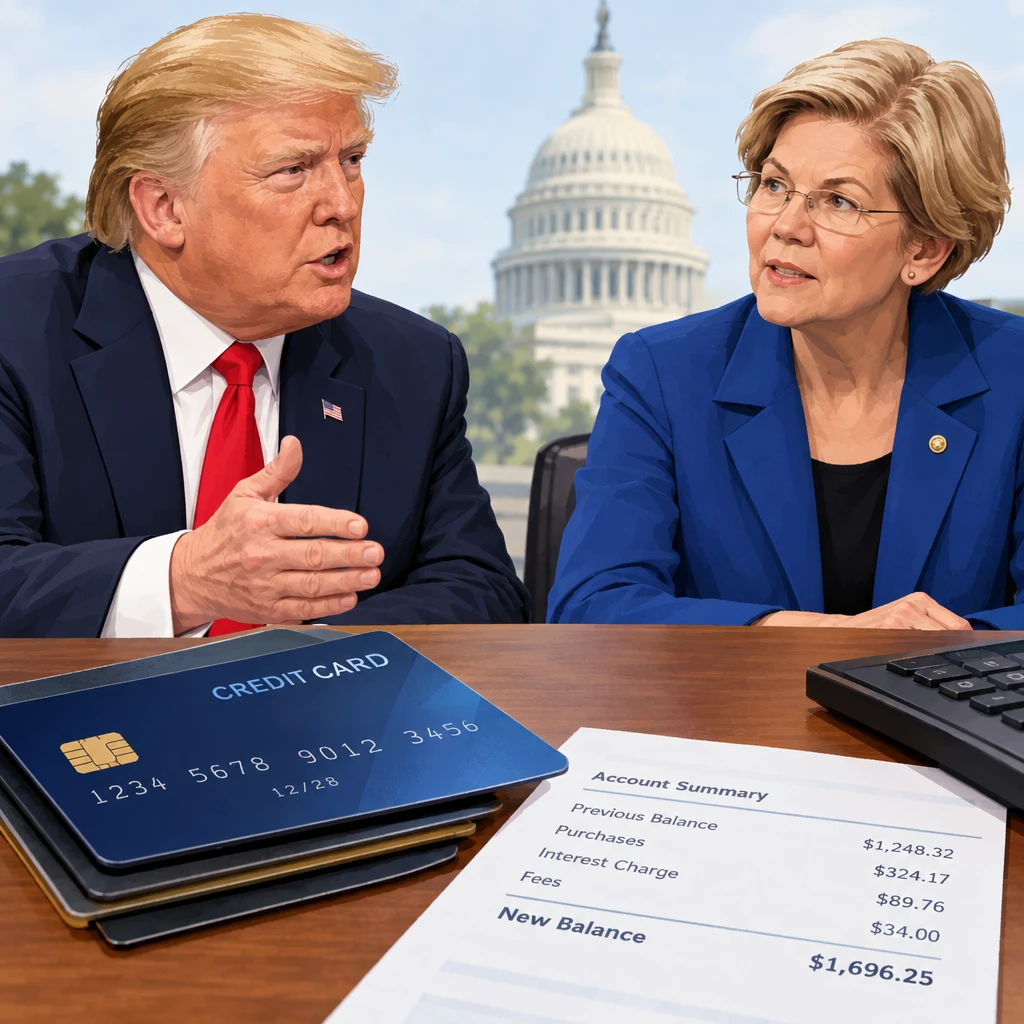
President Trump says he would gladly work with Democrats to cap credit card interest and fees, arguing that card companies make too much money . , US News, Times Now
Every so often, politicians from opposite sides of the aisle discover they agree on something, and everyone holds their breath to see how long the agreement lasts. This time, the surprise came from former President Donald Trump, who said he would be willing to work with Democrats to cap credit card interest rates and fees. He told reporters he would “absolutely” be on board, and one headline put it even more bluntly: he’s “all into it.”
For anyone who has ever stared at a credit card statement and wondered how a small purchase somehow grew into a much bigger bill, this is the kind of idea that gets attention fast. Trump argued that credit card companies are currently making excessive profits, a claim that many consumers would happily nod along to, even if they disagree on almost everything else.
What Is Actually Being Proposed?
The core idea is simple: put a ceiling on how much banks and card issuers can charge borrowers. One version that has been floating around would cap interest rates at 10 percent. WTOP’s headline described Trump vowing to work with Democrats on exactly that kind of limit. Interest rates on credit cards are often far higher than that, so a cap at 10 percent would be a major change.
The push is closely associated with Senator Elizabeth Warren, who has long championed limits on credit card rates and fees. Warren has argued for years that many families rely on credit cards to get through tight months, and that the cost of carrying a balance can spiral quickly. From her perspective, a cap would stop those costs from piling up beyond what borrowers can reasonably handle.
The Banking Industry’s Objection
Unsurprisingly, the banking industry is not thrilled. Its main argument is that caps could reduce access to credit. Lenders price their cards based on risk, and borrowers with weaker credit histories typically pay higher rates to offset the chance that they won’t pay everything back. If the government forces rates down to a fixed ceiling, banks may decide that riskier customers are no longer worth lending to. In other words, the people a cap is meant to protect could end up locked out of cards altogether.
That is the tension at the heart of the debate. Supporters see high rates as predatory and a drain on household budgets. Critics see them as a necessary price of extending credit to people who might otherwise have none. Both sides can point to real consumers who would be affected, which is part of why the issue is so hard to settle.
Why the Bipartisan Angle Matters
When a Republican and a Democrat both lean toward the same policy, it raises eyebrows, and for good reason. Political alliances on consumer finance are not common, and they often collapse once the details come out. Interest rate caps have historically been controversial, and there are plenty of lawmakers in both parties who prefer market-based solutions. So any talk of a deal deserves a healthy dose of skepticism until actual legislation appears.
Still, the fact that the idea is getting this kind of attention says something. Credit card debt is a major concern for many Americans, and voters across the political spectrum tend to feel that fees and interest charges are out of control. A politician who promises to fight that can find an audience pretty easily.
What Happens Next?
For now, the story is mostly about intentions. Trump has signaled openness, and advocates are hoping that openness turns into real negotiations. Whether that happens depends on a lot of things: how much bipartisan appetite there is in Congress, how the banking lobby responds, and whether the details of any proposal can satisfy both sides.
If you carry a balance on a card, this is worth keeping an eye on. Even if nothing changes soon, the debate itself is a useful reminder to check your rates, look for lower-interest options, and pay attention to fees you might be ignoring. And if politicians really do find common ground on this one, it would be a rare moment of agreement that the people who pay those bills might actually notice.
Inspired by: “Trump says he’d work with Dems to cap credit card interest, fees” (r/Media)