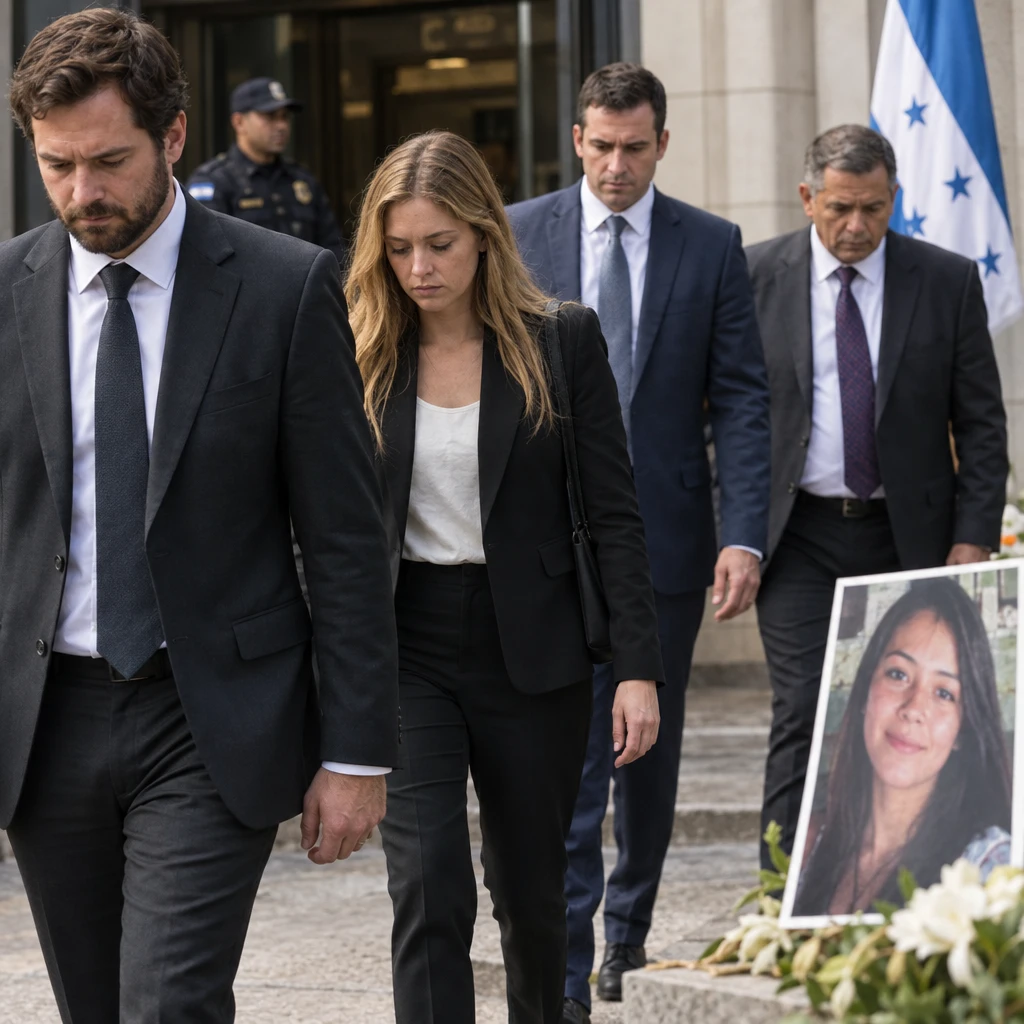
A beach on the Honduran island … AP] A court in Honduras has convicted four people, including three United States citizens, of criminal association in connection with the 2022 disappearance of a woman whose whereabouts are still unknown …
Some news stories arrive with a headline that does most of the work for you. This one is a good example. Four people were convicted in Honduras, three of them US citizens, in connection with a sex-trafficking ring. That’s the short version. The longer version involves a woman who disappeared in 2022 and still hasn’t been found, which is the part that should stay with you after you close the tab.
Let’s start with the basics. The four defendants were convicted of criminal association, which is a charge about being part of an organized group that commits crimes, rather than a charge about one specific act. Prosecutors don’t always need to prove that every member did every bad thing. They need to show that people were working together toward an illegal goal. In a trafficking case, that goal is exploiting people for sex, and the group’s structure is often the whole story.
Now for the detail that makes this case feel heavier than a typical courtroom update. The convictions stem from the disappearance of a woman in 2022, and her whereabouts are still unknown. That changes the tone. This isn’t only a case about paperwork and sentencing guidelines. There is a person at the center of it, and as of the reporting, her family and the public still don’t have answers. Any time a case involves a missing person, the conviction is a legal milestone, but it doesn’t close the question that matters most to the people who love her.
The sentencing piece is next. Prosecutors plan to seek the maximum sentence of ten years for each defendant, with a hearing set for December 9th. If you’re thinking that ten years sounds like a neat, round number that feels both serious and oddly modest for a trafficking operation, you’re not alone. Sentencing debates around crimes like this often come down to that tension: how do you weigh the harm done to victims against the limits set by the law? Prosecutors are arguing for the top of the range, and the hearing is where that argument gets tested.
It’s also worth noting that this case crosses borders in a way that makes these prosecutions harder. Three of the four people convicted are US citizens, but the trial happened in Honduras. Cross-border cases raise practical questions about evidence, cooperation between governments, and whether justice is consistent from one jurisdiction to another. Trafficking networks tend to exploit exactly those gaps, which is why international cooperation is so central to fighting them.
The reporting on this case came from more than one outlet, including Al Jazeera and an economic news source, which both covered the convictions. If you read the coverage side by side, the core facts line up: four convictions, three American defendants, a missing woman, and a December hearing. Still, the available reporting is fairly limited, so it’s smart to watch for updates before drawing firm conclusions about the broader operation or the individuals involved beyond what the courts have actually decided.
So what should a regular reader take from this? First, that trafficking cases often unfold far from the spotlight, and convictions like these are the result of long investigations most people never see. Second, that a conviction and a resolution are not the same thing, especially when a victim’s fate is unknown. And third, that the December hearing is worth following, because the sentence will be the formal answer to a question the court has been asked to settle.
It’s not a cheerful story, and it doesn’t need to be. But it’s an important one to follow all the way through, past the headline, to the hearing and beyond.
Inspired by: “Three US citizens among 4 convicted in Honduras over sex-trafficking case” (r/World)