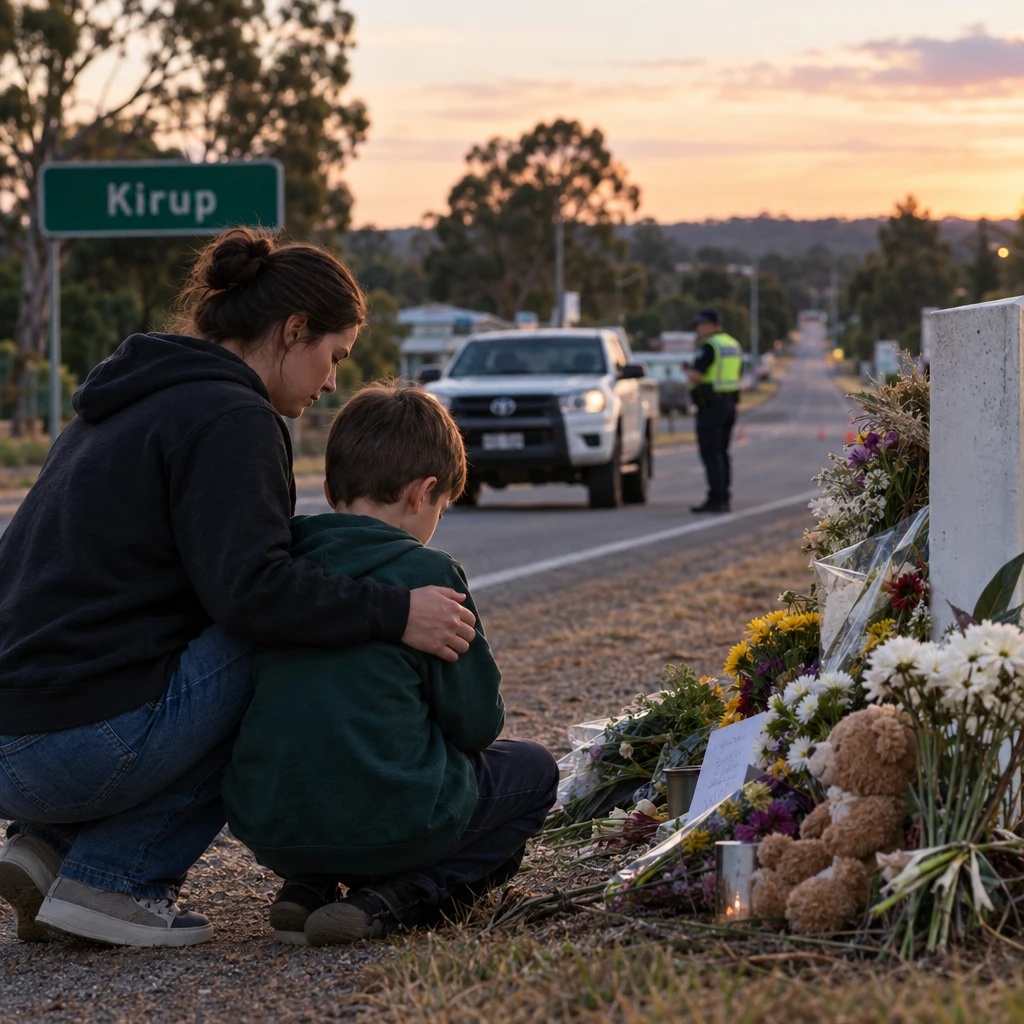
Police said the boy was struck by a Toyota Hilux ute travelling north on the highway at about 5.50pm on Friday afternoon . The boy was flown by helicopter to Perth Children's Hospital, where he later died.
Some news stories hit harder than others, and this one is hard to read. An 11-year-old boy died after being struck by a Toyota HiLux ute on the South Western Highway in Kirup, a small town about 200 kilometres south of Perth in Western Australia. It happened at around 5:50 pm on a Friday. Emergency services took him to Perth Children’s Hospital, where he later died from his injuries.
If you’re not from the area, it’s easy to read a headline like this and move on. But behind it is a family, a community, and a child who should have had many more ordinary afternoons ahead of him. Police are investigating how the collision happened, and that work will take time. It’s better to wait for the facts than to fill the gaps with guesses, rumours, or angry comments online, which tend to appear within minutes of stories like this.
The story has been covered by several outlets, including NCA NewsWire, The West Australian, and ABC Australia. Each reported the same core details: a boy, a ute, a regional highway, and an investigation underway. That consistency is useful, because it shows the basic facts are settled even while the finer details remain under investigation.
Kirup is the kind of place many Australians drive through without stopping. Regional towns like this often sit beside major highways that carry heavy traffic, including trucks, utes, and holiday travellers. Those roads are fast, the shoulders can be narrow, and the gap between a quiet town and a busy road can be very small. Anyone who has driven regional WA knows how quickly the speed limit can change and how a town can appear around a bend.
Regional road safety is a long-running concern in Australia. Country roads have historically recorded a disproportionate share of serious crashes compared with metropolitan areas, often due to higher speeds, longer distances between services, fatigue, and the mix of vehicle types on the road. Pedestrians and cyclists, including children, can be especially vulnerable when they are near a highway or crossing a road in a town where traffic might be moving faster than people expect.
For drivers, the lesson is familiar but worth repeating. Slow down in towns, keep an eye out for people near the roadside, and treat any road that runs through a community with extra care. For parents and carers, it’s a reminder to talk with children about road safety, especially near busy routes, and to make sure they know how to cross roads safely and where it’s unsafe to be.
There is also the question of how communities cope afterward. Small towns tend to rally around families in situations like this, whether through quiet gestures, shared messages, or simply the many people who know someone connected to the tragedy. If you live in the region or know someone affected, reaching out to them, even with a short message, can mean more than people realise.
The investigation will determine what happened on that Friday evening. Until then, the most respectful response is to take the loss seriously, avoid speculation about people involved, and remember that behind every news alert is a real child whose life was cut short. Our thoughts are with his family, his friends, and everyone in Kirup who will feel this loss.
Inspired by: “Boy, 11, killed in horror ute crash” (r/News)