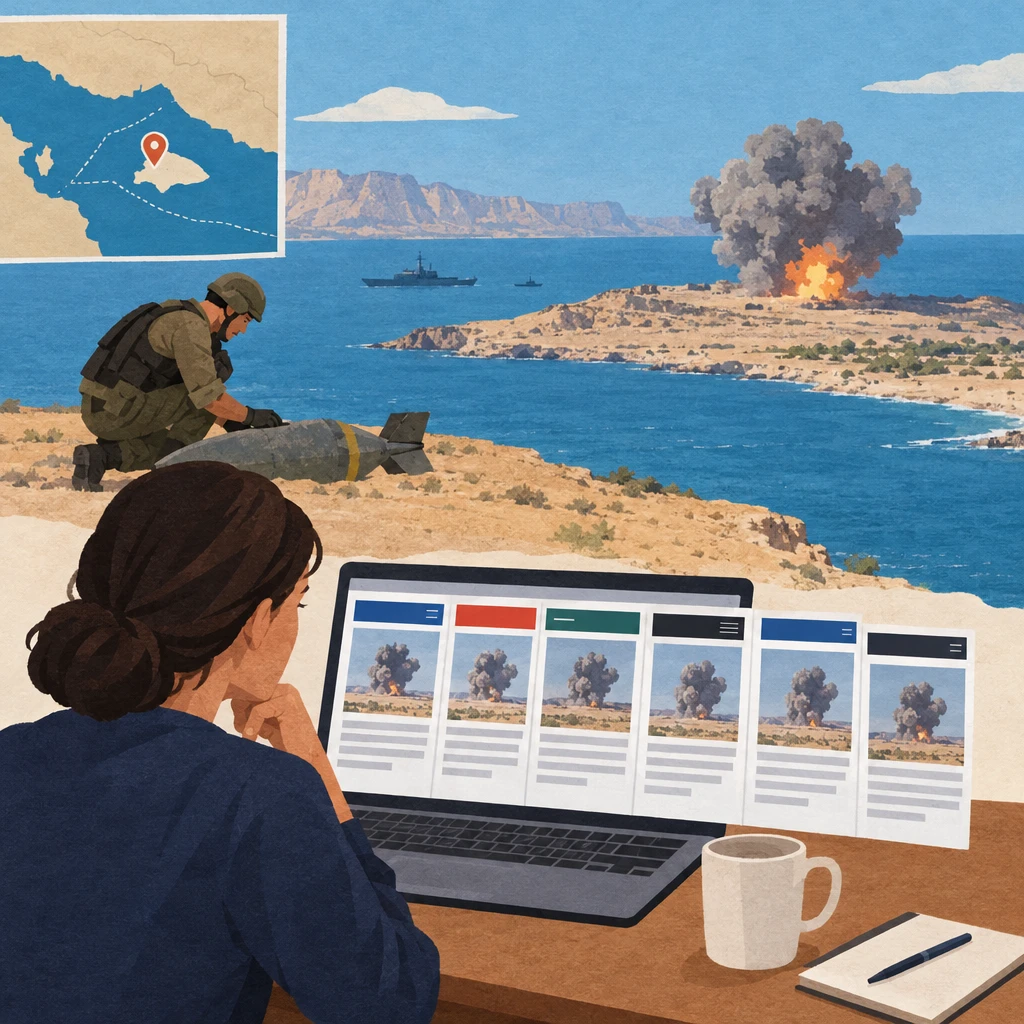
Explosions and smoke reported on Iran's Qeshm island resulted from the controlled disposal of unexploded American munitions left from previous attacks , a provincial official said Friday.
Every so often a headline shows up that makes you read it twice, then scroll back up to check whether you missed something. The one about an explosion on Iran’s Qeshm Island is that kind of headline. The explanation attached to it is fairly simple: the blast is linked to the disposal of unexploded munitions, according to the Iranian news agency Tasnim.
Qeshm is the largest island in the Persian Gulf, sitting near the Strait of Hormuz, one of the most strategically important waterways on the planet. It is not exactly a quiet spot, so when something goes boom there, people pay attention. The island has a long military history and a sizable population, which is why reports of an explosion tend to travel quickly.
What has been reported is limited. Multiple outlets, including News Dawn, Al Monitor, and a number of economic news sites, carried essentially the same story. Each one attributed the explosion to the disposal of unexploded munitions, and each one traced that claim back to Tasnim. That is worth noticing. When several publications run nearly identical wording, it usually means they are all repeating a single original source rather than independently confirming the details. In other words, the story is one report echoing across several websites, which is a bit like hearing the same rumor from three cousins who all heard it from the same guy at the barbecue.
Why would munitions disposal be the go-to explanation? Unexploded ordnance is a real and persistent problem in many places with a history of conflict. Shells, bombs, and other devices that fail to detonate can remain dangerous for years or even decades. Clearing them is a specialized job, and the standard method is controlled detonation, where experts set off the devices in a managed way. When that goes according to plan, the result is a loud bang followed by a lot of people saying it was all under control. When it doesn’t, the result is a bigger problem. Either way, a bang near a military area is a plausible thing to attribute to this kind of work.
That plausibility is exactly why readers should be careful. A reasonable-sounding explanation can make people stop asking questions. Good reporting on an event like this would typically clarify where the explosion happened, whether anyone was hurt, what authorities have said beyond the initial attribution, and whether independent observers or officials have confirmed the cause. Those details are not in the material available here, so it is fair to treat the munitions explanation as the reported cause rather than a fully verified fact.
The situation also shows how news travels now. A single agency publishes a claim, aggregators pick it up, and by the time you see it, it looks like widespread coverage. Volume is not the same as verification. A story can appear in five places and still rest on one source.
So where does that leave us? Most likely, there was an explosion on Qeshm Island, and Tasnim has linked it to the disposal of unexploded munitions. That is the reported account. Anything beyond that, including the scale of the blast, any damage or casualties, and the full official response, would need more detailed reporting before anyone should feel confident. Until then, the honest takeaway is a shrug paired with some healthy skepticism: the explanation sounds believable, but the story is still thinner than its headline count suggests.
Inspired by: “Explosion on Iran's Qeshm Island linked to disposal of unexploded munitions, Tasnim reports” (r/News)