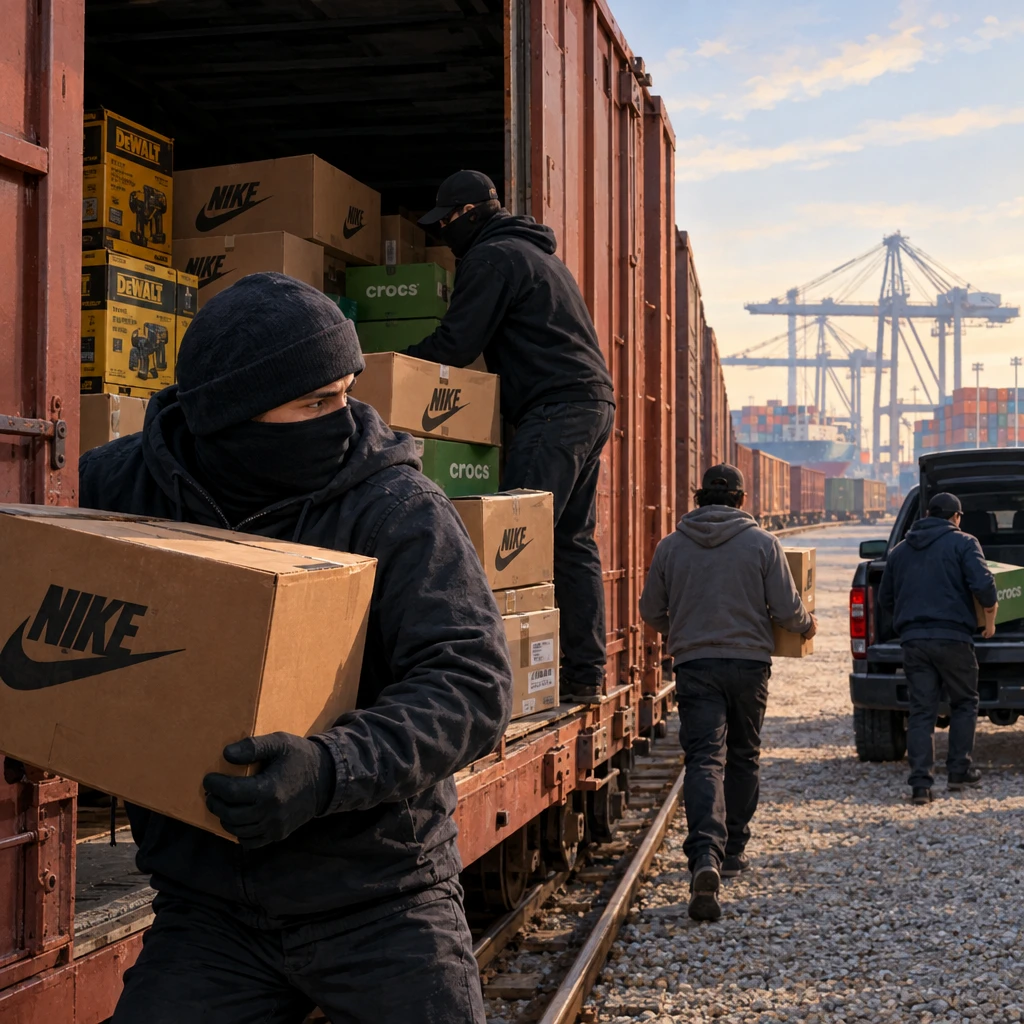
LOS ANGELES (AP) — More than a dozen people were charged Thursday with allegedly orchestrating a massive train heist operation to steal over $22 million in cargo — from popular shoes to power tools — from major retailers.
Let’s start with the part that sounds like a heist movie plot, because that is exactly how it reads: more than a dozen people have been charged in connection with a train theft operation that allegedly pulled more than $22 million in cargo from major retailers. Not one truck. Not one warehouse. Trains.
According to the reporting, the group targeted more than three dozen trains moving goods through the Los Angeles and Long Beach ports. The loot reportedly included Nike sneakers, Crocs footwear, and power tools. Those are not exotic items. They are the kind of everyday merchandise that fills store shelves, which is part of what makes this story so frustrating. Somewhere, a shipment of shoes that was supposed to end up in a shopping center apparently ended up somewhere else instead.
It’s worth pausing on the word “allegedly.” Charges are accusations, and the people named are presumed innocent unless and until they’re proven guilty in court. That caveat matters, even though the scale of what’s being described is hard to ignore. Over a dozen individuals facing charges suggests this was not a lone opportunist who saw an unlocked boxcar and got lucky. It points to an organized effort, with people likely playing different roles over a sustained period.
Why trains? Cargo theft has been on the rise, and freight rail is an appealing target for anyone who understands how goods move. Trains carry enormous volumes of merchandise, often across long routes and through multiple hands before reaching a final destination. Each handoff is a chance for something to go missing. Ports, meanwhile, are busy, complicated places where thousands of containers and shipments move every day. When you combine high-value goods, big volumes, and a lot of moving parts, you get an environment where a determined group can find openings.
That’s the sobering takeaway here. This case highlights what appears to be a growing problem of large-scale cargo theft targeting freight trains across the country, not just in one corner of California. For retailers, the losses are obvious. They pay for the product, they lose the sale, and they often absorb the costs of security, insurance, and replacement. For shipping companies and rail operators, theft can mean delays, damaged reputations, and the headache of tightening procedures that were built around efficiency rather than suspicion. And for ordinary shoppers, those costs can eventually filter down into prices, which is a fun little reminder that nobody in the supply chain is really insulated from crime.
There’s also a broader lesson about how modern commerce works. Goods travel through an enormous web of companies, contractors, and checkpoints, and that web is only as secure as its weakest link. A high-tech tracking system doesn’t help much if a single person with access and bad intentions can exploit a gap. Security is part technology, part paperwork, and part simply paying attention to who is where and why.
The case is still working its way through the legal system, so the details may evolve. Courts will decide what the evidence shows and what each person is responsible for. In the meantime, this story is a useful reminder that some of the most impressive-sounding crimes are really just theft on a very large, very well-organized scale.
So the next time you pull on a pair of sneakers that arrived without fanfare, spare a thought for the long, complicated journey they took. Hopefully, the only thing that ends up surprising them is a pair of very happy feet.
Inspired by: “Suspects charged in brazen train heist ring that netted $22 million in cargo from major retailers” (r/World)