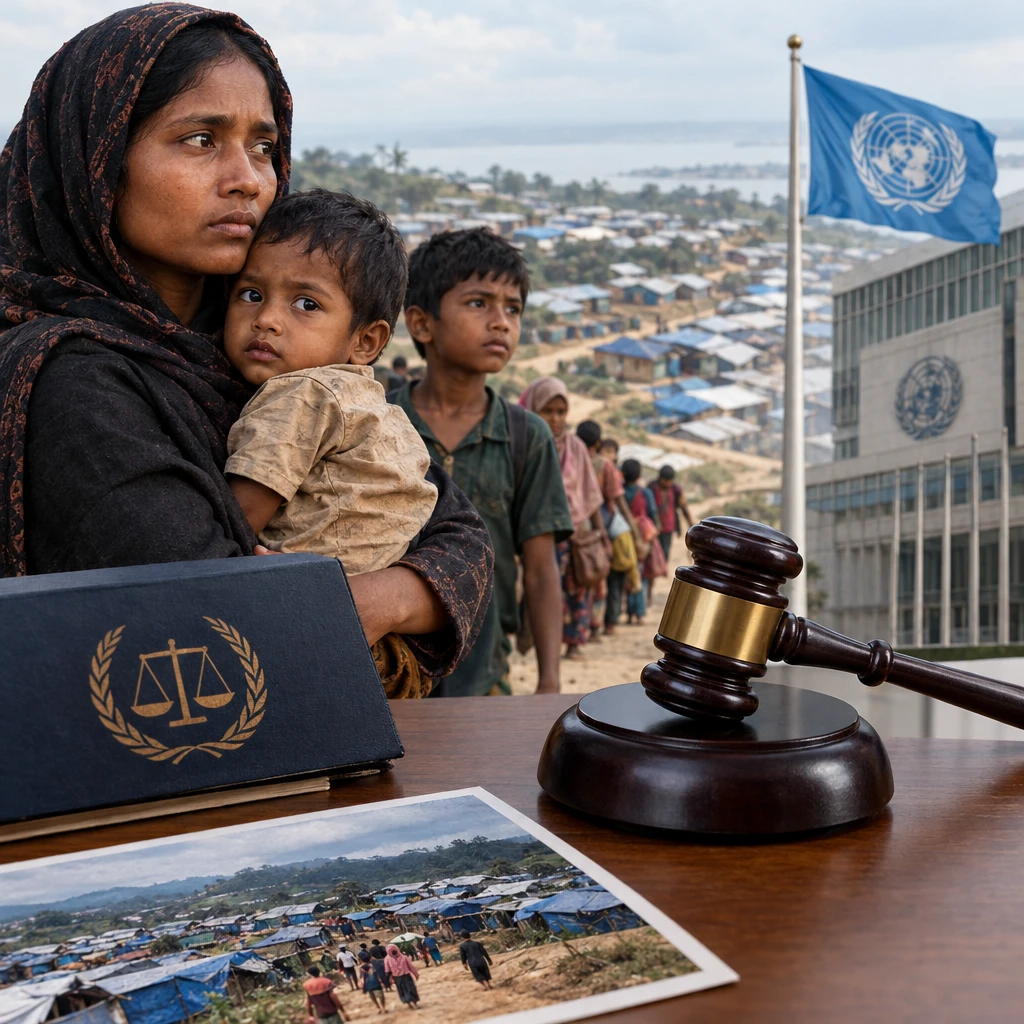
Myanmar committed genocide against … In his summarising remarks, Judge Yuji Iwasawa says Myanmar had the "intention to destroy" a substantial part of the Rohingya population …
It’s not every day that a global court delivers a verdict that makes headlines across continents, but the International Court of Justice just did exactly that. The court has found Myanmar guilty of genocide against the Rohingya people. According to the reporting, this is the first time the court has made such a ruling against a state, which is the sort of milestone that makes you pause and reread the sentence a couple of times.
Let’s start with the basics. The ruling stems from the military’s 2017 actions in Rakhine State. Those operations resulted in thousands of deaths and widespread sexual violence, and more than 700,000 Rohingya fled across the border into Bangladesh. Those numbers are not abstract statistics. They represent families, villages, and whole communities that were pushed out of the only homes many of them had ever known.
The judges concluded that Myanmar breached the Genocide Convention, the 1948 treaty that defines genocide and obligates states to prevent and punish it. The vote was 9 to 6, which tells you something about how hard this was. Legal disputes at this level rarely produce unanimous rulings, and a split decision like this one means the reasoning was contested all the way through. It also means that the losing judges were not simply shrugging. The margin reflects a genuinely difficult legal question, even if the majority reached its conclusion.
One of the more striking headlines came from The Age, which quoted the phrase ‘intention to purge.’ That phrase gets at the heart of what makes genocide legally distinct from other atrocities. Under the Convention, the crime is not just about killing or harming people. It requires proof of intent to destroy, in whole or in part, a national, ethnic, racial, or religious group. Proving intent is notoriously hard, which is why genocide convictions are so rare and why this ruling carries so much weight.
Not everyone reacted with pure celebration, and that’s worth noting too. Zeteo described the ruling as a remarkable moment for the Rohingya and for global justice. The Saturday Paper and National Post both framed it in terms of the court’s finding. Coverage across outlets emphasized that a legal finding is not the same as a full resolution. A verdict can name what happened, but it does not automatically bring people home, rebuild villages, or deliver accountability to every individual who suffered.
And here’s where the sarcasm creeps in, because the world has a long track record of watching atrocities unfold in slow motion before issuing statements about them. The Rohingya crisis played out over years, with refugee camps in Bangladesh filling up and reports of abuses piling up. A court ruling arriving years after the violence is better late than never, but it is also a reminder of how slow international justice can be when powerful interests and political hesitation get in the way.
Still, the significance of the ruling should not be dismissed. It establishes a formal legal finding that a state breached one of the most serious obligations in international law. For the Rohingya community, many of whom still live in limbo, that recognition matters. For the broader legal system, it sends a message that the Genocide Convention is not just words on paper.
So what happens next? Rulings like this tend to shape future cases, inform policy debates, and put pressure on governments to take the issue seriously. Whether that pressure translates into real change for the Rohingya is the question that will matter most in the months and years ahead. The court has spoken. Now the harder work begins, and that work belongs to everyone who claims to care about justice, not just to the judges in The Hague.
Inspired by: “UN court finds Myanmar committed genocide in landmark ruling” (r/World)