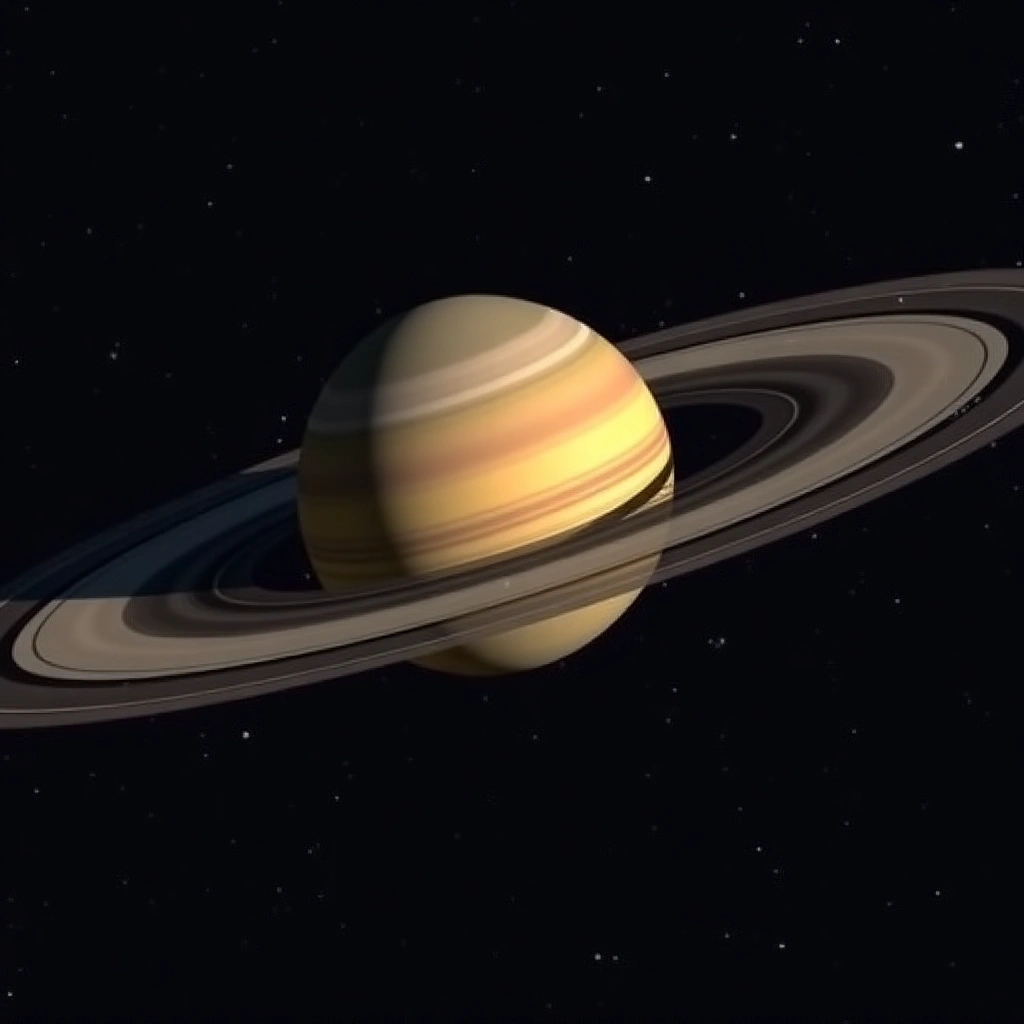
But first it’s passing a historic boundary, reaching a distance of one light-day, or nearly 26 billion kilometers , from Earth … An artist’s concept depicting a Voyager spacecraft.
Every so often, NASA announces something so far away that it makes your commute feel like a personal failure. This week’s news is one of those. NASA’s Voyager 1 probe is believed to have reached a distance of about 16 billion miles (26 billion kilometers) from Earth, which is equal to one light-day. In other words, it is now as far from us as light can travel in a single day.
Before we go further, let’s talk about what a light-day actually means. Light is the fastest thing in the universe, and it still needs a full 24 hours to cover that distance. So if you ever wanted a unit of measurement that sounds like it belongs in a sci-fi novel but is actually used by real scientists, congratulations, you’ve found one.
According to the reports, the spacecraft crossed this point on Wednesday at 5:16 a.m. ET while traveling through interstellar space. Scientists have not fully confirmed the milestone yet. They expect confirmation within about a day, which is a pretty reasonable wait for something that involves a probe that is, at this point, a very long way from anyone’s living room.
The Voyager 1 Journey So Far
Voyager 1 was launched in 1977, back when disco was still going strong and the idea of a smartphone would have sounded like pure fantasy. The spacecraft was built to study the outer planets, and it did that job remarkably well, sending back images and data from Jupiter and Saturn. Its mission then continued outward, carrying it past the edge of our solar system and into the region between stars.
That is a big deal. Voyager 1 is the most distant human-made object from Earth, and it has been working for nearly five decades. Think about that the next time your laptop freezes after three years of use. Engineers on the ground have had to solve problems with aging hardware, sometimes by sending commands that are, to put it lightly, a bit like troubleshooting over a very slow phone line.
Why It Matters
Reaching a light-day mark is more than a fun trivia fact. It shows how far a spacecraft designed in the 1970s can keep going, and it gives scientists a chance to study the environment beyond the influence of the Sun. Data from interstellar space helps researchers understand the conditions between stars, including particles and magnetic fields that we can’t observe as easily from closer to home.
The bad news, if you want to call it that, is that the probe’s power is limited. Voyager 1 currently has enough power to keep communicating with Earth for an estimated three to four years. After that, its instruments will keep winding down as its power supply fades. This is the cosmic version of a phone battery at 3 percent, except the charger is nowhere close and nobody is going to make a trip to fetch it.
How Do We Even Talk to It?
Sending and receiving messages across this kind of distance takes patience. Signals from Voyager 1 take many hours to reach Earth, and commands sent from Earth take just as long to arrive. Any conversation with the probe is more like sending a letter and waiting for a reply than having a chat. Anyone who has ever sent a text and waited for a reply knows the feeling, only with a bit more dignity and a lot more physics.
The Bigger Picture
For the people who have spent decades working on this mission, the milestone is a reminder of what careful engineering can accomplish. For everyone else, it’s a chance to look up at the night sky and reflect on how much we have managed to send out into the dark. Voyager 1 is still out there, quietly doing its job, and it has been doing it for longer than many of the people reading this article have been alive.
So raise a glass to a spacecraft that is now farther from home than most of us can comfortably imagine. Just don’t expect it to text back anytime soon.
Inspired by: “NASA Voyager 1 Probe Believed to Have Reached ‘Light-Day’ Milestone” (r/News)