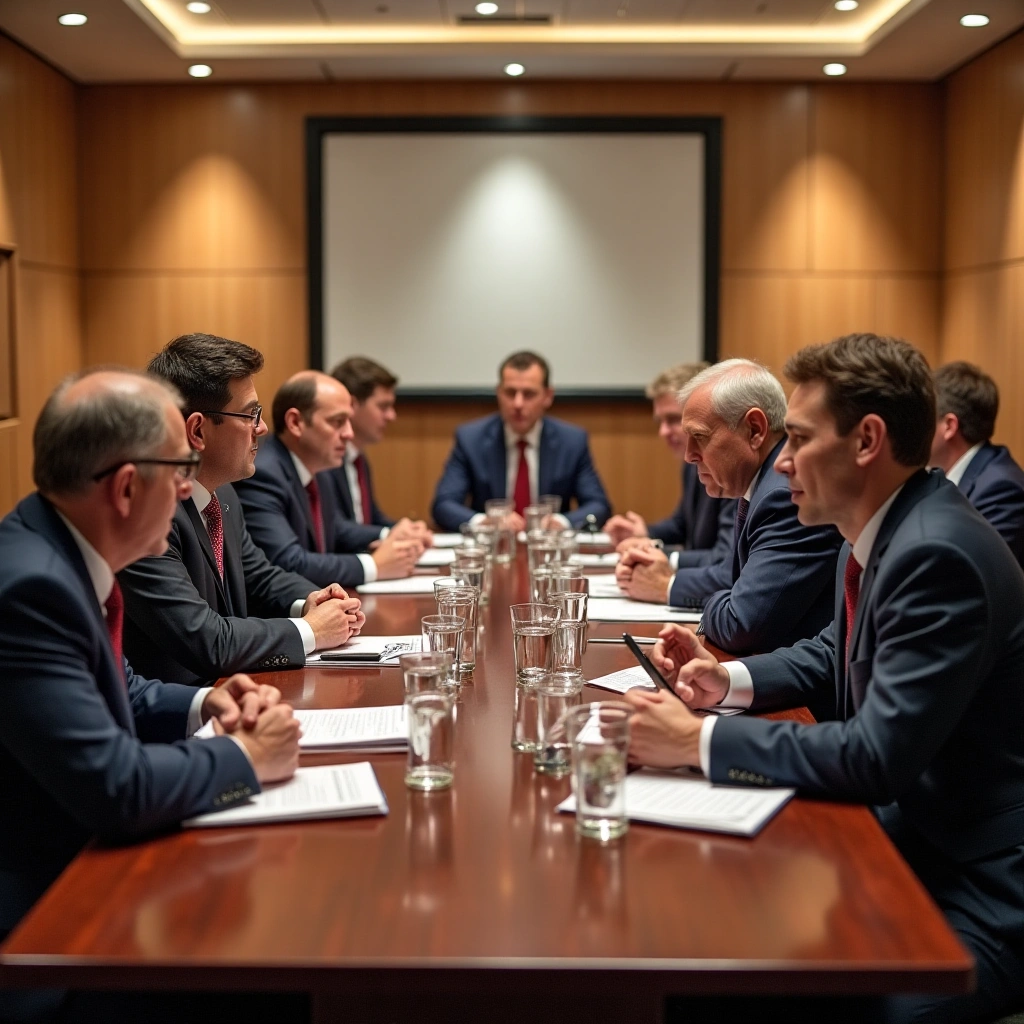
We are turning global uncertainty into national opportunity in a more dangerous and divided world,” Carney told the CEO summit. "Canada is choosing a path towards a stronger, more prosperous, more resilient future.” · Malaysian Prime Minister Anwar Ibrahim told the executives of top Chinese and multinational companies that bigger economies should recognize that fair and dynamic growth benefits all.
When a group of Asian leaders gets together to talk about trade, you can usually expect a lot of polished language about cooperation, prosperity, and working together. This time, the headlines around Chinese President Xi Jinping’s speech at the Asia-Pacific Economic Cooperation (APEC) Summit in Shenzhen followed that script: the region, he said, must pursue open trade and equitable growth if it wants stability and dynamism. Nobody at a summit is going to argue against stability and dynamism, so the more interesting question is what else was happening in the background.
For context, APEC is a forum of economies around the Pacific Rim. It was founded in 1989 and has long promoted trade liberalization, economic cooperation, and the idea of a free trade zone spanning the Asia-Pacific. That last goal, sometimes described as a Free Trade Area of the Asia-Pacific, has been discussed for years, mostly in the form of ambitious plans and careful wording. Summits are good at producing statements, and this one was no exception.
The timing added some spice. According to the reporting, U.S. President Donald Trump was traveling to the Shenzhen summit from the Association of Southeast Asian Nations (ASEAN) summit in the Philippines. Trump’s ‘America First’ approach to trade stands in clear contrast to APEC’s stated goals of openness and regional integration. Put those two things side by side and you get a bit of a dramatic tension. One side is talking about open markets and shared growth, while the other has built much of its recent political identity around prioritizing domestic interests. Diplomats are generally very good at smoothing over that kind of gap, but it’s hard to ignore.
One of the headlines also mentioned Russian President Vladimir Putin condemning sanctions as Trump arrived in China. Whether or not you read that as a coincidence, it’s a reminder that APEC gatherings rarely happen in a vacuum. Trade talk tends to get tangled up with security concerns, sanctions, and rivalries between major powers, and a summit like this becomes a kind of stage where many of those disputes play out at once.
So what does ‘open trade and fair growth’ actually mean? In principle, it usually refers to lowering barriers such as tariffs and restrictions so goods, services, and investment can move more freely. The ‘fair’ part is where things get more complicated. Countries often disagree on what fairness looks like: some emphasize rules that apply equally to everyone, others focus on giving developing economies room to catch up, and still others worry about unfair subsidies or intellectual property practices. Everyone likes the word ‘fair’ until they have to define it in a treaty.
Still, there is a reason regional leaders keep returning to these themes. The Asia-Pacific is home to some of the world’s largest and fastest-growing economies, and supply chains there are deeply interconnected. Disruptions in one country can ripple through factories and markets across the region. From that perspective, Xi’s call for stability is less a slogan and more a practical concern for businesses and workers who depend on predictable rules.
The honest takeaway is that the summit produced a message that sounds reasonable and is hard to oppose in the abstract. Whether it turns into concrete progress will depend on the details that rarely make the headlines: tariff schedules, enforcement mechanisms, and whether major economies are willing to compromise on their own priorities. Watching those details will tell you much more than any opening speech.
In the meantime, expect plenty more speeches about open markets, and maybe a few raised eyebrows whenever the phrase ‘America First’ comes up in the same conversation. That is simply what regional diplomacy looks like.
Inspired by: “China’s Xi and other Asian leaders say Asia-Pacific must embrace open trade, fair growth” (r/World)