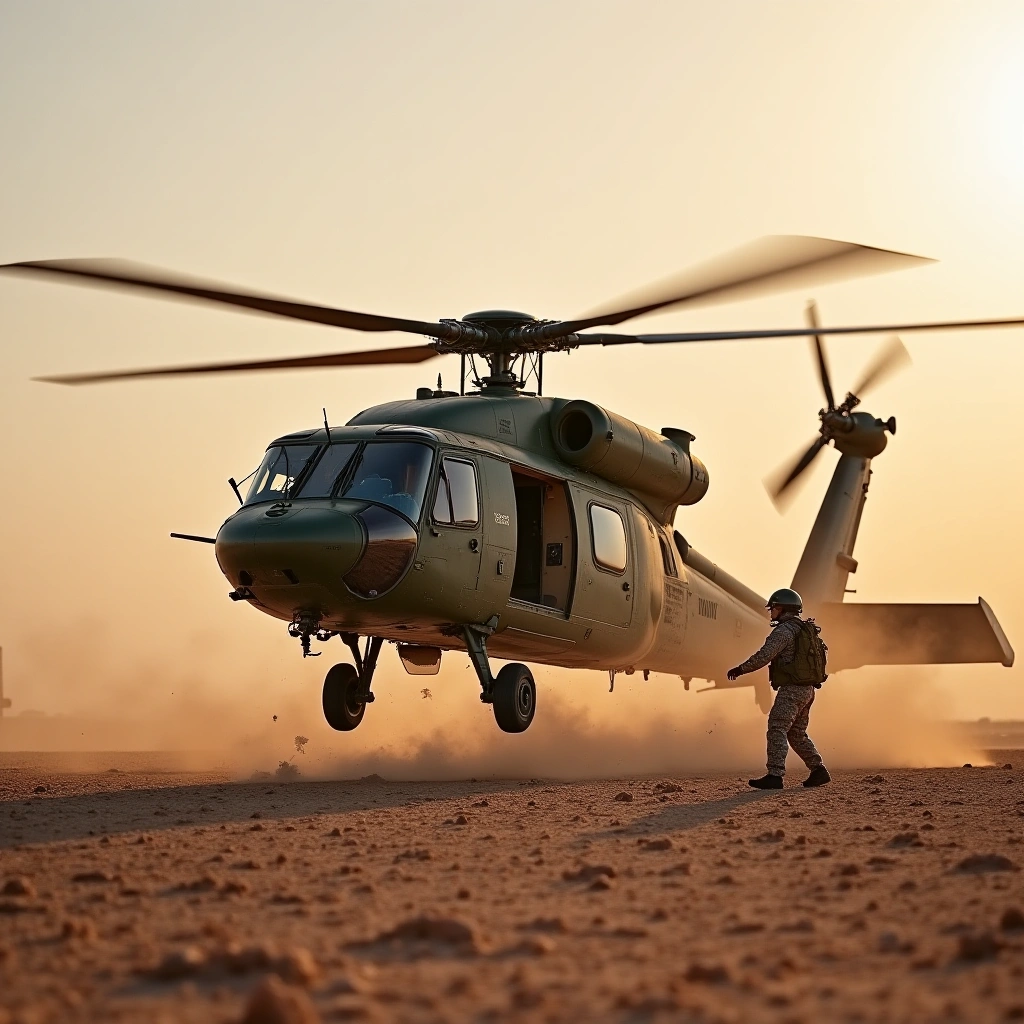
A Jordanian military Black Hawk helicopter is found to have crashed during a training exercise As of right now, Arab News reports two Jordanian military pilots were killed when the aircraft…
Nobody likes reading that a military helicopter went down, but the headline that a Jordanian military Black Hawk crashed during a routine training exercise has a particular sting. Routine is supposed to be the boring part. Routine is where everyone is meant to be bored, checking boxes and drinking lukewarm coffee. When routine turns into a crash report, the mood changes fast.
Here is what the reports say. A Jordanian military Black Hawk went down during a training exercise. Specialist teams responded and began standard procedures, which is the sort of phrase that sounds reassuring because it implies someone had a checklist and followed it. No casualties have been reported so far. The story was picked up by several outlets, including The National, Anadolu Agency, and the Jerusalem Post, and the Jerusalem Post framed it as the armed forces confirming the crash themselves. That detail matters. When the military speaks first and says the aircraft went down during training, it is usually a sign the situation is under control, at least for the moment.
The most interesting part of the coverage is the phrase describing a pattern of recent air training accidents in Jordan. One crash is an incident. Several in a short stretch starts to look like a trend, and everyone from analysts to nervous relatives will want to know whether it is bad luck, bad maintenance, bad weather, or something in how training is run. It is worth being careful here. A pattern in the news does not automatically prove a systemic problem, and the public reporting available does not establish a single cause. What it does do is raise fair questions that a military investigation should be expected to answer.
So what usually happens after a training crash? In most militaries, the process follows a familiar rhythm. First comes the immediate response: search and rescue, securing the site, checking on crew, and making sure nothing dangerous is left lying around. Then comes the investigation, which typically looks at the aircraft itself, the maintenance records, the flight crew’s training and fatigue status, environmental conditions, and the specifics of the exercise. Findings are often classified or kept internal, which can be frustrating for the public, but the goal is to fix the underlying problem rather than assign blame for its own sake.
Helicopters are a special kind of unforgiving. The Black Hawk is a widely used utility helicopter, flown by many armed forces around the world, and it is generally regarded as robust and capable. Still, no aircraft is immune to the realities of flying close to the ground, in varied conditions, during exercises that are designed to push crews into challenging situations. Training is meant to be demanding, because the real thing is more demanding. That is precisely why training accidents deserve serious scrutiny: they happen in the environment where the military is trying to prepare people for the worst.
There is also a human side that headlines tend to flatten. The crew, the ground teams, and the families who wait for news are the ones living with this story. The fact that no casualties have been reported is genuinely good news, and it deserves to be said plainly rather than buried under analysis. A crash with no fatalities is still a serious event, but it is one where the training, the procedures, and the response all seem to have worked as intended.
If there is a lesson here, it is not that militaries are careless. It is that aviation is unforgiving and that transparency, thorough investigation, and a willingness to act on findings are what separate a worrying pattern from a resolved one. For now, the reporting points to a crash, a prompt response, and no reported injuries. The questions about why, and whether it will happen again, will need answers that the public is still waiting for. Until then, the sensible approach is to stay informed, avoid jumping to conclusions, and hope the next training exercise is as boring as it was supposed to be.
Inspired by: “Jordanian military helicopter crashes during training exercise” (r/News)