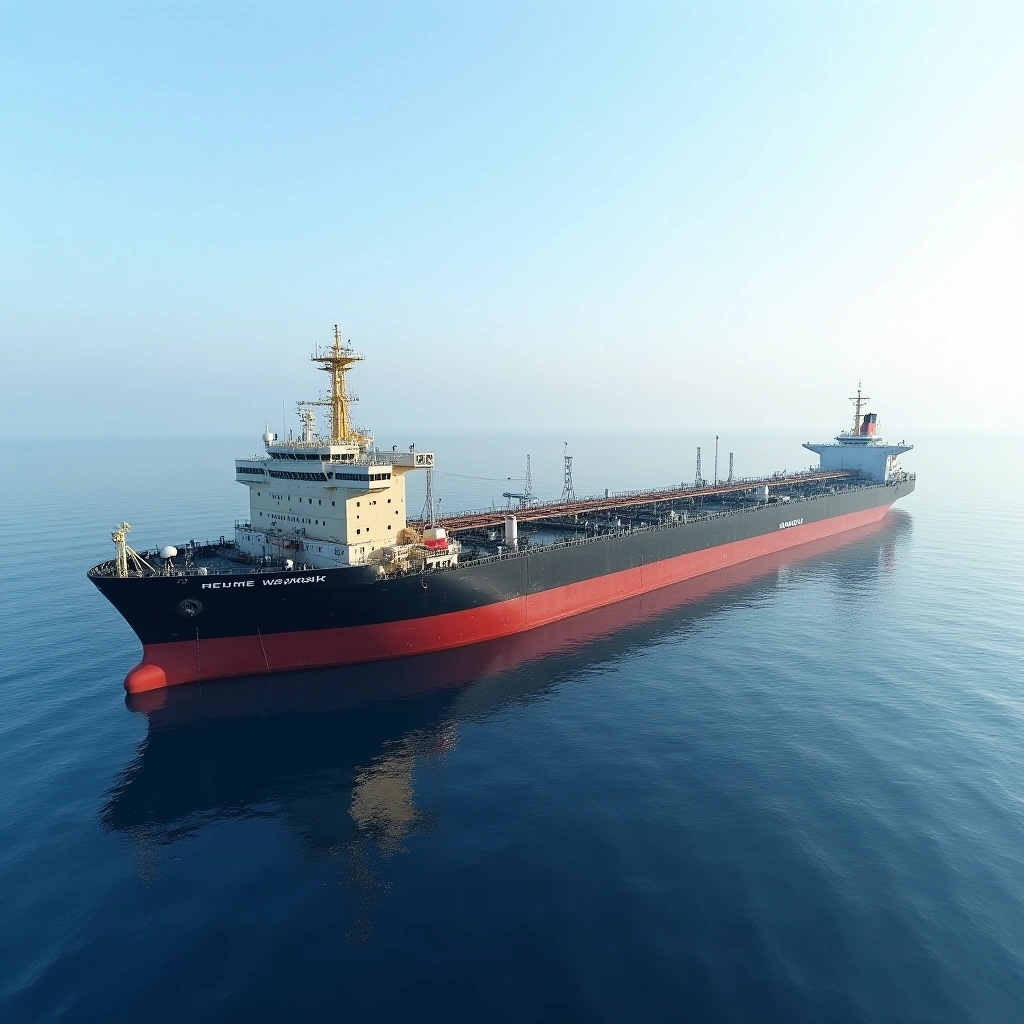
A supertanker carrying more than … have claimed that two oil tankers had hit mines while attempting to cross an unauthorised route in the southern part of the strait, triggering explosions and fires ….
Some news stories sound alarming right away. Others need a second read before you realize how big they are. “Iran says supertanker with 2 million barrels of oil sank in Gulf” manages both. You read it once and think, okay, that’s bad. You read it again, notice the words “two million barrels” and “Strait of Hormuz,” and the size of it sinks in.
So let’s walk through what was reported, what it means, and why people far from the Persian Gulf should care.
What Actually Happened
According to Iran’s Revolutionary Guard, a supertanker carrying more than two million barrels of oil sank after striking a mine in the Strait of Hormuz. It was reportedly one of two vessels involved in similar incidents. The sinking came amid heightened tensions in the region and restricted traffic through the corridor.
The story was carried by several outlets, including CNA, the Times of India and the Deccan Herald, all reporting essentially the same core facts: a supertanker, roughly two million barrels of oil, a mine, and the Strait of Hormuz.
The main source of the claim is Iran’s Revolutionary Guard. That doesn’t make it false. It does mean that, as with any report from a single party in a tense region, it’s worth watching for independent confirmation and more details. The initial reports left many questions open, including the condition of the crew, the full extent of any spill and who placed the mine. Those details matter a lot, and it’s fair to treat this as a developing story rather than a closed case.
First, How Big Is “Two Million Barrels”?
A standard barrel of oil is 42 US gallons. Two million barrels works out to about 84 million gallons of crude.
For scale, that’s roughly what a very large crude carrier, the industry’s term for these giant tankers, is built to haul. These ships are some of the largest moving objects humans have made. They’re less like boats and more like floating neighborhoods that happen to be full of oil. A ship like that going down is a major event under any circumstances.
Why the Strait of Hormuz Is Not Just Any Stretch of Water
If the world economy had a list of places where it would really prefer nothing went wrong, the Strait of Hormuz would be near the top.
The strait is a narrow passage connecting the Persian Gulf to the Gulf of Oman and, from there, to the open ocean. A huge share of the world’s seaborne oil passes through it, commonly estimated at around a fifth of global oil consumption. Major Gulf producers depend on it to get crude and gas to buyers around the world.
That makes it what analysts call a “chokepoint,” a term that sounds dramatic until you understand it’s accurate. When traffic through the strait slows or gets disrupted, the effects tend to reach energy markets far beyond the region.
So a tanker sinking there after hitting a mine isn’t only a maritime accident. It’s a reminder of how fragile one of the world’s most important trade routes is.
The Mine Problem
Naval mines are an old technology. You don’t need a cutting-edge weapon to cause serious trouble in a narrow, busy shipping lane. You need something that sits in the water, waits, and goes off when a ship comes along.
That’s what makes mines so unsettling for shipping. A crew can’t see one coming the way it might spot another vessel. Once there’s a credible mine threat in an area, every ship passing through is taking a risk. Shipping companies get nervous, insurers get more nervous, and suddenly the cost of moving oil goes up even if no other ship is ever hit.
The report says this was one of two vessels involved in similar incidents. One mine strike can be called an isolated event. Two starts to look like a pattern, and markets react to patterns.
Heightened Tensions and Restricted Traffic
The sinking reportedly happened while traffic through the strait was already restricted and regional tensions were running high. That context matters.
When a major trade corridor is already under strain, an incident like this adds to an existing sense of risk. Shipowners may reroute, delay voyages, or ask for more money to sail. Governments start issuing statements. Naval forces start paying close attention.
It’s the geopolitical version of a tense family dinner where someone knocks over a full glass of wine. The spill itself is bad, but the bigger worry is what happens next.
The Environmental Side
It would be odd to talk about a ship carrying 84 million gallons of crude going to the bottom of the sea without mentioning the environment.
The initial reports didn’t spell out how much oil, if any, escaped. If a significant amount did, the consequences for marine life, coastlines and local fishing communities could be serious and long-lasting. The Gulf is a semi-enclosed body of water, which can make spills harder to disperse and clean up than in the open ocean.
This is the part of the story that deserves close attention as more information comes out. Markets tend to recover. Ecosystems take a lot longer.
What It Could Mean for Oil Prices
Whenever something goes wrong in the Strait of Hormuz, people start watching oil prices.
The logic is simple. If traders believe oil might not move through the strait as freely as usual, they price in that risk. Even the possibility of disruption can push prices up, and higher crude prices can eventually show up at the gas pump, in shipping costs and in the price of goods that travel long distances.
It’s too early to say what the lasting market impact of this incident will be, and anyone claiming certainty right now is probably selling something. The direction of worry, though, is predictable: more risk in Hormuz usually means more nervousness in energy markets.
The Questions Still Hanging in the Air
This story leaves several important questions open:
– Who laid the mine? The reports describe a mine strike but don’t settle responsibility.
– What happened to the crew? That’s the most important human question, and early reports didn’t fully address it.
– How much oil was released? It makes the difference between an expensive loss and an environmental disaster.
– What happened with the second vessel? The reports mention two ships in similar incidents, and details on the second one matter too.
– Will traffic through the strait recover or tighten further? That will shape the economic fallout.
The Bottom Line
A supertanker carrying more than two million barrels of oil reportedly sank after hitting a mine in one of the most important shipping lanes on Earth, at a moment when the region was already tense and traffic was already restricted. Even with details still emerging, that’s a serious event with possible consequences for the people involved, for the marine environment and for global energy markets.
It’s also a reminder that a lot of modern life depends on a few narrow stretches of water staying calm. When they don’t, the effects travel a long way.
We’ll be keeping an eye on this one. You probably should too, especially the next time you fill up your tank.
Inspired by: “Iran says supertanker with 2 million barrels of oil sank in Gulf” (r/News)