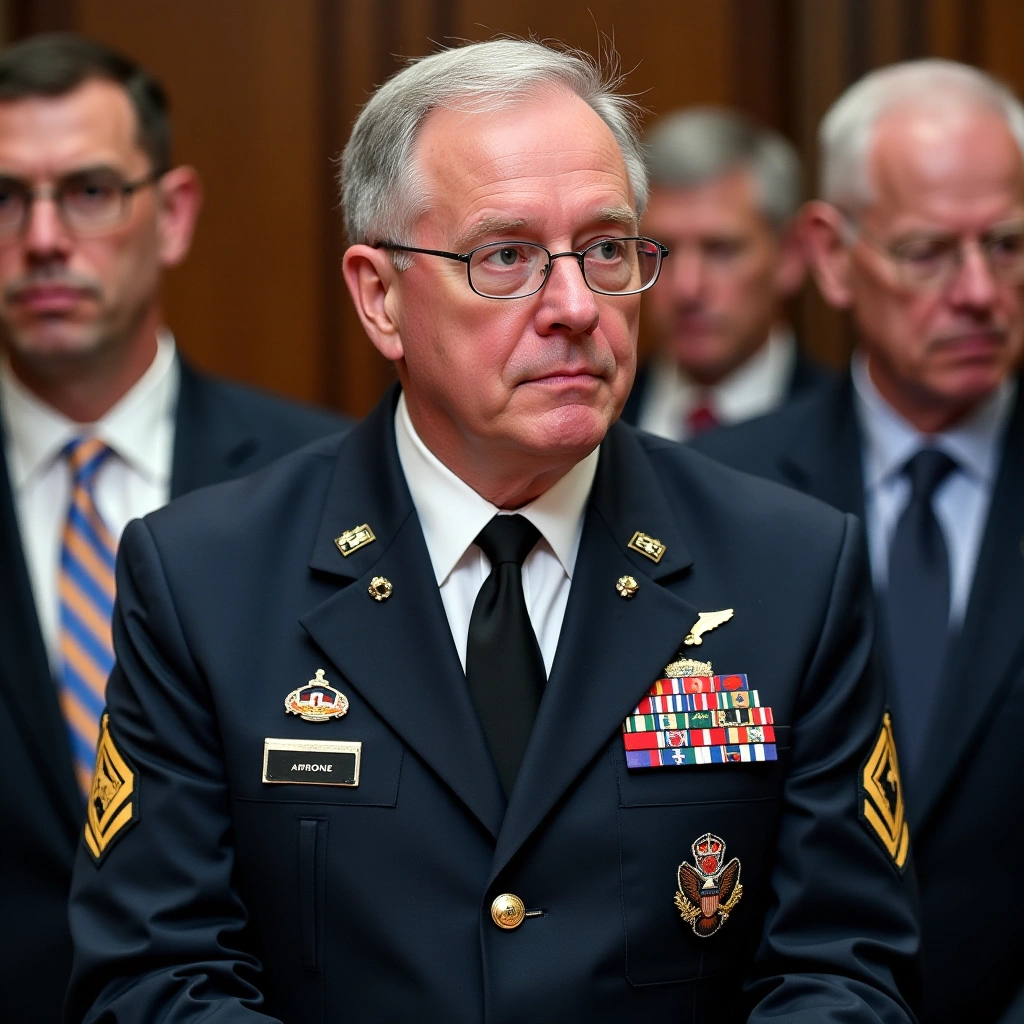
Lt. Gen. Brett Sylvia now faces legal jeopardy on two fronts after allegations by defense chief Pete Hegseth’s team were previously referred to the Justice Department.
Some headlines come with charts, timelines, and a cast of characters. Others arrive like a note slipped under the door. This is one of the second kind: the Pentagon is preparing its own prosecution of a general accused of leaking. The Washington Post reported it, Political Wire picked it up, and that is roughly where the publicly available crumbs end.
So let’s be upfront. This post will not tell you the general’s name, what was allegedly leaked, or to whom. The source material doesn’t include any of that, and inventing it would be the journalistic equivalent of filling in a crossword with whatever letters feel right. What we can do is unpack what the headline means, why the word “own” is doing so much work, and what a military prosecution of a senior officer typically involves.
The Word That Matters: “Own”
The Pentagon isn’t just pursuing a case. It’s preparing its own prosecution. That phrasing suggests the military is moving on a track that is distinct from the usual civilian process.
In the U.S., leak cases involving classified information are often associated with the Justice Department, federal prosecutors, and civilian courts. The military, however, runs its own justice system under the Uniform Code of Military Justice, or UCMJ. Service members, including generals, fall under it. When the Defense Department talks about running its own prosecution, it’s signaling that it intends to use that system rather than simply waiting for someone else to take the lead.
Why would it do that? The headline doesn’t say, and we won’t pretend it does. Generally speaking, though, an institution chooses to handle a case itself when it wants control over the process, the timing, or the message. Which of those applies here is a question for future reporting, not for confident speculation on a blog.
A Quick Tour of Military Justice
If your knowledge of military courts comes mostly from TV dramas involving dramatic courtroom speeches and someone shouting about the truth, here’s the less cinematic version.
– The UCMJ is federal law. Congress passed it, and it governs people in the armed forces, with its own set of offenses, procedures, and punishments.
– Courts-martial are real criminal trials. They have judges, prosecutors, defense counsel, and verdicts. A conviction is a criminal conviction, not a stern talking-to in a hallway.
– Rank doesn’t grant immunity. Generals are subject to the same code as privates. In practice, cases against very senior officers are rare and tend to attract a lot of attention, partly because the military isn’t exactly eager to advertise when its top leadership is in trouble.
– Retirement isn’t necessarily an escape hatch. Under the UCMJ, certain retired members of the regular forces who receive retired pay can remain subject to military jurisdiction. Whether that’s relevant here depends on details the reporting we have doesn’t spell out.
The point is that “the Pentagon is prosecuting” isn’t a polite way of saying “the Pentagon is annoyed.” It’s a formal legal process with real consequences.
Why Leak Cases Are Their Own Special Headache
Leak cases are tricky for any prosecutor, and they’re arguably trickier when the defendant is a high-ranking officer.
First, there’s the classified-information problem. To prove someone disclosed sensitive material, you often have to discuss that sensitive material in some way. Courts have procedures for handling this, but it’s a bit like trying to prove someone spilled a secret without saying the secret out loud. Doable, but awkward.
Second, there’s the question of intent and authorization. Senior officials talk to reporters, foreign counterparts, and colleagues constantly, and some of that is entirely sanctioned. Drawing the line between an approved conversation and an unauthorized disclosure can get contentious fast.
Third, there’s the politics. Leak investigations rarely happen in a vacuum, and any case involving a general will inevitably get pulled into broader arguments about loyalty, transparency, whistleblowing, and who exactly is allowed to say what to whom. Expect plenty of people to have very strong opinions about this case long before they know any of the facts. That’s practically a national pastime at this point.
What We Don’t Know (Which Is a Lot)
Here’s an honest inventory of the gaps, based on the material available:
– Who the general is. Not included in what we have.
– What was allegedly leaked. Also not included.
– The specific charges. Leak-related offenses can be charged in different ways, and we don’t know which, if any, have been filed.
– How the civilian side fits in. “Its own prosecution” implies a choice about which system handles the case, but the reasoning and any interplay with civilian prosecutors aren’t laid out.
– The timeline. “Prepares” means this is still being set up. Preparation isn’t a trial, and a trial isn’t a verdict.
In other words, if anyone on social media tells you exactly how this ends, they are either very well-sourced or, far more likely, very confident in a way that has nothing to do with evidence.
Why This Is Worth Watching Anyway
Even with the thin details, a story like this matters for a few reasons.
It shows how the military handles accountability at the top. Rules apply to everyone in theory. Cases like this test whether that’s also true in practice.
It touches the ongoing tug-of-war over information. Governments have legitimate reasons to protect certain secrets, and the public has legitimate reasons to want to know what its government is doing. Leak prosecutions sit right on that fault line.
And it raises questions about institutional choices. When the Pentagon decides to take the lead itself, people will reasonably ask why, and the answer will say something about how the department sees its own authority.
The Bottom Line
Right now, the confirmed facts fit comfortably in a single sentence: the Pentagon is preparing to prosecute a general accused of leaking, and it’s doing so through its own process. Everything beyond that will have to wait for further reporting, court filings, or official statements.
Until then, the most sensible approach is to keep an eye on credible outlets like the Washington Post, treat hot takes with a healthy dose of skepticism, and resist the urge to cast the movie before the script has been written. The military justice system moves deliberately. Our speculation should too.
Inspired by: “Pentagon prepares its own prosecution of general accused of leaking” (r/News)