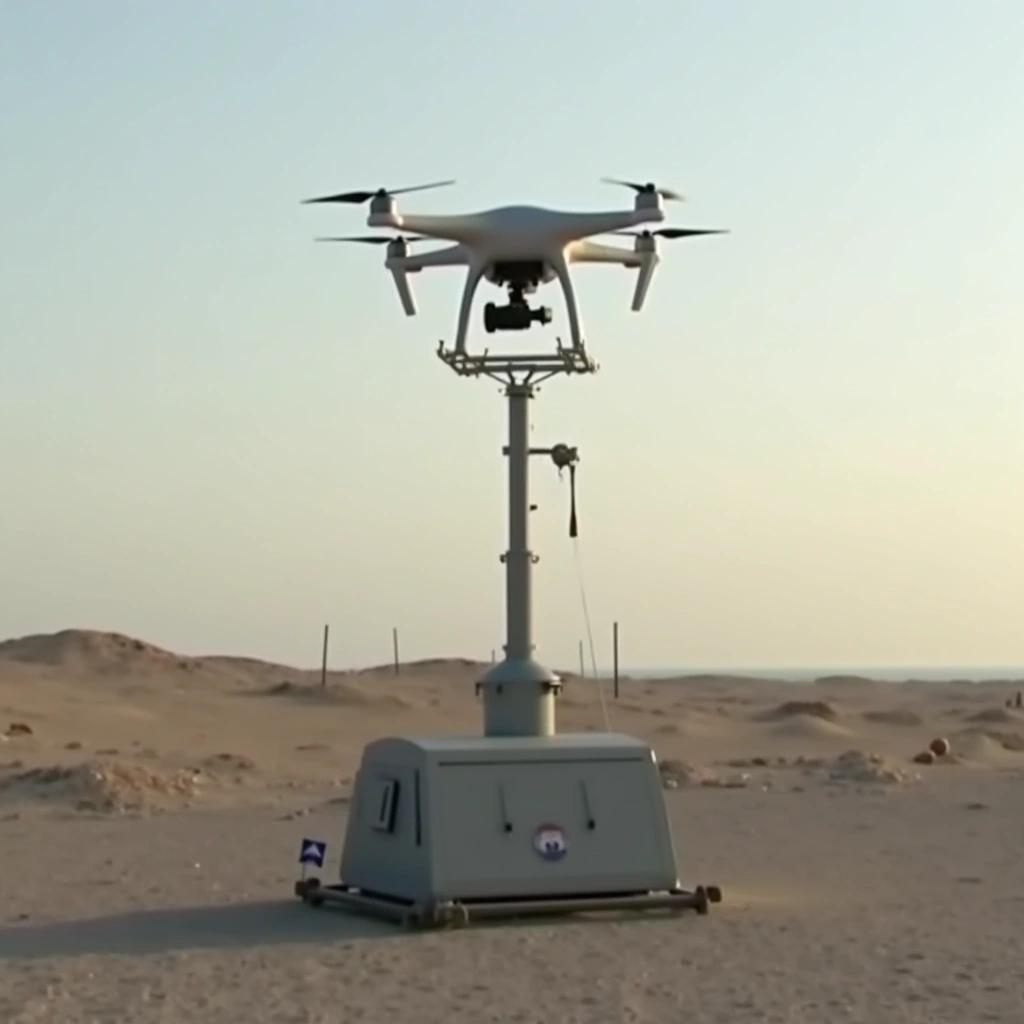
Iran launched another drone attack targeting a US military radar facility in Bahrain on Tuesday, its third attack on American military installations in five days , as an Israeli security institute reported that Washington's naval presence in …
If you were hoping the Gulf would have a quiet week, I regret to inform you that the Gulf did not get the memo.
Iran has launched a drone attack on a US military radar system at the Sheikh Isa air base in Bahrain. That alone would be headline material. What makes it more striking is that, according to reports, this is the third such incident in five days. Three in five days is not a one-off. That’s a pattern, and in international security, patterns tend to make people nervous.
Here’s what we know, what we don’t, and why it matters.
What Happened
The target was a US military radar system located at Sheikh Isa air base in Bahrain. Iran launched drones toward it. Several outlets, including Euronews and Yahoo News Australia, framed it as Iran claiming the attack. So this isn’t a case of anonymous drones appearing out of nowhere and everyone squinting at the sky. Tehran is apparently fine having its name attached.
Bahrain’s armed forces intercepted the aerial attacks. They also told citizens to seek shelter, which is never a phrase anyone wants on their phone in the middle of the day.
The good news, and it is real good news: there were no reported casualties or damage. Nobody was hurt and nothing was reported broken. In a story like this, that’s about as close to a happy ending as you get.
Why a Radar System?
Of all the things you could aim drones at, why a radar installation?
Radar is basically a military’s eyes. It detects what’s coming, tracks it, and gives everyone a chance to respond. Going after radar is less about blowing up something expensive (though it is expensive) and more about trying to blind the other side, or at least showing you could if you wanted to.
There’s an irony here too. Attacking a radar system with aircraft is a bit like trying to sneak up on a security camera by walking straight at it. The whole point of radar is to see you coming, and in this case Bahrain’s defenses apparently did, since the drones were intercepted.
Whether the attacks were meant to cause damage, test defenses, or send a message is the kind of question analysts will argue about for weeks. The reports don’t settle it, and I’m not going to pretend they do.
The Bahrain Angle
Bahrain is a small country hosting a US military presence in one of the world’s most strategically sensitive regions. That puts it in a tricky spot: it isn’t the main party to the tension between Iran and the United States, but it hosts the hardware.
That’s why the shelter warnings matter. When drones fly toward a base inside your borders, it doesn’t much matter that the intended target was American equipment. Your citizens are the ones being told to take cover. Bahrain’s forces did the intercepting, so this was very much Bahrain’s problem too.
Meanwhile, Diplomacy Is Happening (Allegedly)
This is the part where you might do a double take. The attack came amid heightened tensions in the Gulf, and also despite ongoing talks between Iran and Oman about maritime security.
So on one track, there are conversations about keeping the waters calm and secure. On another, drones are heading toward a US radar system for the third time in five days. Nothing says “let’s talk about security” quite like a demonstration of insecurity.
To be fair, this isn’t unusual in international relations. Countries often negotiate and apply pressure at the same time. Sometimes the pressure is meant to strengthen a hand at the table. Sometimes different parts of a government aren’t perfectly in sync. And sometimes talks on one issue, like maritime security, run alongside a separate confrontation that nobody in the room is willing to bring up.
Oman has long been seen as a regional go-between, so it isn’t surprising that it’s involved. Whether these talks can calm things down while drones keep flying is the big open question.
Three Incidents, Five Days: Why the Frequency Matters
One incident can be read as a message. Two might be coincidence or follow-up. Three in five days suggests something sustained.
Repeated incidents raise the stakes in a few ways:
– Each one is another roll of the dice. This time there were no casualties or damage. Air defenses are good, but no system is perfect forever, and the more attempts there are, the more chances for one to get through.
– They strain the people on the ground. Every incident means alerts, interceptions, and shelter warnings. That wears on both the military and civilians.
– They make miscalculation more likely. When tension is high and incidents keep happening, the room for misunderstanding shrinks. Everyone is reacting faster and assuming the worst.
What We Don’t Know
In the spirit of not making things up, which is apparently a radical stance these days, here’s what the reporting doesn’t tell us:
– Exactly how many drones were involved.
– The specific motivation behind this attack versus the previous two.
– How, or whether, the United States plans to respond.
– Whether the Iran–Oman talks have been affected.
Those answers may come out later. For now, anyone claiming to know the full strategic picture is probably guessing with confidence.
Who’s Covering It
The story was picked up widely, by Al Monitor, Euronews, Yahoo News Australia, the Honolulu Star-Advertiser, and the South China Morning Post. Coverage from that many regions tells you this isn’t just a local story. When Hawaii, Australia, Europe, and Hong Kong are all paying attention to an air base in Bahrain, you know it matters beyond the Gulf.
The Bottom Line
Iran launched drones at a US military radar system at Sheikh Isa air base in Bahrain, the third such incident in five days. Bahrain intercepted them, told citizens to shelter, and no casualties or damage were reported. All of this happened while Iran and Oman were talking about maritime security, which is a bit like discussing fire safety while someone keeps flicking a lighter.
The best outcome is that the interceptions keep working, the talks produce something real, and “third incident in five days” doesn’t become “tenth incident in a month.” The Gulf has seen plenty of excitement over the years. A boring stretch would be a nice change.
Inspired by: “Iran attacks US military radar system in Bahrain with drones” (r/World)