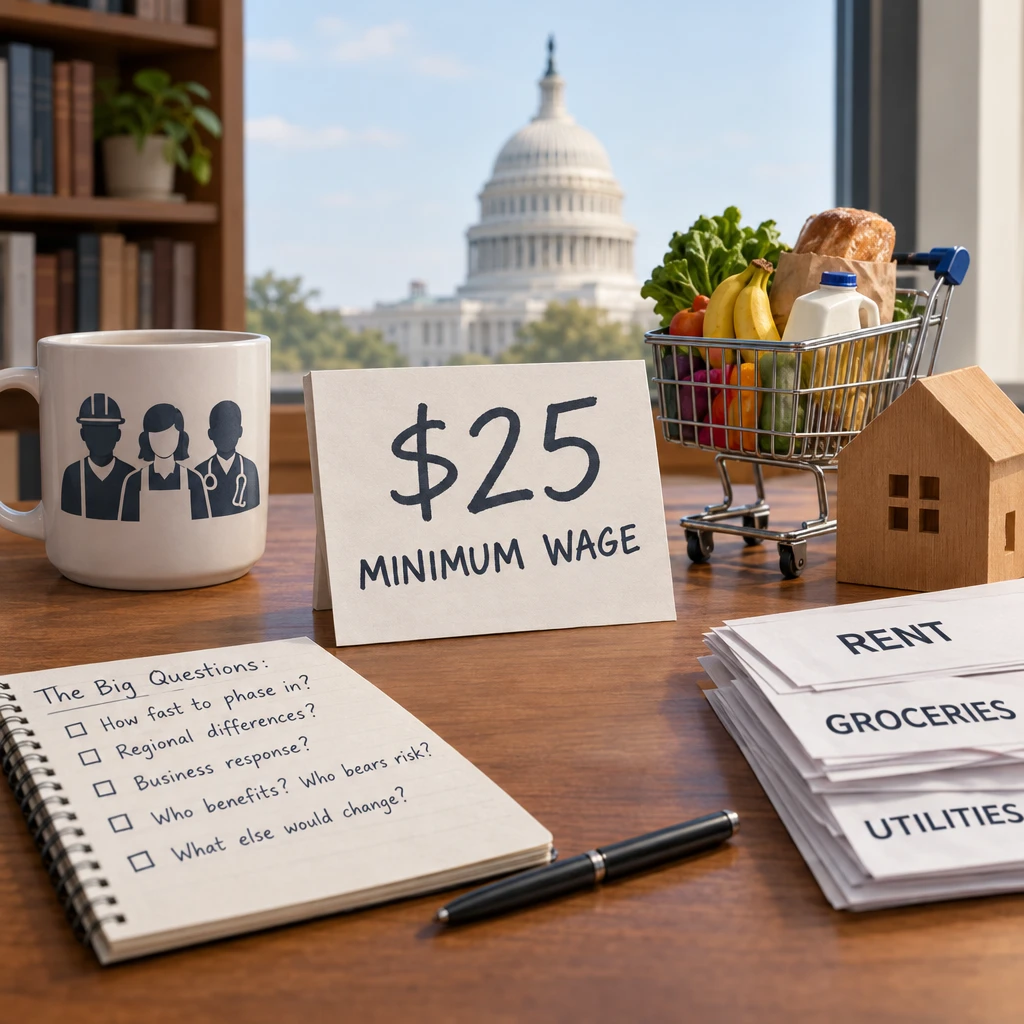
A proposal to more than triple the federal minimum wage to $25 an hour sparks debate over inflation risks, job losses and small business impacts .
Every few years, someone in Washington dusts off the minimum wage debate and throws it onto the table like a hot potato. This time, House Democrats have floated a federal minimum wage of $25 per hour. That is more than three times the current federal floor of $7.25, which has stayed put since 2009. If you have been paying attention to grocery receipts and rent notices lately, you might be wondering whether the number is a bold fix or a fun thought experiment.
What Is Actually on the Table
The proposal comes from members of the Congressional Progressive Caucus. Their pitch is that wages need to keep up with the cost of living, and that workers should be able to get by, and maybe even thrive, on a full-time paycheck. Supporters argue that a national floor is necessary no matter where someone lives. In their view, a worker in a rural county and a worker in an expensive city should not be left wondering whether a basic wage is enough to live on.
That last point deserves some attention, because it is the heart of the argument. A single federal number applies everywhere, from high-cost metro areas to places where a dollar stretches a lot further. Proponents see that as a feature. Critics see it as a problem, since a wage that feels modest in one region could be a serious shock to a small business in another.
The Economists Are Not Thrilled
Not everyone is cheering. Some economists have warned that a jump this large could push up prices and cut into employment. One economist associated with the Heritage Foundation has been among the most vocal critics, arguing that businesses facing a sudden spike in labor costs will respond in predictable ways. They may raise prices, reduce hours, automate tasks, or simply hire fewer people.
That argument is not new, and it is not automatically wrong. Economists have debated minimum wage effects for decades, and research on the subject has produced a range of findings depending on how big the increase is, how quickly it phases in, and what local labor markets look like. A modest increase and a more than threefold jump are very different animals. The bigger the change, the bigger the uncertainty.
A Headline With Some Heat
The original coverage of this story leaned hard into drama. One headline labeled the proposal as “EXPOSED,” while another framed it as progressives pushing a solution to an affordability crisis despite inflation warnings. You can probably guess which framing is doing more work to grab your attention. Headlines like these tend to treat policy disagreements as scandals, when they are really arguments about trade-offs.
It is fair to say the proposal is controversial. It is also fair to say it is a serious policy idea that its backers have thought through, at least in broad strokes. Calling it a secret plot does not help anyone understand what would happen if it became law.
The Questions Worth Asking
If you want to think this through without picking a team, a few questions help cut through the noise:
– How fast would it phase in? A gradual increase gives employers and workers time to adjust. A sudden leap leaves less room.
– What about regional differences? Would a single national number work in both expensive cities and lower-cost towns, or would it need local adjustments?
– How would businesses respond? Some might pass costs to customers, some might cut staff, and some might find productivity gains. The mix matters.
– Who benefits most, and who bears the risk? Higher wages could help many workers, but the people most likely to lose hours or jobs could be the ones with the least bargaining power to begin with.
– What else would change? Wage policy rarely operates alone. Taxes, benefits, and local cost-of-living conditions all shape the final result.
So Where Does That Leave Us?
The $25 proposal is a big swing, and it is fair to be skeptical of any idea that jumps this far this fast. It is also fair to recognize that many people are struggling with costs and want wages to reflect that reality. Those two things can both be true at once, which is part of why minimum wage debates never seem to end.
For now, the proposal is a political statement as much as a policy plan. It signals where one group of lawmakers wants to take the conversation. Whether it becomes law, gets watered down, or quietly fades away will depend on a lot of factors, including economic conditions, political support, and how the research on its effects develops.
In the meantime, the best move is to read past the capital letters in the headlines and look at the actual trade-offs. Higher pay and fewer jobs are not the only possible outcomes, but they are the outcomes critics are worried about, and they deserve a serious answer rather than a shouting match.
Inspired by: “EXPOSED: Progressives Push $25 Minimum Wage as Heritage Economist Warns of INFLATION and Job Losses” (r/Politics)