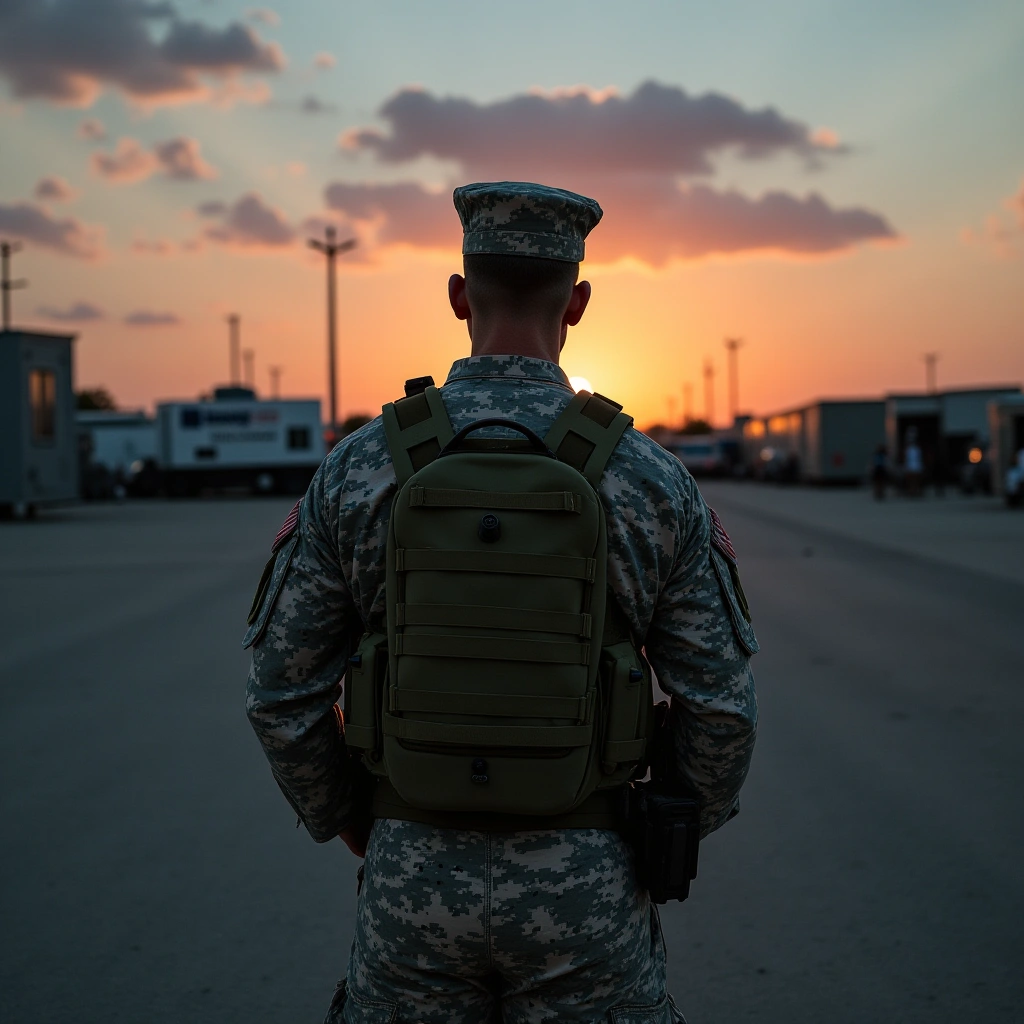
An American soldier has alleged that U.S. military leaders dismissed concerns ahead of an Iranian attack that killed six servicemembers on March 1.
There are stories where a bit of sarcasm helps, and stories where you need to be careful about where you aim it. This one falls into the second category. Six U.S. service members are dead after an Iranian drone attack on a command post in Kuwait on March 1st. Now a U.S. Army Major says the people in charge were told, in advance, that the site was not properly protected, and that they did not fix it.
So let’s be clear about the target. Any side-eye in this post is for institutional inertia, not for the people who served and died there.
What’s Being Alleged
According to reporting from multiple outlets, including the New York Post, Hindustan Times, Times of India, and LifeZette, an Army Major has filed a whistleblower complaint about security at a command post at Port Shuaiba in Kuwait. The complaint went to congressional committees, and the Major also described the allegations in an interview with CBS News’ “60 Minutes.”
The core claim is that concerns were raised before the attack in three areas:
– Defenses at the outpost. The complaint says the site’s overall protection was insufficient.
– Medical resources. It says the site lacked adequate capacity to treat casualties if something went wrong. Something did.
– Counter-drone systems. It says the tools needed to detect and stop drones were not where they needed to be.
The complaint alleges these warnings were not addressed. Then the drone came, and six people did not go home.
Hindustan Times describes the whistleblower as an injured U.S. soldier. If that’s accurate, this isn’t someone criticizing from a comfortable distance. It’s someone who was on the receiving end of the outcome they say they tried to prevent.
Why the Counter-Drone Piece Matters So Much
Drones have become one of the most frustrating threats in modern conflict. They are relatively cheap, they can be hard to detect, and they turn “the place we work every day” into a target. Countering them takes the right sensors, the right systems, and people trained to use both, positioned where the threat actually is.
When someone says a site lacked adequate counter-drone capability, they aren’t asking for a luxury upgrade, like a better coffee machine for the break room. They’re describing a basic gap in protection against a well-known threat.
The medical allegation matters too, and it tends to get less attention. Force protection isn’t only about stopping an attack. It’s also about what happens in the minutes after one. Adequate medical resources can be the difference between a wounded service member and a fatality. If the complaint is right that this was flagged and left unresolved, that’s a serious question.
The Washington Response So Far
Senator Richard Blumenthal has requested a classified briefing on force protection assessments for the outpost. In plain terms, he wants to see what the military knew about the site’s vulnerabilities, when it knew it, and what it decided to do about it.
Outlets including Hindustan Times report that Democrats are pushing for a probe. Congressional oversight can be slow, partisan, and occasionally theatrical. But this is the kind of situation it exists for. Lawmakers are supposed to ask hard questions when people in uniform die, especially when someone inside the system says the risk was known ahead of time.
The word “classified” is doing a lot of work here. Some of the details about defenses at a military site will reasonably stay out of public view. The question is whether the public will eventually get a clear answer to the simple version: were the warnings given, and were they ignored?
What We Don’t Know Yet
It’s worth slowing down here, because the internet loves to skip the part where facts get established.
These are allegations in a whistleblower complaint. The reporting summarized here doesn’t lay out a detailed Pentagon rebuttal, a full timeline of who received which warning and when, or the specific contents of any internal assessments. Those details matter a lot. A warning that was received, weighed, and rejected for a documented reason is different from one that was filed and forgotten, though neither is reassuring to the families involved.
So the fair position is to take the complaint seriously, back an actual investigation, and avoid writing the ending before the evidence is in. That goes in both directions. We shouldn’t assume every allegation is proven, and we shouldn’t assume the institution will investigate itself with enthusiasm and total candor. History hasn’t been generous to that second assumption.
Why Whistleblowers Matter Here
Filing a whistleblower complaint against your own chain of command is not a great career move. It doesn’t make you popular at work. It invites scrutiny, skepticism, and probably a lot of quiet hallway conversations you’re not part of.
That doesn’t automatically make someone right. It does mean the decision to go to Congress and to “60 Minutes” wasn’t casual. Whistleblower channels exist because organizations, including very large and very powerful ones, don’t always want to hear bad news from below. Sometimes the only way a warning gets taken seriously is after the worst has happened and someone insists on putting it on the record.
The Bigger Picture
Force protection sounds like a dry bureaucratic term until you remember what it means: keeping the people we send abroad alive. Every deployed site involves tradeoffs. There are limited resources, competing priorities, and a lot of locations that all want the same equipment. Nobody expects perfection.
What people do expect, and are entitled to expect, is that when credible warnings are raised about a known threat, someone with authority actually does something about them. Or at minimum, that someone can explain clearly why they didn’t.
If the investigation finds the warnings were reasonably handled, the public should hear that. If it finds they were brushed aside, the public, and especially the families of the six service members, deserve accountability that goes beyond a strongly worded memo and a promise to “review procedures going forward.”
Bottom Line
Six service members were killed in an Iranian drone attack at Port Shuaiba in Kuwait. An Army Major says leadership was warned about weak defenses, limited medical resources, and inadequate counter-drone systems, and that those warnings went unaddressed. The complaint is now in front of Congress, Senator Blumenthal wants a classified briefing, and Democrats want a probe.
The next step is the least exciting and most important one: a real investigation that produces real answers. The people who served at that outpost deserve that. So does anyone who will be stationed at the next one.
Inspired by: “Pentagon Brushed Off Iran Drone Warnings Before Strike Killed 6 US Service Members, Whistleblower C…” (r/Politics)