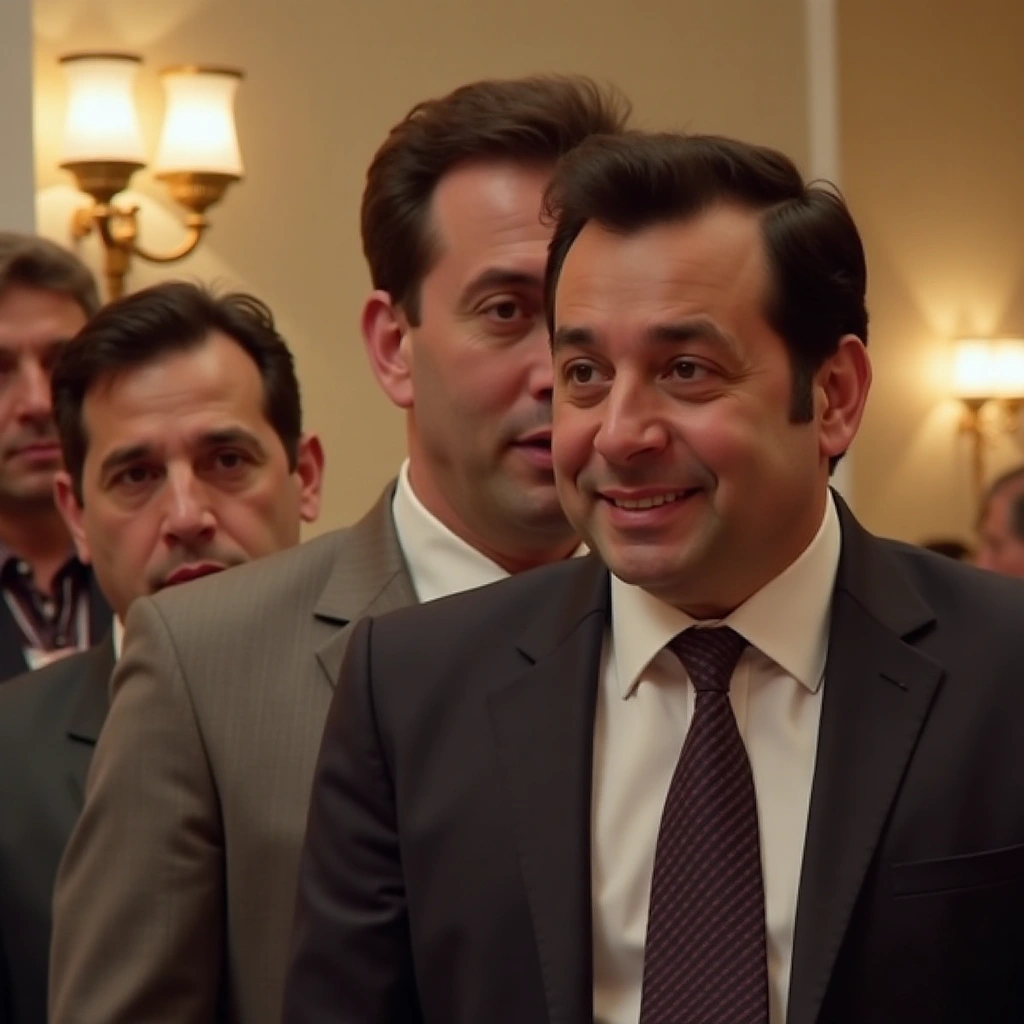
Bollywood actor Saif Ali Khan has reportedly received a death threat allegedly from wanted criminal Zeeshan Akhtar . The Mumbai Police are investigating the source of the threat and verifying its authenticity as the threat referenced a recent …
Nobody expects a Monday morning news alert to involve a Bollywood star, a murder case, and a threat that may or may not be real. Yet that is exactly where things stand with Saif Ali Khan, who has reportedly received a death threat in the name of Zeeshan Akhtar, a wanted accused in the murder case of Baba Siddique.
For anyone who hasn’t followed the story closely, the basic facts are these. Khan is an actor, and he is now at the center of a police investigation. Mumbai Police are working to verify whether the threat is authentic, which is the sensible first step. A threat that sounds dramatic on the surface still has to be checked before anyone can say what it means.
Khan is not the only one. Actors Tushar Kapoor and Ayushmann Khurrana also reportedly received similar threats. When several well-known names get messages that follow the same pattern, it stops looking like a random prank and starts looking like a deliberate campaign, or at least like someone trying very hard to get attention.
The story took an unexpected turn when authorities arrested Vaibhav Mishra, who was allegedly using artificial intelligence to send these threats. That detail is worth pausing on. A few years ago, a threat from a notorious criminal figure would have needed a network of people, phone lines, and real intent behind it. Today, a person with the right tools can apparently create messages that sound convincing enough to alarm people with a lot of public visibility. It is a reminder that technology has made it much easier to cause fear without having much power at all.
Investigators have also indicated that Mishra had no connection to any organized crime gang. That is an important point, and it cuts both ways. On one hand, it may mean the threats were not backed by a violent group, which is a relief for the people targeted. On the other hand, it means the threats were arguably more troubling in a different way: an individual, possibly acting alone, was able to use a famous criminal’s name to stir up panic. Being harmless in structure does not make the threat harmless in effect.
There is also the matter of how the story reached the public. The report appeared across several outlets, including World Times of India, Times of India, Deccan Herald, and NDTV, and the headlines varied in how confidently they presented the threat. Some made it sound like a settled fact that the accused had sent a message. Others leaned on phrases like “reportedly” and “sources say.” In a story like this, that difference matters. Until the police confirm the details, readers should treat the early claims with some caution, and the speed of online reporting does not always leave room for that.
So what should readers take away from all this? First, a death threat against a public figure is serious regardless of its source, and police are right to investigate it thoroughly. Second, the arrest suggests that the threat may have been fabricated, but that conclusion still rests on the investigation continuing. Third, the case is a good example of how easily a name, a face, and a few convincing lines of text can be combined to create real anxiety.
It is also a useful reminder to be a little skeptical when a big headline lands in your feed. The details will likely become clearer as the investigation moves forward. Until then, the most accurate thing anyone can say is that a threat was reported, police are checking it, and at least one person has been arrested over the alleged use of AI to create these messages. Not the most exciting sentence, but at least it is the one the facts support.
Inspired by: “Saif Ali Khan receives death threat from Baba Siddique murder case accused” (r/World)