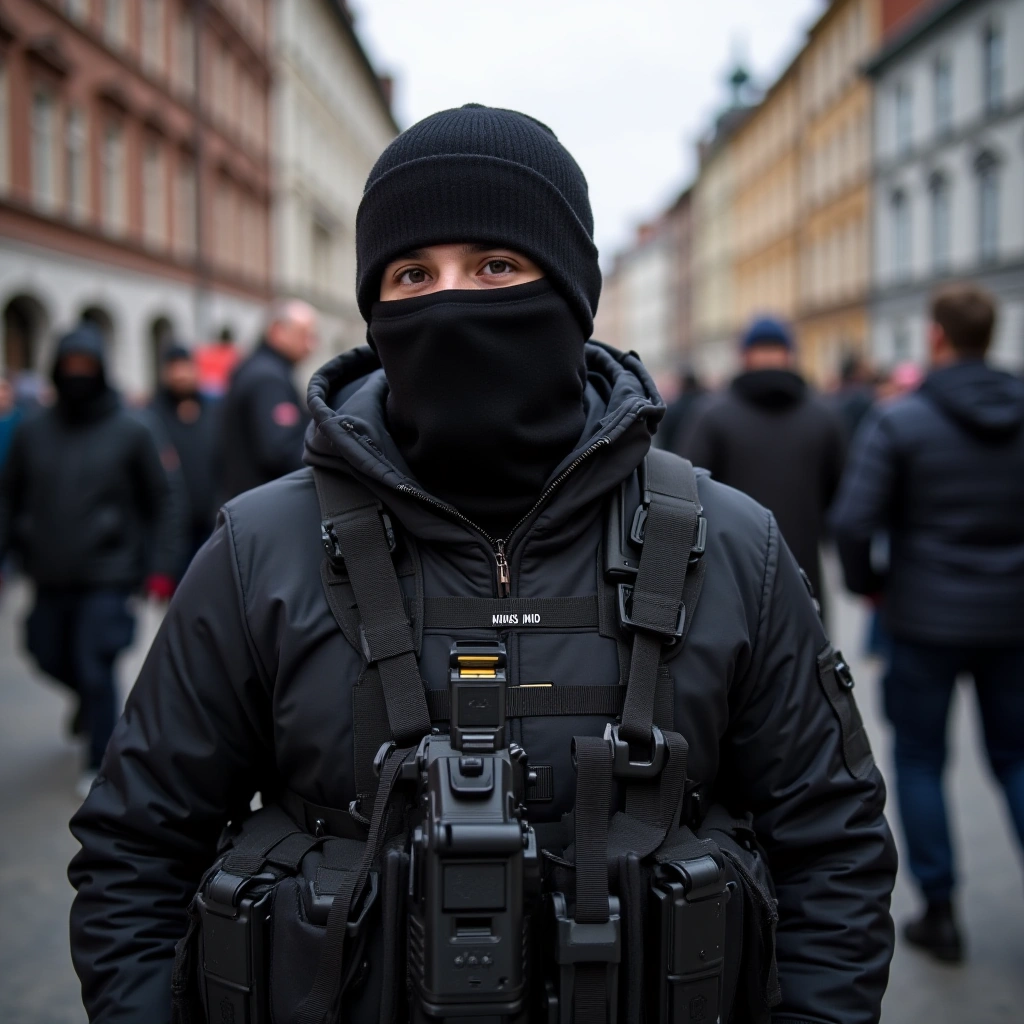
Poland's Internal Security Agency (ABW) has detained three teenagers suspected of preparing a terrorist attack, Tomasz Siemoniak , the minister overseeing Poland's special services, said on X on Monday.
Some news stories make you sigh. Others make you put your coffee down and stare at the wall for a minute. This is one of the second kind.
Polish authorities have detained three teenagers, one aged 16 and two aged 17, on suspicion of preparing a terrorist attack. The arrests were carried out by Poland’s Internal Security Agency, known by its Polish initials ABW. According to reports, the suspects are believed to be linked to an international neo-Nazi movement and had been exchanging information online about explosives and firearms.
The detentions also come shortly after a shooting in Krakow that reportedly killed six people. That context matters, so let’s take things one piece at a time and stick to what has actually been reported.
The Basics
Here is the confirmed outline, based on coverage from outlets including The Straits Times and the Jerusalem Post:
– Three teenagers, ages 16, 17, and 17.
– The ABW, Poland’s main counterintelligence and internal security service.
– Preparing or planning a terrorist attack.
– Ties to an international neo-Nazi movement.
– Sharing information online about explosives and firearms.
– The arrests follow a recent shooting in Krakow that killed six people.
That is the factual skeleton. Plenty of details have not been made public, including the specific target, how far along any plan was, and the exact nature of the online group involved. When authorities release more, the picture will get clearer. Until then, anyone claiming to know the whole story is probably guessing, or selling something.
Who Is the ABW?
If you are not a regular follower of Polish security agencies (and honestly, who is, unless it is your job), the ABW is the agency responsible for protecting Poland against internal threats such as terrorism, espionage, and other serious risks to state security. Think of it as the people whose job is to notice the bad thing before it turns into a headline.
In this case, the headline is about the arrests rather than an attack, which is the version of this story everyone should prefer. Counterterrorism work rarely gets credit when it goes well, because the success looks like nothing happening. Here, at least based on what has been reported, the work appears to have intervened before anything was carried out.
The Age Factor
This is the part that is genuinely unsettling. These are not seasoned extremists with decades of grievances. They are teenagers, the age when most people’s biggest crisis involves exams, acne, or a parent discovering their browser history for reasons far less alarming.
The involvement of minors in extremist plots is a growing concern for security services in many countries. Young people spend a huge amount of time online, and extremist groups know it. Ideological content can be packaged in memes, edgy humor, gaming communities, and private chat groups, places where it can blend in with ordinary internet noise until it no longer does.
None of this excuses anything that may have been planned. But it does raise uncomfortable questions about how teenagers end up in these spaces, and who else might be drifting toward them right now.
The Online Angle
According to reports, the suspects exchanged information online about explosives and firearms. That detail is a reminder that the internet, the same place where we share recipes and argue about whether a hot dog is a sandwich, also hosts some very dark corners.
The usual pattern described by researchers and security agencies goes something like this: someone finds a community that offers belonging and a sense of purpose, the content gets progressively more extreme, and the group’s worldview becomes the only one that seems to make sense. When that worldview involves violence, the consequences can be very real.
Platforms have spent years promising to crack down on this kind of material. Judging by how often stories like this keep appearing, that promise is, shall we say, still a work in progress.
An International Movement
The reported link to an international neo-Nazi movement is significant. Extremism does not respect borders, and online networks make it easy for people in different countries to connect, share material, and encourage each other. A teenager in one country can be influenced by people they have never met, in places they have never been.
That is also why cooperation between security services across countries matters so much. A threat that grows in a chat room spanning several nations is hard for any single agency to track alone.
The Shadow of Krakow
The arrests come after a recent shooting in Krakow that reportedly killed six people. Reports have noted the timing, but it is important not to draw connections that have not been confirmed. Based on the available information, the two events are described as following one another, not as definitively linked.
What can be said is that a tragedy of that scale tends to put everyone on higher alert, from security agencies to parents to schools. For the families and community affected, this is not a news cycle; it is a loss that will last far longer than the headlines.
What Happens Next
As with any investigation, the coming weeks will likely bring more information, possibly about charges, the scope of the alleged plot, and the network the teenagers were reportedly connected to. Because the suspects are minors, some details may remain limited, which is normal and frankly appropriate.
In the meantime, a few reasonable takeaways:
1. Prevention works, quietly. If the reporting holds, this is a case where intervention came before harm.
2. Online radicalization is not a theoretical problem. It is happening, and it is reaching young people.
3. Patience beats speculation. Early reporting is incomplete. Filling the gaps with assumptions helps nobody.
Final Thoughts
It is tempting to read a story like this, shake your head, and scroll on to something more cheerful. That is understandable. But it is worth pausing on the fact that three teenagers allegedly found their way into an extremist network and were discussing weapons online. That did not happen in a vacuum.
The good news, such as it is, is that authorities stepped in. The less good news is that the conditions that make stories like this possible have not gone anywhere. Keeping an eye on what young people are exposed to online, and talking with them about it, is a lot less dramatic than a counterterrorism operation. It is also a lot more pleasant.
We will update as more verified information becomes available.
Inspired by: “Poland detains three teenagers suspected of preparing terrorist attack” (r/News)