November 15 is the 319th day of the year (320th in leap years) in the Gregorian calendar; 46 days remain until the end of the year. 655 – Battle of the Winwaed: Penda of Mercia is defeated by Oswiu of Northumbria. 1315 – Growth of the Old Swiss Confederacy: The Schweizer Eidgenossenschaft …
Some dates in history are quiet. Somebody signs a minor treaty, a small bridge opens, everyone goes home early. November 15 is not one of those dates. Over the years it has collected a wartime campaign that reshaped the Civil War, America’s first attempt at a national rulebook, and an explorer getting his first look at a mountain that would eventually carry his name. Let’s walk through all three, at a more leisurely pace than Union troops managed.
1864: Sherman Leaves Atlanta, and Georgia Notices
On November 15, 1864, Union forces under Maj. Gen. William Tecumseh Sherman set out from Atlanta on what became known as the “March to the Sea.” The destination was Savannah, Georgia, on the Atlantic coast, and the Union eventually captured it.
Some context helps. By late 1864 the Civil War had been grinding on for more than three years. Atlanta had fallen to Sherman earlier that fall, which was a major blow to the Confederacy and a welcome boost for the Union. Sherman then made a bold decision. Instead of sitting in Atlanta and defending long, vulnerable supply lines, he would cut loose and march his army across Georgia toward the sea, living largely off the land along the way.
That phrase, “living off the land,” sounds like a wellness retreat. It was not. Sherman’s army of roughly 60,000 soldiers foraged heavily from farms and plantations in its path. Railroads, supply depots, and other infrastructure useful to the Confederate war effort were wrecked. Union soldiers famously heated railroad rails and twisted them around trees, creating what came to be called “Sherman’s neckties.” It’s the kind of accessory nobody asked for and nobody could return.
The strategy aimed beyond battlefield victories. Sherman wanted to break the South’s capacity and will to keep fighting by showing that the Confederate government couldn’t protect its own heartland. He was blunt about it. He spoke of making Georgia “howl,” and he believed that making the war’s cost painfully clear might end it sooner. Whether you see that as grim pragmatism or something harsher, the march is still debated today, and it remains one of the most studied and argued-over campaigns in American military history.
The army reached the coast in December and took Savannah. Sherman then sent President Abraham Lincoln a telegram offering him the city as a Christmas present. Most people settle for a gift card. Sherman went with a port city.
From Savannah, Sherman turned north into the Carolinas, keeping up the pressure. The war ended in the spring of 1865, and the March to the Sea is widely seen as one of the campaigns that hastened the Confederacy’s collapse.
1777: The Articles of Confederation, or America’s Rough Draft
Go back nearly a century, to November 15, 1777. The Revolutionary War was underway, and the Second Continental Congress approved the Articles of Confederation, the first governing framework for the newly declared United States.
If the Constitution is the polished final essay, the Articles were the rough draft written the night before it was due. Having just rebelled against what they saw as an overbearing central authority in Britain, the framers were understandably reluctant to create a powerful central government of their own. So they built a very weak one.
Under the Articles, the states held most of the power. Congress could not directly levy taxes, which meant it had to request money from the states and hope they felt generous. Spoiler: they often didn’t. There was no independent executive branch and no national court system, and making major changes required something close to unanimous agreement among the states. It was a bit like running a group project where nobody has to do their part and everyone has veto power.
It also took a while to take effect. Approval in 1777 didn’t mean instant adoption. The states had to ratify the Articles, and that wasn’t finished until 1781.
The Articles weren’t a total failure. They held the states together through the war, and the government operating under them managed real business, including setting up processes for organizing western territories. But the weaknesses became hard to ignore, and by the late 1780s leaders gathered to fix things. That effort produced the U.S. Constitution, which replaced the Articles and is still in use. So the Articles of Confederation served as a very important lesson in what not to do, which, let’s be honest, is how a lot of us learn things.
1806: Zebulon Pike Spots a Peak
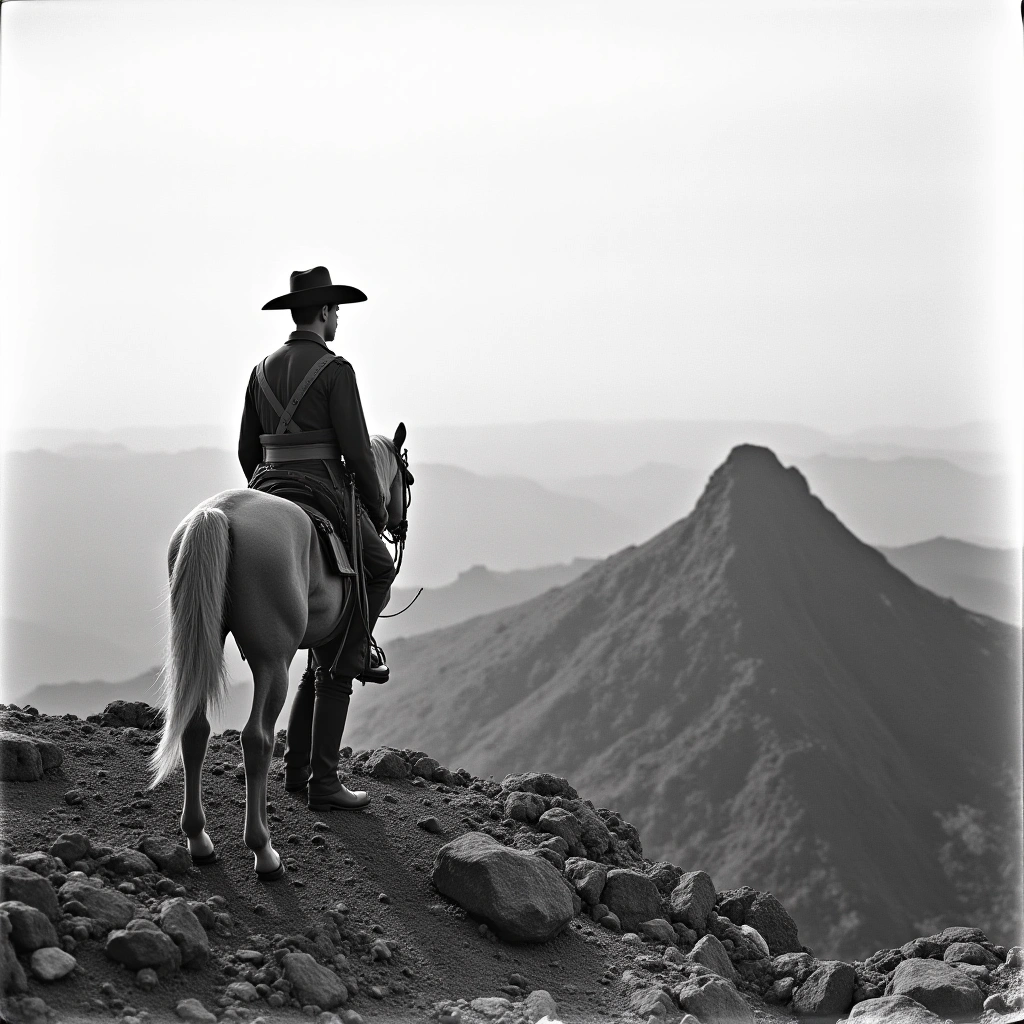
On November 15, 1806, explorer Zebulon Pike sighted the mountain in what is now Colorado that we know today as Pikes Peak.
Pike was leading an expedition to explore the southwestern parts of the Louisiana Purchase, the huge territory the United States had bought from France a few years earlier. When the mountain came into view, it was an impressive sight rising over the plains.
Pike and some of his men tried to reach the summit, but late-autumn conditions, deep snow, and a serious underestimate of the distance stopped them. He reportedly believed nobody would ever climb it. History has been somewhat unkind to that prediction. People have reached the top many times since, and today you can get there by road or by a cog railway. Telling the future is hard, especially about mountains.
Still, Pike gets the last word in one way: the peak carries his name. Not bad for someone who never made it to the top. There’s a lesson in that for anyone who has quit halfway up a staircase.
Why November 15 Is Worth Remembering
Put these three events side by side and you get a small cross-section of American history:
– A young nation tries to figure out how to govern itself and lands on a system too weak to work for long.
– That nation, having grown dramatically, sends explorers to see what it actually bought.
– The nation fights a devastating war over its own survival and the future of slavery, and Sherman’s march helps decide how it ends.
It’s a reminder that history doesn’t move in a straight line. It stumbles through rough drafts, misjudges distances to mountains, and sometimes moves forward through very painful chapters. November 15 happens to hold a little of all that.
So the next time this date comes around and your biggest accomplishment is remembering where you parked, go easy on yourself. Not every day needs a march, a constitution, or a mountain. Some days you just need coffee.
Inspired by: “Today in history: Union troops begin ‘Sherman’s March’” (r/News)