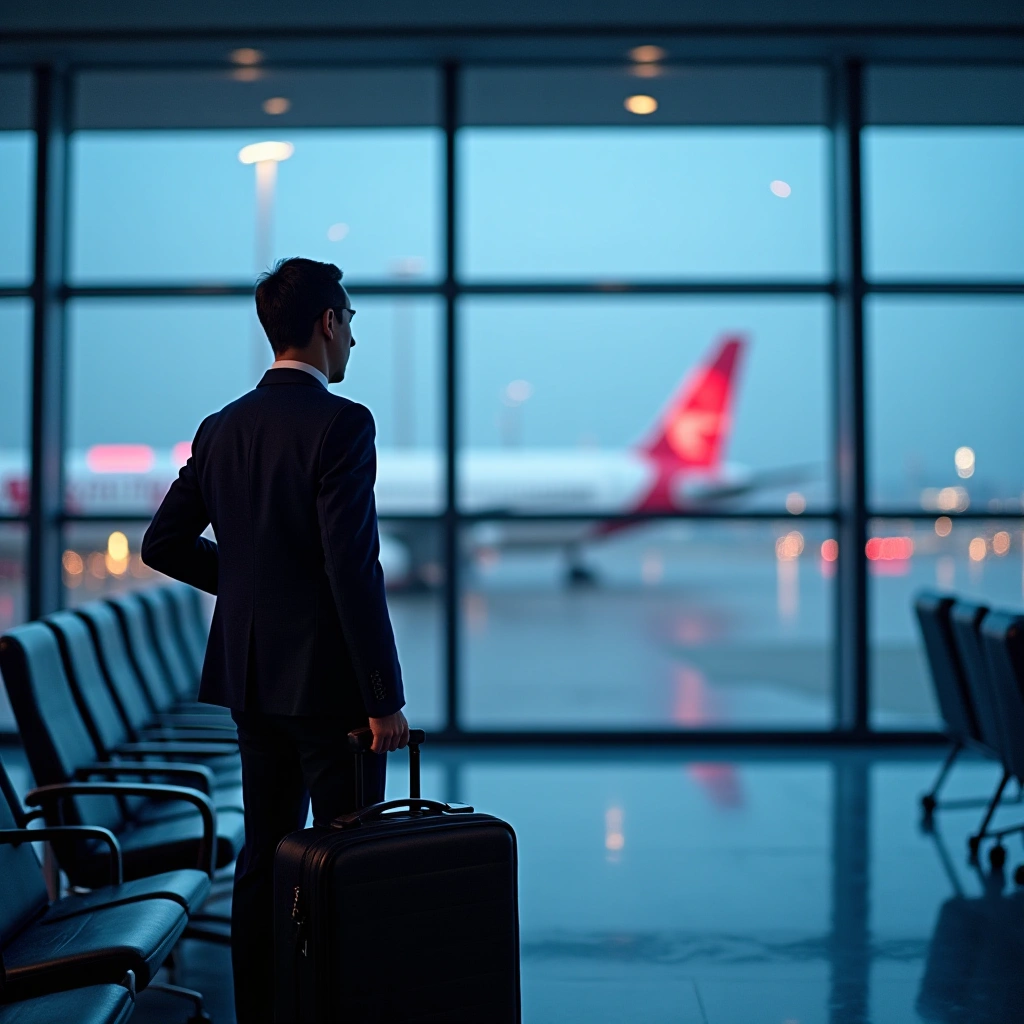
Over 4,000 flights in the U.S. were delayed and another 1,600 canceled as of early Sunday afternoon.
If you spent Sunday staring at a departures board that kept changing its mind, you had plenty of company. According to reports from Forbes and The New York Times, roughly 6,000 flights were delayed or canceled on Sunday as the air travel system tried to recover from a ground stop put in place earlier in the day.
And what caused the ground stop in the first place? Great question. The available reports don’t say. So if you were hoping for a satisfying villain, you’ll have to settle for the classic travel-day experience: something went wrong, everyone paid for it, and nobody handed out an explanation with the free pretzels.
Here’s what we actually know, what a ground stop means, and why one pause can wreck an entire day of flying.
What We Know (and What We Don’t)
The confirmed facts are short:
– A ground stop was implemented earlier on Sunday.
– Delays and cancellations continued after it as the system recovered.
– About 6,000 flights were disrupted.
– The cause of the ground stop has not been specified in available reports.
That’s the list. There’s no official word on which airports or airlines were hit hardest, how long the stop lasted, or what triggered it. It’s tempting to fill those gaps with guesses about weather, technology, or staffing, but guessing is how the internet produces three confident and completely contradictory explanations before lunch. We’ll stick to what’s been reported.
So What Is a Ground Stop, Anyway?
A ground stop is basically air traffic control’s emergency brake. When one is in effect, flights headed to an affected airport, or sometimes flights more broadly, are held on the ground at their departure points instead of taking off. In the United States, these orders typically come from the Federal Aviation Administration.
The logic is simple. If something is preventing aircraft from landing or moving safely through the system, it’s much better to keep planes parked at the gate than to have them circling in the sky, burning fuel and waiting for permission to land. A plane on the ground is an inconvenience. A plane stuck in a holding pattern is an inconvenience with a dwindling fuel supply.
So while ground stops are deeply annoying, they exist for a good reason. Nobody enjoys sitting at the gate, but most of us would pick that over the alternatives.
Why the Chaos Outlasts the Ground Stop
Here’s the frustrating part. Lifting a ground stop doesn’t instantly fix anything. The headline number, nearly 6,000 disruptions, reflects that the trouble kept going well after the pause itself.
The reason is that air travel runs like a very large, very fragile set of dominoes. A few things are going on:
Planes are in the wrong places. Aircraft fly multiple trips a day. If a plane is held at one airport in the morning, it isn’t where it was supposed to be for its afternoon flight, or the one after that. One delay quietly turns into several.
Crews run out of legal working hours. Pilots and flight attendants have duty-time limits, and for good reason, since nobody wants an exhausted pilot. But when delays pile up, crews can hit those limits before their scheduled flights are done. A plane with no crew is just a very expensive waiting room.
Gates and runways get crowded. When the system restarts, a backlog of flights all want to leave at once. Airports can only push so many planes out so quickly, which means the line keeps moving at roughly the speed of airport security on a holiday weekend.
Passengers need rebooking. Every canceled flight sends a group of travelers looking for seats on later flights, which may already be fairly full. That’s how a single disruption spreads into tomorrow’s travel too.
Put all of that together and you get a day where the original problem might be over, but its effects keep rolling through the schedule for hours.
The Missing Explanation
It’s worth saying again: the reports so far don’t identify why the ground stop happened. For travelers, that’s annoying in its own way. People tend to handle bad news better when it comes with a reason. “There’s a storm” is irritating. “Something happened, we don’t know what” makes everyone feel like a character in a mystery novel with the last chapter torn out.
As more information comes out, the cause may become clearer. Until then, it’s best to treat any confident claims floating around social media with a healthy amount of skepticism.
What Travelers Can Actually Do
You can’t control the national airspace. Believe us, if complaining at a gate agent worked, the problem would have been solved decades ago. But you can make a messy travel day a little more bearable.
Check your flight status often. Use your airline’s app or website and turn on notifications. Information during a disruption changes fast, and the app often knows before the gate announcement does.
Rebook early. If your flight is canceled, look at options in the app or call the airline while you’re standing in line. Seats on later flights go quickly, and the person who rebooks first usually gets the better deal.
Know your rights. If your flight is canceled, you may be entitled to a refund rather than just a voucher, depending on the circumstances and the rules where you’re flying. It’s worth checking before you accept whatever is offered first.
Pack for patience. Phone charger, snacks, a refillable water bottle, and something to do. Ground stops have a way of turning a two-hour trip into a full-day experience.
Be kind to airline staff. The gate agent didn’t cause the ground stop. They’re dealing with hundreds of frustrated people at once, and in general, polite passengers get further than loud ones. Science may not have formally proven this, but every frequent flyer knows it.
The Bigger Picture
A day with nearly 6,000 disrupted flights is a reminder of how tightly connected the air travel system is. It works remarkably well most of the time, moving huge numbers of people safely, but it doesn’t have a lot of slack. When one piece stops, even briefly and for good reason, the effects spread quickly and take a long time to settle.
For anyone caught in Sunday’s mess, the takeaway is the same old travel wisdom: stay flexible, stay informed, and keep a granola bar in your bag. And if anyone figures out exactly what triggered the ground stop, we’d love to hear it too, because for now, that part of the story is still waiting on the tarmac.
Inspired by: “Flight Delays Persist: Nearly 6,000 Disruptions Sunday After Ground Stop Crisis” (r/News)