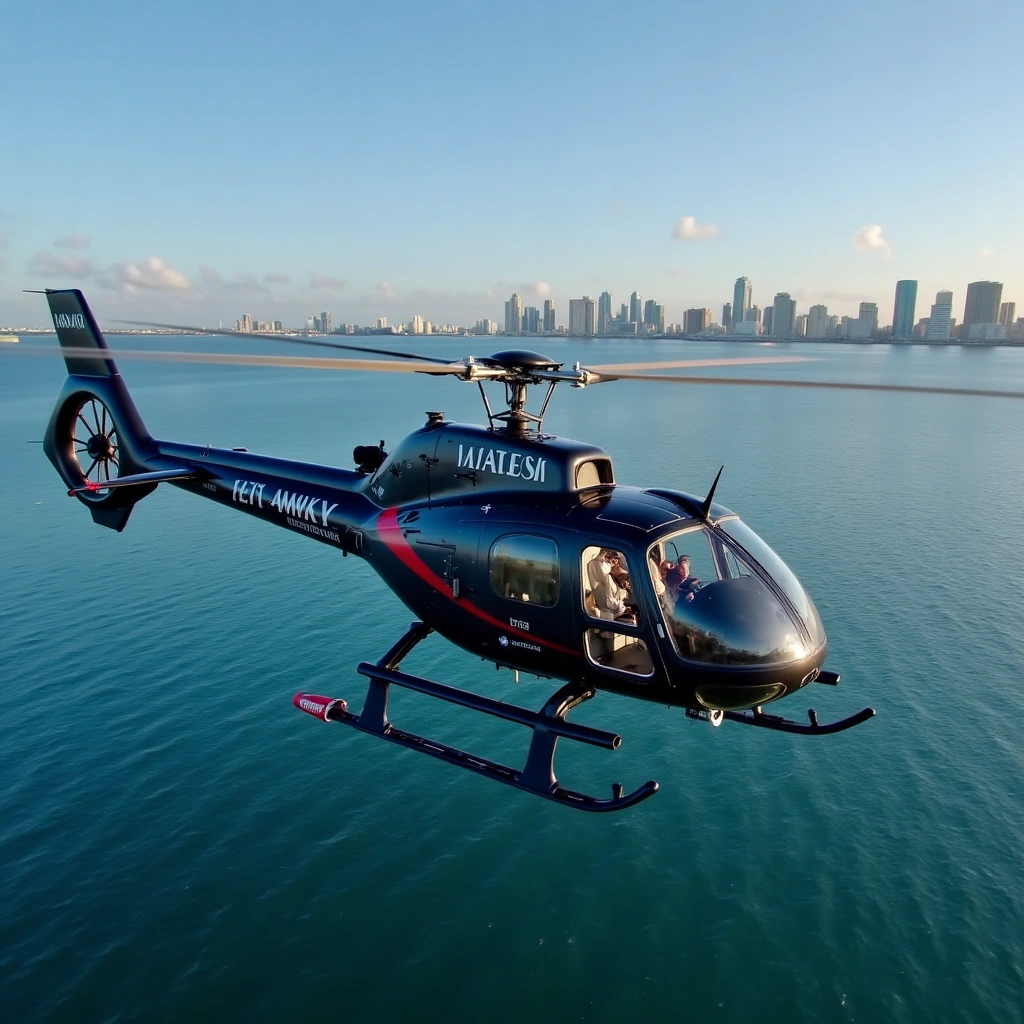
A helicopter that crashed earlier this month in Biscayne Bay, killing one person and critically injuring two others, had been flying so low that it hit the water on a turn , the NTSB said.
Some news stories make you wince before you finish the headline. This one is a good example. A helicopter went down in Biscayne Bay near Key Biscayne, Florida, on November 4th. The pilot was killed, and two other people on board were critically injured. Now the National Transportation Safety Board (NTSB) has offered a key early finding: the helicopter was flying “extremely” low to the water during turns.
That detail deserves a closer look, because it tells you a lot about how quickly things can go wrong in aviation.
The Aircraft and the Mission
The helicopter was a Robinson R44 II, a small piston-engine model that’s common in private, training, and utility work. It wasn’t on a routine sightseeing hop. It had been filming a powerboating event offshore when it crashed. Filming from the air is a job with its own pressures. Camera crews want the best angles, the boats want to be shown at speed, and the pilot is trying to keep everyone happy while flying a machine that needs constant attention.
There’s also a detail that makes many aviation people frown: some of the helicopter’s doors had been removed to make photography easier. Open doors give camera operators a clear view and room to move, but they also change how the aircraft behaves and how people are secured inside. Nobody is saying that alone caused the crash, and the NTSB investigation is what will sort out cause and effect. Still, it’s the kind of choice that makes a safety investigator’s ears perk up.
What “Extremely Low” Really Means
Flying low over water is not automatically reckless. Pilots do it for legitimate reasons, including certain kinds of photography and low-level operations. The problem is margin. When you’re close to the surface and banking through turns, there’s very little room to recover from a mistake. A small change in airspeed, a gust of wind, a distraction, or a slightly wrong control input can turn a manageable situation into an emergency in seconds.
That’s why the word “extremely” in the NTSB’s assessment matters. It suggests the helicopter wasn’t just a little lower than ideal. It was operating in a range where the safety cushion was thin enough to be a real concern.
Why Investigators Dig So Deep
If you’ve never followed an NTSB investigation, here’s the short version: they aren’t in the business of blame. Their job is to figure out what happened and why, so similar accidents can be prevented. That means looking at the aircraft, the weather, the pilot’s training and experience, the flight plan, the mission requirements, and any pressures that might have influenced decisions on the day.
It’s slow work. Preliminary reports come out early, and the final determination of probable cause can take much longer. Early statements like this one are useful signposts, but they aren’t the whole story yet.
The Human Side
It’s easy to get lost in details like door configurations and altitude, but the most important fact here is that someone died. The pilot was killed, and two others were seriously hurt. Behind every aviation report are families, coworkers, and people who will be living with the aftermath for a long time.
The Takeaway
If there’s a lesson for anyone who flies, films from the air, or just watches a helicopter buzz overhead, it’s this: low, fast, and turning is a dangerous combination, and cutting corners for a better shot is a bad trade. Aviation has a long memory for accidents that started with someone deciding the rules could bend a little for the mission.
We’ll know more once the NTSB publishes its full findings. Until then, the headline says it all: the helicopter was flying extremely low, and that’s exactly the kind of detail that investigators will be focused on.
Inspired by: “Helicopter that crashed in Florida, killing 1 and injuring 2, was flying ‘extremely’ low, NTSB says” (r/World)