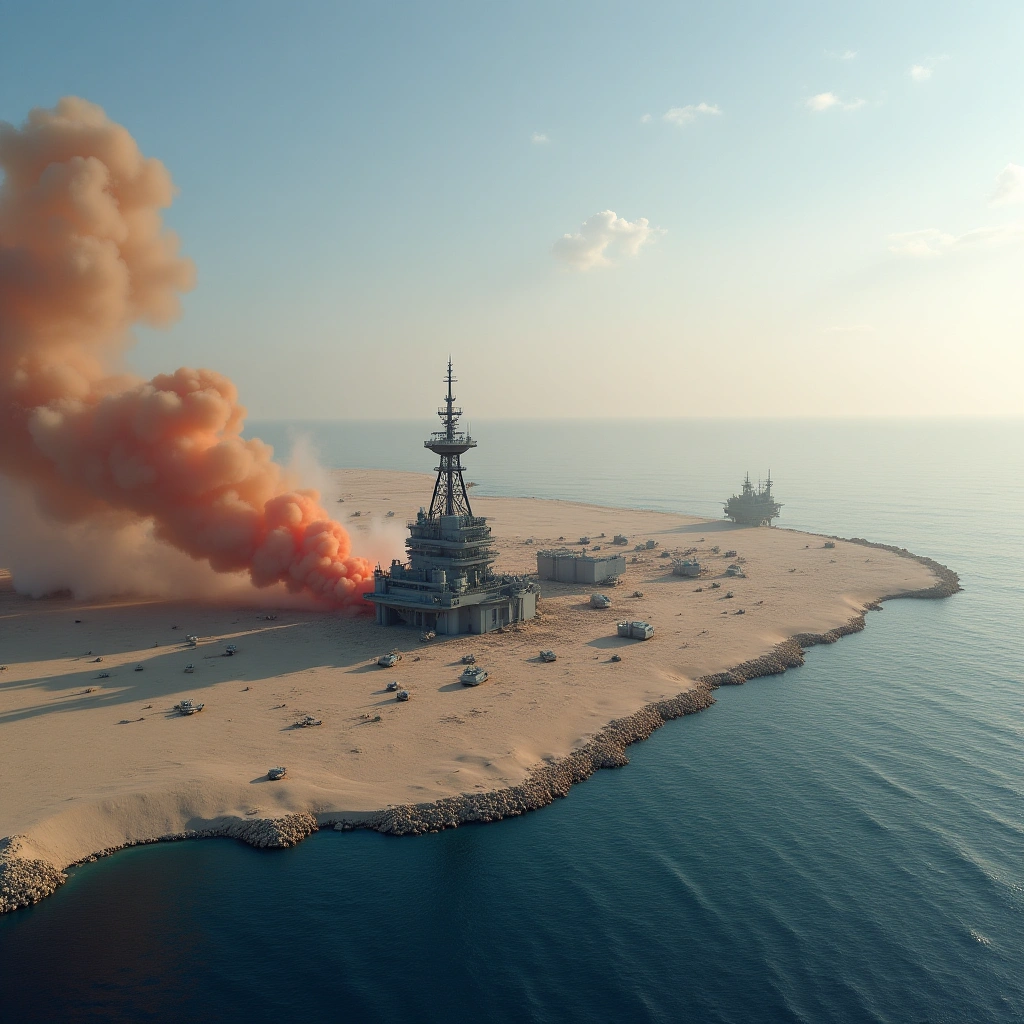
Kuwait said on Wednesday it was countering "hostile drone attacks", as Washington's Gulf allies remained on alert hours after the United States struck Iran's Qeshm Island in the Strait of Hormuz.
If you were hoping for a quiet week in the Middle East, I have some unfortunate news. Gulf nations are on alert after the United States struck Qeshm Island, a piece of Iranian territory sitting in the Strait of Hormuz. Nobody in the region is treating this as a minor skirmish, and it is easy to see why.
Let’s start with the geography, because it matters. The Strait of Hormuz is one of the most important shipping routes in the world. A significant share of the world’s oil passes through this narrow waterway, which connects the Persian Gulf to the open ocean. When tensions rise there, the consequences tend to spread quickly, affecting governments, energy markets, and ordinary people who will never set foot in the region. Qeshm is Iran’s largest island and sits right at this chokepoint, so a strike there is not exactly a quiet, isolated event.
The immediate reports paint a tense picture. Kuwait said it was countering drone attacks, and Bahrain intercepted incoming attacks from Iran early Wednesday. In other words, the fallout is not just a headline about American and Iranian officials trading statements. Neighboring countries are dealing with threats on their own soil or in their own airspace. That is what being on alert actually looks like: sirens, air defense systems, and governments trying to reassure citizens while quietly hoping the situation does not escalate further.
So how did we get here? The strikes did not appear out of nowhere. The reporting describes a period of heightened tensions between the United States and Iran, with recent exchanges that include Iranian attacks on a base used by Washington. Earlier, the United States and Israel had carried out strikes on Iran. Each action tends to be answered by another, and before long, the back-and-forth starts to resemble a cycle that nobody seems eager to be the first to break. It is the diplomatic version of two people refusing to hang up a phone call that has already turned into shouting.
This is where things get complicated for the Gulf states. Countries like Kuwait and Bahrain are not usually the primary parties in these disputes, yet they often find themselves in the middle. They host military facilities, rely on secure shipping lanes, and sit uncomfortably close to the conflict. Their interests are served by stability, but they have limited control over the decisions being made in Washington and Tehran. That leaves them trying to protect their people, manage relations with multiple powers, and avoid being dragged further into someone else’s fight. It is a balancing act that rarely looks graceful from the outside.
The wider risk is what makes this story worth following closely. Drone attacks and intercepted missiles are alarming on their own, but they also raise the chances of miscalculation. A single error, a misread radar blip, or a strike that hits the wrong target could quickly change the scale of the conflict. Shipping companies, energy traders, and insurers are watching the situation closely, because even the threat of disruption in the Strait of Hormuz can push prices and costs higher around the world.
For now, the most accurate summary is that the region is on edge and the situation remains fluid. Reports from several outlets, including World Al-Monitor, The Straits Times, the Toronto Sun, and CNA, all point to the same core facts: US strikes on Qeshm Island, Gulf states responding to attacks, and a broader pattern of escalating tensions. Anyone following the story should keep an eye on official statements, since early reports in conflicts like this can change rapidly.
Until there is clearer movement toward de-escalation, the Gulf will remain on alert. Let’s hope cooler heads prevail, because the people caught in the middle of these high-stakes standoffs deserve better than another round of strikes and sirens.
Inspired by: “Gulf nations on alert after US strikes Iranian island” (r/World)