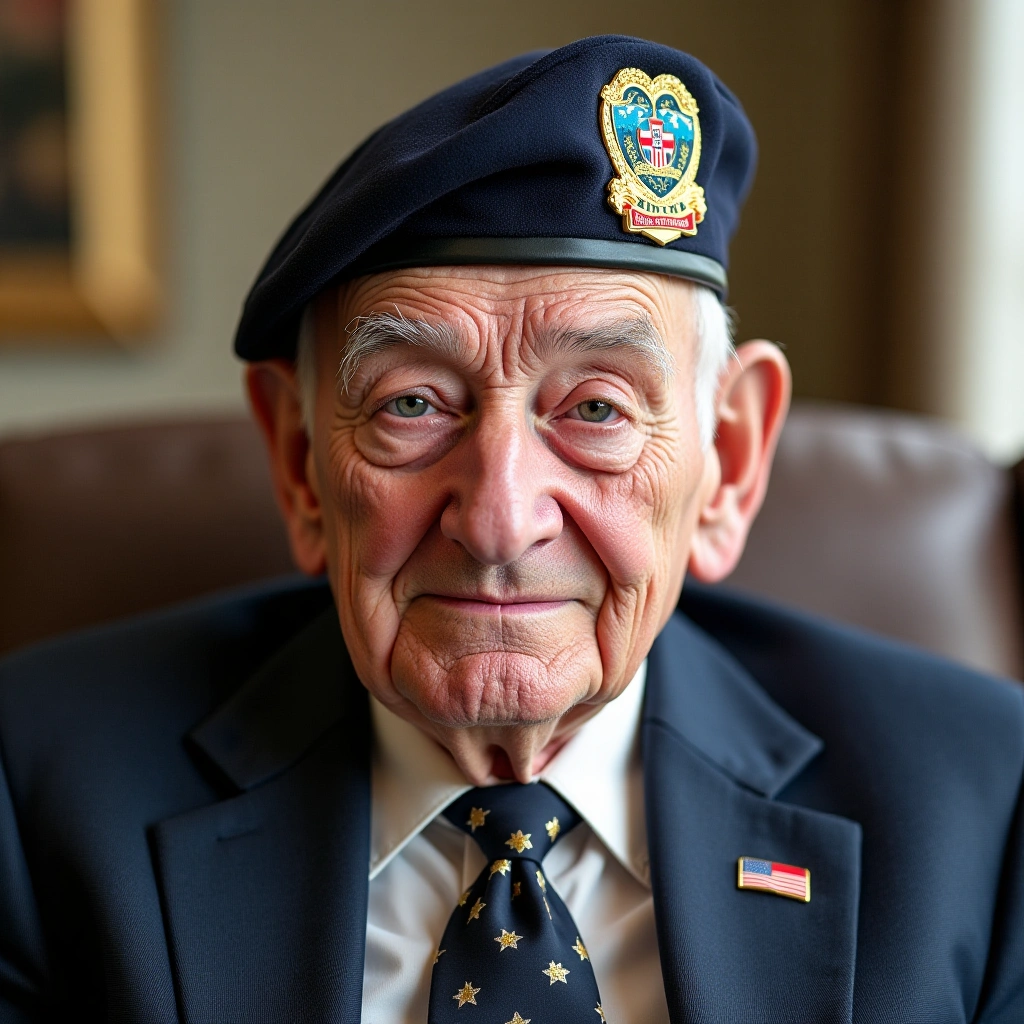
Freeman Johnson, the oldest of the few remaining Pearl Harbor survivors, has died. Johnson died Saturday at his home in Centerville, Massachusetts . He was 106, according to one of his daughters, Diane Johnson.
Some news stories call for a moment of quiet before anything else, and this is one of them. Freeman Johnson, identified as the oldest living survivor of the attack on Pearl Harbor, has died at his home in Centerville, Massachusetts. He was 106 years old.
The news was reported by HuffPost, the New York Post, the Daily Mail, and The Guardian. When outlets that agree on almost nothing all run the same headline, you know the story matters.
So let’s talk about it: who he was, where he was on December 7, 1941, and why a man who reportedly never saw the attack still carries such weight in how we remember it.
Where He Was That Morning
On December 7, 1941, Freeman Johnson was one of roughly 87,000 military personnel on Oahu. That number is worth repeating, because when most of us picture Pearl Harbor, we picture the explosions, the smoke, and the burning battleships from the newsreels. We don’t usually picture tens of thousands of ordinary people who had been going about an ordinary Sunday morning.
Johnson was serving aboard the USS St. Louis, a light cruiser, and he was working below deck when the attack began. According to reports, he did not hear or see the Japanese surprise attack as it unfolded.
That detail sounds almost impossible at first. One of the most consequential mornings of the twentieth century happened right outside, and he didn’t see it? But it makes sense once you think about what being below deck on a warship meant. It meant steel walls, machinery noise, and a job that had to get done whether or not you knew what was happening topside. Plenty of people experienced history less like a movie and more like confusion, orders, and doing their part without the full picture.
The St. Louis also has a notable place in the story of that day. It was among the ships that managed to get underway and leave the harbor during the attack. So while Johnson may not have watched it happen, he was aboard a ship that was very much part of it.
Surviving Is Not a Small Thing
The word “survivor” can get diluted. These days people say they “survived” a long meeting or a holiday dinner with relatives who have opinions. Survivors of Pearl Harbor lived through an attack that killed more than 2,400 Americans and pulled the United States into the Second World War.
The attack changed the country almost overnight. The next day, the United States declared war on Japan. The young men and women who were on Oahu that morning didn’t get a quiet stretch to process what had happened. For many of them, it was the first day of years of service in a global war.
Surviving that day and then living another eight decades is remarkable. Johnson lived to 106, which is impressive on its own. Most of us struggle to keep a houseplant alive for 106 days.
The Weight of Being “The Oldest”
There’s something bittersweet about headlines that start with “oldest living.” They honor a remarkable person, but they also remind us how few people with that firsthand experience are left.
Every year, the number of Pearl Harbor survivors gets smaller. That’s simple arithmetic. Someone who was a young serviceman in 1941 would be well past 100 today. Each time one of them dies, we lose a direct connection to a moment most people only know from textbooks, documentaries, and the occasional overly dramatic Hollywood movie.
When there’s nobody left who can say “I was there,” history doesn’t disappear, but it changes. It becomes something we inherit secondhand instead of something we can ask about. That’s why stories like Johnson’s get attention, and why they deserve it.
Not Every War Story Looks Like the Movies
The detail that Johnson reportedly didn’t see or hear the attack is easily the most striking part of his story, and it’s worth thinking about instead of skipping past.
We tend to want war stories with a clear dramatic arc: the hero looks up, sees the planes, and springs into action while the music swells. Real experience is often messier. Many people in history’s biggest events were in a room somewhere, doing a job, with no view of the bigger picture. That doesn’t make their experience less real or their service less important. If anything, it gives a more honest picture of what being there was actually like.
There’s a lesson here for anyone who has ever felt their contribution to something big was too small or too out of sight to matter. Plenty of important work happens below deck.
A Long Life After a Defining Day
The reports don’t give a full chronicle of Johnson’s life, and it would be unfair to fill the gaps with guesses. What we do know is that he lived a very long time and died at home in Centerville, Massachusetts, which, given the choice, is how a lot of people would want to go.
Think of the stretch of history 106 years covers. Someone born that long ago lived through the Great Depression, a world war, the space race, the arrival of television, and the internet, where people now argue about history in comment sections with a confidence that would make a five-star general blush.
Through all of it, Johnson carried the experience of that December morning, even if what he remembered was the inside of a ship rather than the sky above it.
Why This Matters Now
It’s easy to treat Pearl Harbor as a fixed date on a calendar, something that gets a dutiful mention every December 7 before everyone moves on. The death of its oldest known survivor is a good reminder that it happened to real people, with real lives before and long after.
Freeman Johnson was one of about 87,000 people on Oahu that morning. He was working below deck on the USS St. Louis. He didn’t see the attack, but he lived through it, and then he lived another 80-plus years. That’s a story worth telling straight, without decoration.
Rest in peace, Mr. Johnson. Thank you for your service, and for staying with us long enough to remind a lot of people that history is made of people, not just dates.
Inspired by: “Pearl Harbor Survivor Freeman Johnson Dies At 106” (r/News)